Budapest’s Most Anticipated Hotel Opening: The St. Regis Arrives at Klotild Palace
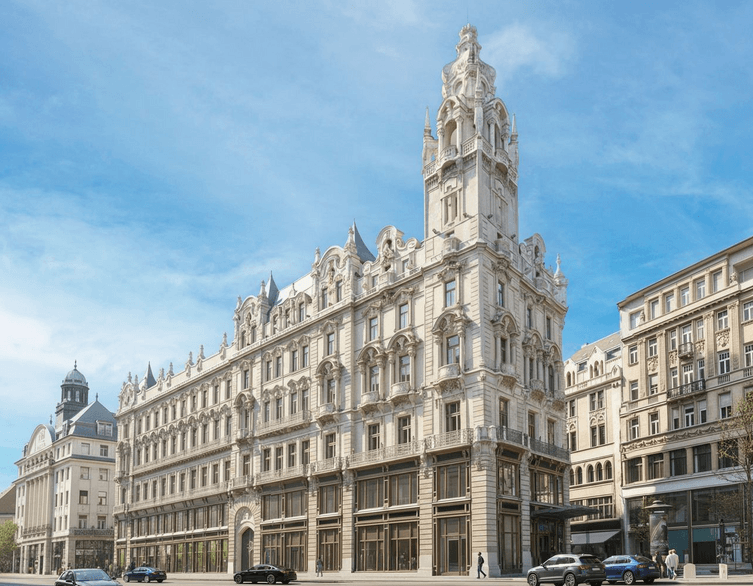
Budapest has never been short of grand addresses, but April 28, 2026 marks a genuinely special moment for the city’s luxury hospitality scene. On that date, The St. Regis Budapest opens its doors inside the magnificent Klotild Palace — one of the Hungarian capital’s most celebrated architectural landmarks — bringing with it a level of refinement that sets a new benchmark even for a city well accustomed to opulence.
A Palace With a Story to Tell
To truly appreciate what The St. Regis Budapest represents, you need to understand the building it calls home. The Klotild Palace was commissioned at the turn of the 20th century by Archduchess Maria Klotild of Saxe-Coburg and Gotha, wife of Archduke Joseph Karl, who shrewdly acquired the plot after the construction of Elizabeth Bridge freed up some of the most coveted land in the entire city. She entrusted the project to architects Flóris Korb and Kálmán Giergl — the same duo behind the legendary New York Palace, which remains one of Budapest’s most photographed interiors to this day.
The result was a pair of mirror-image neo-Baroque towers rising dramatically at the Pest end of the bridge, their 48-metre corner towers crowned with carved stone princely crowns, functioning literally as stone gateposts to the Elizabeth Bridge below. Together, they became known as the Klotild Palaces — the northern building retaining the Klotild name, the southern one eventually coming to be called Matild. Both survived the Second World War, albeit not entirely intact. The bridge itself was less fortunate: blown up by retreating Nazi forces, it was later rebuilt in a completely different, simplified style between 1961 and 1964. The palaces, however, endured — and both have now found extraordinary second lives as luxury hotels.
Best deals of Budapest









Twin Palaces, Twin Hotels
The southern sister, Matild Palace, led the way when it reopened as a Luxury Collection hotel in 2020, drawing instant acclaim for its spectacular interior and rooftop bar. Now the northern Klotild Palace completes the pair, and the symmetry is almost poetic: both buildings operate under the Marriott umbrella, standing face-to-face across Váci Street as they have for over a century, together framing the gateway to Elizabeth Bridge just as their architect originally envisioned.
Before this latest chapter, the Klotild Palace had already had a brush with hospitality, housing the Budapest branch of the Buddha Bar Hotel chain for a number of years before the St. Regis project prompted its closure and the full renovation that followed.
The St. Regis: A Legacy of Legendary Hospitality
The St. Regis brand itself carries remarkable heritage. It was founded in 1904 when John Jacob Astor IV opened The St. Regis New York with an explicit vision: to create a gathering place for the most influential figures of his era. That founding spirit has since expanded to more than 60 exceptional locations worldwide, each defined by personalised service, discreet elegance, and the brand’s celebrated rituals. Budapest, with its own storied café culture and tradition of grand social gatherings, feels like a natural home for it.
Inside the Hotel: Rooms, Suites and Standout Spaces
The St. Regis Budapest offers 102 elegantly appointed guest rooms in total — 63 rooms across Superior, Deluxe, and Duplex categories (with a generous minimum size of 35 square metres) and 39 suites, meaning there are almost as many suites as standard rooms. That ratio alone speaks volumes about the kind of stay the hotel is designed to deliver. The two signature suites are the Klotild Tower Suite, making dramatic use of the palace’s iconic corner tower, and the two-bedroom Presidential Suite, both featuring sweeping views over the Danube and the graceful arc of Elizabeth Bridge. Every guest, regardless of room category, has access to the renowned St. Regis Butler Service — a personal touch that has defined the brand since its very first New York opening.
Dining, Drinking and the Art of Ritual
The social heart of the hotel is The St. Regis Bar, where the brand’s legendary Bloody Mary cocktail — a signature drink with its own fascinating history rooted in the original New York bar — is reimagined with local Hungarian inspiration, accompanied by a curated selection of wines and premium spirits. The bar is also the stage for two of the St. Regis’s most theatrical traditions: Afternoon Tea, served daily in the atrium between 2pm and 5pm, and Champagne Sabrage, the art of opening a champagne bottle with a sword — a ritual that never fails to draw a crowd.
Even if you are not staying at the hotel, Afternoon Tea in the atrium is worth experiencing on its own terms — a genuinely special way to soak up the palace atmosphere without committing to a room rate.
The Klotild Patisserie, meanwhile, is a nod to Budapest’s deep-rooted café culture, a world-famous tradition dating back to the 19th century. Beautifully restored with turn-of-the-century furnishings, it is the kind of place where you could easily lose an afternoon over coffee and a slice of something extraordinary. The culinary programme also includes the 99 Sushi Bar & Restaurant, an internationally recognised fine dining concept bringing contemporary Japanese cuisine to the palace. For private events and business meetings, the hotel offers the John Jacob Astor Boardroom and the Caroline Salon, both finished to the exacting standards you would expect.
Wellness With a View
Below the hotel’s historic façade lies a thoroughly modern wellness offering. The St. Regis Spa features an indoor pool, sauna, hammam, experience showers, and three treatment rooms — a serene urban retreat that provides complete contrast to the sensory richness of the city above. For those who prefer to keep active, the sixth-floor fitness gallery sits beneath a glass roof with panoramic Budapest skyline views — quite possibly the most scenic gym in the Hungarian capital.
A New Era for Budapest Luxury Tourism
The arrival of The St. Regis is more than just another hotel opening. It signals that international luxury brands continue to see Budapest as a genuinely compelling destination, one increasingly competing for high-spending travellers in a field that includes Prague, Vienna, and Warsaw. The thoughtful restoration of a protected heritage landmark — rather than new construction — also demonstrates that responsible tourism and architectural preservation can go hand in hand, giving an irreplaceable piece of Budapest’s Belle Époque golden age a future as vibrant as its past.
Related news
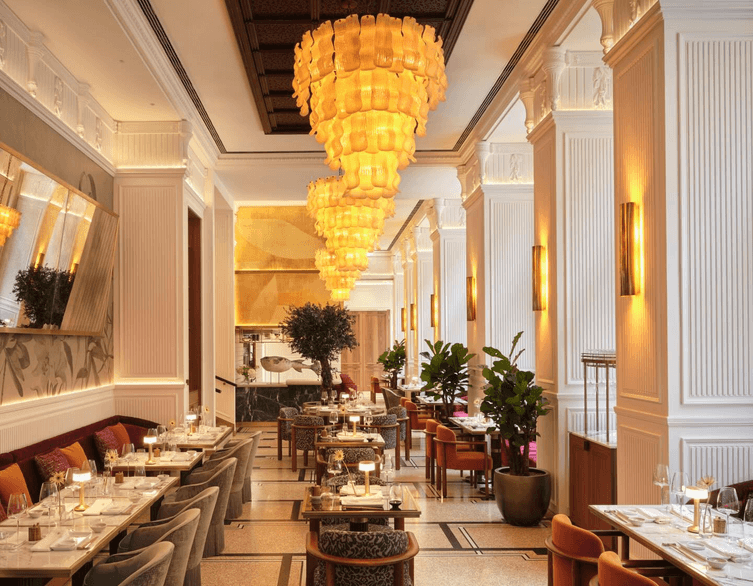
99 Sushi Bar & Restaurant Budapest: World-Class Japanese Fine Dining Arrives at The St. Regis
Budapest has quietly been rewriting its culinary story over the past few years, and the latest chapter is a striking one. The 99 Sushi Bar &...
Budapest’s Hotel Boom: 8–10 New Hotels Opening in 2026 — From St. Regis to Moxy, Ruby, and Beyond
Budapest has always had a flair for reinvention — and in 2026, the Hungarian capital is doing it again, this time with a full-blown hotel boom...
Google Travel Just Made Finding the Best Hotel Deal Way Easier — Here’s What You Need to Know
Planning a trip to Budapest? Lucky you. The city has everything: stunning architecture, thermal baths, ruin bars, and enough langos to make your...