How Budapest Is Getting Ready for Pride 2026
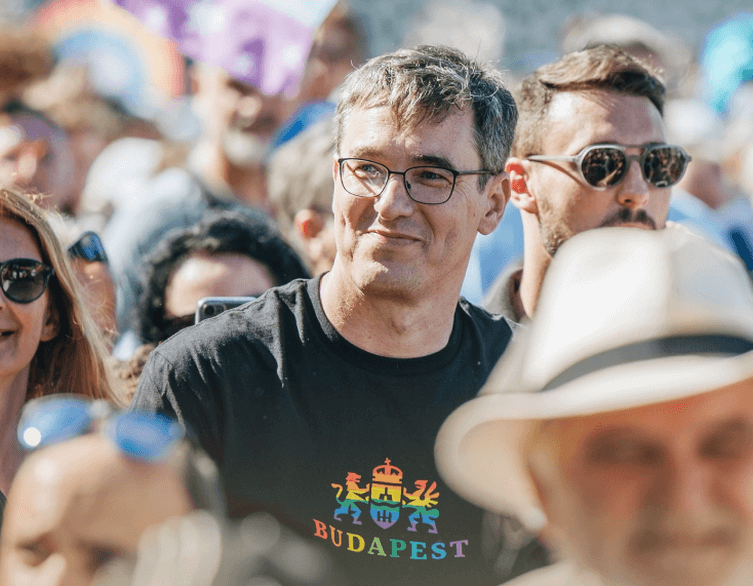
With the 31st Budapest Pride March just one week away, the Hungarian capital is making its position unmistakably clear — and it’s doing so in ways that are visible to anyone walking the streets, crossing the Danube, or simply looking up at City Hall. This year’s preparations feel different from previous years, carrying a sense of momentum and civic pride that goes well beyond the practical logistics of organising a parade.
The City Is Flying Its Colours — Literally
The preparations started at the very beginning of June, when the rainbow flag went up on City Hall once again, as has become a tradition at the start of Pride Month in Budapest. It’s a gesture that has quietly embedded itself into the city’s summer rhythm — a signal, repeated year after year, that this is a city that considers the freedom and dignity of all its residents worth marking publicly.
But this year, the city went further than it ever has before. For the first time in Budapest’s history, the Elizabeth Bridge — the sleek, white suspension bridge connecting Pest and Buda across the Danube — has been decorated with the Progressive Pride flag. City officials freely acknowledged that they could find no precedent for it: Budapest’s bridges have never been dressed this way before. It’s a historic first, and a deliberately visible one. The bridge sits on the route the Pride March will travel on June 27, meaning tens of thousands of participants and spectators will pass beneath it on the day. Budapest, the city is saying, is a diverse, open, and welcoming community where everyone can feel at home and live and love freely.
A March the City Is Fully Behind
The 31st Budapest Pride March takes place on Saturday, June 27, setting off from the Opera House on Andrássy Avenue and arriving at Vérmező Park in Buda, passing the flag-adorned Elizabeth Bridge along the way. Lord Mayor Gergely Karácsony confirmed that the police have formally acknowledged the event — a detail that carries real weight given the turbulence of recent years. “Finally,” he wrote. “It doesn’t need to be a municipal event, because this is an event for freedom-loving Hungarians. It was last year, it will be this year, and it always will be.”
Last year’s Budapest Pride, organised partly by the city administration in defiance of a government ban, became the largest in the city’s history. This year, with the city’s full backing and a significantly clearer legal landscape, organisers and participants are heading into the day with a confidence that feels hard-won and well-founded.
Best deals of Budapest










The Legal Turning Point That Changed Everything
Understanding why this year’s preparations feel so charged requires a brief look at what has changed legally. Last year’s march took place under a government ban rooted in a child protection law, and in its aftermath, Lord Mayor Karácsony faced criminal charges for his role as organiser. The proceedings against the organiser of Pécs Pride were similarly initiated.
Then, in April 2026, the Court of Justice of the European Union ruled that the law underpinning the ban breaches EU law — incompatible with internal market rules, fundamental freedoms, and core European values. The charges against the Lord Mayor were subsequently dropped entirely. Prosecutors noted that where a national law is found to conflict with EU law, courts are not required to wait for the legislation to be formally repealed before setting it aside. In practical terms: the legal ground has shifted, and the city’s preparations this year reflect that shift with quiet confidence.
A City That Wears Its Values on Its Bridges
What makes Budapest’s preparations for Pride 2026 worth paying attention to — particularly for visitors — is not just the logistical readiness, but the deliberate, public nature of the city’s commitment. Flags on City Hall are one thing; a historic first on one of the most photographed bridges in Central Europe is something else entirely. These are not quiet gestures. They are a city saying, loudly and visually, that Budapest belongs to everyone.
For anyone visiting Budapest in the lead-up to June 27, the city’s Pride preparations are woven into the urban fabric in a way that’s impossible to miss. Whether you’re strolling along the Danube embankment, looking up at City Hall, or joining the march itself as it moves from the grandeur of Andrássy Avenue to the open green of Vérmező Park, you’re experiencing a city that is, in the most literal sense, showing its true colours.
Related news
Related events