Budapest’s Sky Show: A Stargazer’s Guide to August 2026
Budapest is about to get an extraordinary bonus attraction this month, and it doesn’t require a ticket, a queue, or even leaving your hotel balcony. August 2026 is shaping up to be one of the most spectacular months for skywatching in years, with a partial solar eclipse, the year’s best meteor shower, and a rare planetary lineup all converging over the Hungarian capital within a matter of days. If you’re visiting Budapest this month, it’s worth building at least one evening around looking up rather than out.
Moon Meets Mars on August 9
The month’s first easy highlight arrives in the early hours of August 9, around 4 a.m., when a waning crescent Moon, about 18 percent illuminated, drifts into a loose conjunction with Mars. The Red Planet appears roughly 3.8 degrees below and to the right of the Moon, sitting about 23 degrees above the eastern horizon, well clear of rooftops and treelines even from a fairly central vantage point. Mars is glowing at a modest magnitude of 1.3 at this point in its orbit, so it won’t rival Venus or Jupiter for brightness, but it’s still easy to pick out with the naked eye once the Moon points you in the right direction.
Because the pairing happens in the pre-dawn sky rather than deep in the middle of the night, it’s a genuinely manageable event even if you’re not planning to stay up until sunrise. If you happen to be up early for a flight, a sunrise walk along the Danube, or just jet lag, stepping outside for five minutes around 4 a.m. is enough to catch it. No telescope is required, though a basic pair of binoculars will sharpen the view of both the Moon’s crescent and Mars’s faint reddish tint. Think of it as a low-effort warm-up for the much bigger show still to come on August 12 and 13.
Best deals of Budapest









A Partial Solar Eclipse at Sunset
The headline event lands on August 12, when a total solar eclipse sweeps across Greenland, Iceland, and northern Spain, and Budapest gets a front-row seat to the partial version. From the Hungarian capital, the Moon will begin visibly touching the Sun’s disk in the evening, with the eclipse reaching its most dramatic point right around sunset at 7:58 p.m. local time, when roughly 60 percent of the Sun’s surface will be covered. Because the eclipse peaks so close to sunset, the effect is genuinely cinematic: a crescent Sun sinking low over the Danube skyline rather than a distant astronomical abstraction.
One safety note that’s easy to overlook in the excitement: never look directly at the Sun during a partial eclipse without certified eclipse glasses or a solar filter on a telescope or binoculars, even when most of the disk is covered. Regular sunglasses, no matter how dark, don’t cut it. If you didn’t pack eclipse glasses, keep an eye out around Budapest in the days before, since local astronomy shops and some bookstores typically stock them ahead of a major eclipse.
The Perseids Light Up the Night
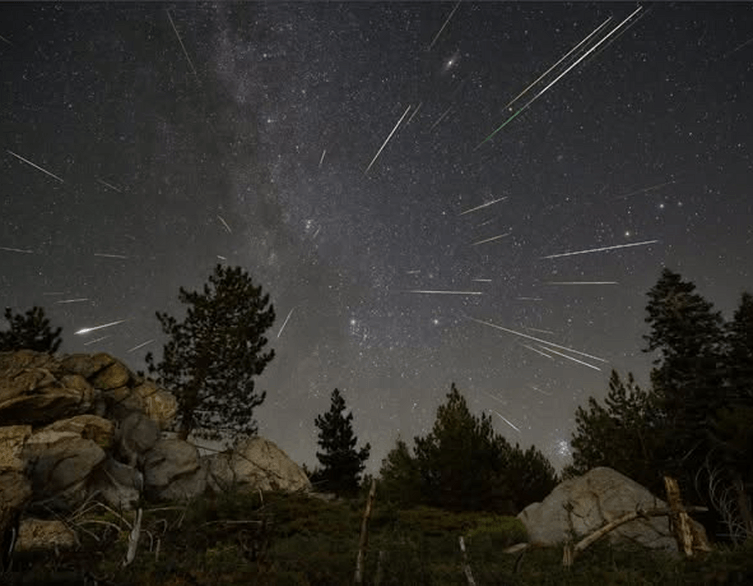
As if one celestial headliner weren’t enough, August 12 also happens to be the night the Perseid meteor shower revs up toward its peak, with the true maximum arriving in the early hours of August 13, between roughly 4 and 6 a.m. Under genuinely dark skies, you can expect to see up to 100 meteors per hour, making it one of the most reliable and rewarding meteor showers of the entire year. The catch, and it’s a real one if you’re staying centrally, is that Budapest’s city lights significantly wash out fainter meteors, so the difference between a handful of streaks and a genuinely jaw-dropping show often comes down to how far you get from artificial light.
Locals in the know head for spots like Margaret Island, Gellért Hill, or Normafa up in the Buda Hills, all of which offer noticeably darker skies than the busy downtown streets while staying within easy reach by public transport or taxi. For a next-level experience, the Svábhegy Observatory in the Buda Hills is hosting public “Night of Falling Stars” events on August 12, 14, and 15, running from 5 p.m. to 11 p.m., with telescope demonstrations and expert-guided viewing that make the science as compelling as the spectacle itself. If you’re willing to venture further afield, Hortobágy National Park, about two hours east of the city, is a certified International Dark Sky Park with genuinely pristine conditions, though for most visitors on a tight itinerary, the Buda Hills will deliver a memorable night without eating up a full day of travel.
A Rare Six-Planet Parade Before Dawn
Early risers get their own reward on August 13, when Mercury, Jupiter, Mars, Uranus, Saturn, and Neptune all line up across the pre-dawn sky in what’s being called a rare six-planet parade. Mercury and Jupiter put on a particularly tight show, drawing close together with the razor-thin crescent Moon nearby, though because the sky is still fairly bright at that hour, binoculars or a small telescope will make the difference between spotting a faint smudge and actually resolving the individual planets. The pairing repeats in a slightly different configuration on August 15, when Jupiter and Mercury again appear close together in the dawn sky, giving you a second chance if clouds spoil the first attempt.
Smaller Moments Worth Catching
Beyond the headline events, August is scattered with quieter, equally charming conjunctions that reward anyone willing to step outside for ten minutes. On August 7, the crescent Moon drifts near the Pleiades star cluster in the early morning sky, an easy naked-eye pairing that looks even better through a simple pair of binoculars. By August 16, Venus, unmistakably the brightest point of light in the western sky after sunset, sits close to a slim lunar crescent just as twilight fades.
Then, on August 28, the month wraps up with a deep partial lunar eclipse, in which most of the Moon slips into Earth’s shadow shortly before it sets in the early morning hours. It’s a fittingly moody finale to a month that has already delivered more sky drama than most stargazers see in an entire year.
Making the Most of It as a Visitor
None of these events require expensive gear or expert knowledge to enjoy. A basic pair of binoculars sharpens almost everything on this list considerably, and Budapest’s relatively mild light pollution compared to other major European capitals means even city-based viewing spots like Buda Castle’s terraces or the embankments along the Danube offer a decent view of the brighter events. If you’re serious about the Perseids or the six-planet parade, though, giving yourself the option to head up into the Buda Hills, whether that’s a short taxi ride to Normafa or a proper evening trip to the Svábhegy Observatory, is the single best upgrade you can make to the experience.
Check the local weather forecast a day or two out before committing to a plan, since clear skies make all the difference between a forgettable evening and one you’ll be describing to friends back home for years. Budapest in August already gives you thermal baths, riverside sunsets, and centuries of history to explore by day; this year, the sky itself has decided to join the lineup of must-see attractions after dark.
Related news
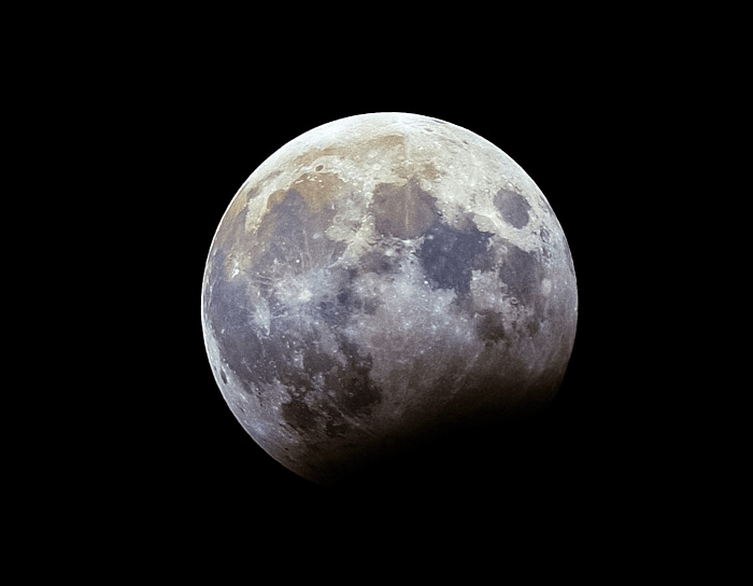
Catch a Rare Partial Lunar Eclipse on August 28
Stargazers visiting Budapest are in for a treat this month. In the early hours of Friday, August 28, a partial lunar eclipse will sweep across the...
Budapest Heatwave Guide: How to Stay Safe as the Alert Level Eases
If you’re packing your bags for Budapest this month, there’s some good news mixed in with a reminder to stay alert: Hungarian health...
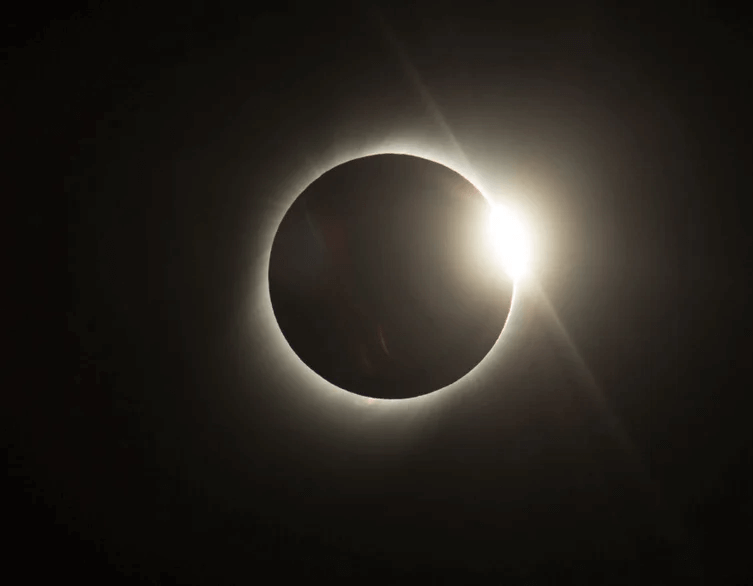
Solar Eclipse Over Budapest: A Rare Sky Show You Won’t Want to Miss
On the evening of August 12, 2026, Budapest will get a front-row seat to a genuinely rare astronomical event: a partial solar eclipse that turns...

Budapest’s Best Events Under the Stars This Summer
There’s something about Budapest after dark that feels different from most European capitals. Maybe it’s the floodlit Parliament reflecting...