Budapest’s Autumn 2026 Lineup of Food-for-Thought Events You Shouldn’t Miss
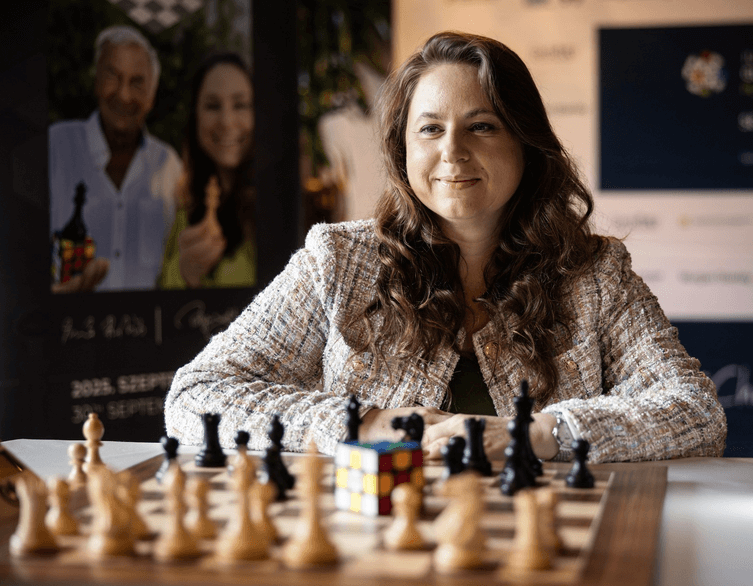
Autumn in Budapest has a special kind of energy. The Danube turns a deeper shade of grey-blue, chestnut trees along the boulevards start to shed their leaves, and the city, always a magnet for culture lovers, shifts gears into an unusually cerebral season. If you’re the sort of traveler who wants more from a trip than just thermal baths and paprika-dusted goulash, though both remain excellent reasons to visit, this autumn 2026 delivers a genuinely rare cluster of events built around ideas, strategy, and discovery. From a family-friendly chess festival inside a Danube-facing castle museum to a citywide science open house and a headline-grabbing world championship featuring the biggest name in modern chess, Budapest is positioning itself as a destination for curious minds as much as sightseers. Here’s your guide to the season’s standout “food for thought” events, along with the practical details you’ll want before booking a trip around them.
The 12th Judit Polgár Global Chess Festival: Strategy Meets Fine Art
On Saturday, September 26, 2026, one of Budapest’s most delightfully unusual cultural events takes over the Hungarian National Gallery, tucked inside the walls of Buda Castle. For one day, the museum’s elegant halls, normally reserved for centuries of Hungarian painting and sculpture, fill with chessboards, puzzles, and a level of playful energy you don’t typically associate with fine art institutions. Running from 10:00 AM to 5:30 PM, the festival is built around the theme of critical thinking, an idea that feels especially timely as artificial intelligence reshapes how people process information and make decisions. The organizers frame chess as a tool for sorting out what’s real from what’s illusion in an increasingly blurred digital world, and this year’s programming leans into that idea with sessions on chess, AI, illusion, and even a screening tied to Judit Polgár’s own story.
The festival is the brainchild of Judit Polgár, widely regarded as the strongest female chess player in history, who has spent her post-competitive career turning this event into one of the largest chess-themed family gatherings anywhere in the world. Now in its 12th edition, it has grown from a modest single-day gathering into a beloved Budapest tradition that draws families, students, teachers, and curious travelers from well beyond Hungary’s borders. Past editions have featured AI-powered chess robots and giant outdoor matches between the famous Polgár sisters, so expect this year to keep pushing the format in unexpected, crowd-pleasing directions.
Visitors without any chess background will still find plenty to enjoy. The day’s schedule includes a RubikChess tournament that combines speed chess with Rubik’s Cube solving, an interactive quiz, an infinite chess simultaneous exhibition, and specially designed chess adventure courses built for kids and families. There’s also a Chess Challenge Tournament and a Generation Clash Chess Tournament, both free to join, along with arts-and-crafts activities and a mission-style trail called the Chaturanga Mission for younger visitors. The undeniable highlight for many attendees, though, will be the chance to meet Judit Polgár in person during a Q&A session and book signing, plus a community simul where she plays several representatives from different corners of the global chess world, a rare and genuinely personal encounter with a legend of the game.
Best deals of Budapest








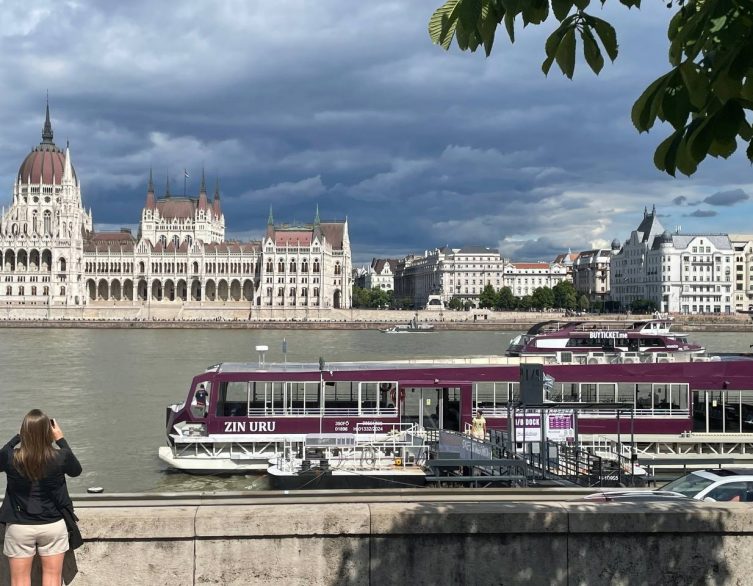
What makes this festival particularly appealing for tourists is its setting. The Hungarian National Gallery overlooks the Danube and the rooftops of Pest from within Buda Castle, making it one of the most scenic museum locations anywhere in the city. Because the festival sits right in the heart of the Castle District, it pairs effortlessly with nearby landmarks like Fisherman’s Bastion and Matthias Church, both an easy walk away. You could easily start your morning with a chess puzzle and end your afternoon soaking in panoramic Danube views, turning one Saturday into a full Castle Hill outing. Admission to most activities is free, though a few tournaments require pre-registration in advance due to limited venue capacity, so it’s worth checking the festival’s official listings before you go if you want to compete rather than just spectate.
Researchers’ Night 2026: Free Science Fun Across Budapest
If chess isn’t quite your thing, Researchers’ Night offers an entirely different way to feed your curiosity, and it happens the same weekend. Taking place on September 25 and 26, 2026, this Europe-wide science festival gives locals and visitors a rare chance to peek behind the scenes of scientific research, completely free of charge. If you happen to be in Budapest that weekend, it’s an easy and rewarding way to spend an evening somewhere unexpected, whether that’s a university lab, a research institute, or a museum you’d normally walk right past without a second glance.
Researchers’ Night is backed by the European Commission’s Marie Skłodowska-Curie Actions and has run annually since 2005, with one clear goal: making science and research careers approachable and exciting for the public, especially younger audiences. Across Europe, the event now spans more than 200 venues, around 2,500 individual programs, and over 140 organizing institutions, all opening their doors on the same late-September weekend. In Budapest, that translates into universities, national research centers, museums, and public libraries all taking part at once, effectively turning the whole city into a giant open house for science.
The format keeps things playful rather than academic. Expect hands-on experiments, lab tours, talks, workshops, exhibitions, competitions, film screenings, and creative activities covering everything from physics and biology to medicine, social sciences, humanities, and even the arts. Past editions in Budapest have included robotics demonstrations, sessions on the Hungarian language, and even talks on childbirth and home births, so the variety on offer tends to be genuinely wide rather than narrowly academic. Corvinus University of Budapest typically runs a full afternoon and evening of talks and demonstrations across its main campus buildings, while Eötvös Loránd University spreads programs across several faculties, including psychology, humanities, and the sciences. The HUN-REN network, Hungary’s national research organization, also opens the doors of a dozen of its institutes, covering fields from nuclear physics to experimental medicine, agricultural science, and computer science, with many of these venues located right in Budapest.
Because the event runs across so many independent locations, it helps to think of Researchers’ Night less as a single event and more as a citywide festival happening in parallel across dozens of buildings. Programs run in both Hungarian and English depending on the host institution, so it’s worth checking individual event descriptions if you don’t speak Hungarian, since some talks are conducted only in Hungarian while others cater specifically to international audiences. Registration isn’t required for most programs, though select lab tours and workshops with limited capacity do require signing up in advance. Given the sheer number of venues spread across the city, from downtown university buildings to research campuses further out, it also helps to pick one or two neighborhoods to focus on rather than trying to hop between opposite ends of Budapest in a single evening.
Total Chess World Championship Tour: Magnus Carlsen and the World’s Best Descend on Budapest
This November, Budapest becomes the epicenter of the global chess world. From November 10 to 21, 2026, the Hungarian capital hosts the official pilot of the Total Chess World Championship Tour, a brand-new global championship created by Norway Chess and approved by the International Chess Federation, or FIDE. For anyone visiting Budapest this autumn, it’s a rare chance to watch chess history unfold in one of the city’s most spectacular settings, and arguably the single biggest chess event the city has hosted since staging the Chess Olympiad in 2024.
The tournament introduces a format never before seen at this level. Rather than testing players in a single time control, the competition combines three disciplines into one championship: explosive three-minute Blitz games, tactical fifteen-minute Rapid matches, and a more strategic forty-five-minute Fast Classic format, with results across all three combined to crown the most complete player. Wins in Fast Classic carry three points, draws earn one, and a nine-round Blitz Swiss tournament helps settle tie-breaks before the knockout stage begins. Because this Budapest event is a pilot, it will shape the rules, structure, and prize framework for the full Total Chess World Championship Tour, which launches globally in March 2027 across multiple host cities and will eventually crown the first FIDE World Combined Champion.
The field assembled for Budapest is genuinely extraordinary. Leading the lineup is five-time World Champion and current World No. 1 Magnus Carlsen, who called the event “always interesting” as a chance “to try out new formats.” He’s joined by a formidable cast that includes Fabiano Caruana, Wesley So, Anish Giri, Alireza Firouzja, and India’s Praggnanandhaa R, the reigning Norway Chess champion, along with Hungary’s own Richard Rapport, competing on home turf. Women’s chess is represented by players including Bibisara Assaubayeva and Vaishali Rameshbabu, rounding out one of the strongest recurring fields ever assembled outside the traditional World Championship cycle. Interestingly, the Tour has also drawn backing from outside the chess world, including Norwegian football superstar Erling Haaland and Olympic cross-country skiing champion Johannes Høsflot Klæbo, a telling sign of how far chess’s commercial appeal has grown in recent years.
Hungary’s chess pedigree runs deep, which is part of why organizers chose Budapest for this launch. The Hungarian national team won gold at the very first Chess Olympiad in 1927 and again in 1928, led by Géza Maróczy, one of the earliest players ever awarded the grandmaster title. Decades later, the Polgár sisters redefined what was possible for women in the sport, with Judit Polgár still widely regarded as the strongest female chess player of all time. FIDE President Arkady Dvorkovich has described Budapest as “one of Europe’s great chess capitals,” a fitting nod given the city’s back-to-back credentials as a chess destination this autumn alone.
The tournament takes place at the Anantara New York Palace Budapest Hotel, a Belle Époque landmark on the Grand Boulevard known for its marble interiors, ornate frescoes, and glittering chandeliers. The hotel is home to the New York Café, open since 1894 and frequently ranked among the most beautiful cafés in the world. For over a century it was a favorite meeting spot for writers, poets, and intellectuals, and today it still serves its famous 24-carat gold cappuccino to visitors from around the globe. Watching elite grandmasters compete against that backdrop adds a layer of atmosphere that few sporting events can match.
Spectators heading to Budapest during the tournament can expect a packed schedule. The opening ceremony and a nine-round Blitz tournament kick things off on November 10, followed by several days of group-stage matches. After a rest day, the knockout semifinals and finals run from November 17 through 20, with daily play typically starting at 3 PM CET. The hotel sits in the Erzsébetváros district, within easy walking distance of Budapest’s famous ruin bars, the Great Synagogue, and the Danube promenade, making it simple to combine a day of world-class chess with an evening of sightseeing elsewhere in the city. Full ticketing and broadcast details are expected to be announced closer to the event, so anyone planning a trip around it should keep an eye on official channels for updates in the coming weeks.
Making the Most of Budapest’s Thinking-Person’s Autumn
What ties these three events together is more than just a shared love of chess or science. Each one offers travelers a way to experience Budapest beyond its postcard image, swapping passive sightseeing for something more participatory, whether that’s solving a puzzle inside a centuries-old gallery, touring a university lab most locals never enter, or watching the world’s best chess minds battle it out beneath chandeliers in a nineteenth-century palace. If your autumn trip lines up with late September, you can realistically experience both the chess festival and Researchers’ Night in the same weekend, since they overlap on September 25 and 26. If you’re visiting in November instead, the Total Chess World Championship Tour offers a headline event substantial enough to build an entire itinerary around, especially paired with the surrounding nightlife and historic sights of Erzsébetváros. Either way, Budapest this autumn proves that a great city break doesn’t have to choose between culture, curiosity, and genuine excitement. It can quite easily deliver all three.
Related news

Related events