Budapest Cracks Down on Smoking at Public Transport Stops

If you’re planning to light up a cigarette while waiting for your tram, bus, or metro in Budapest, think again. The city has ramped up enforcement of its long-standing smoking ban at public transport stops, and the numbers prove it’s no longer just a rule on paper. In the first half of 2026 alone, city officers issued fines nearly eight times more often than during the whole of 2025.
The Rule Isn’t New, But the Enforcement Is
Smoking has technically been banned at Budapest’s public transport stops since 2011. The prohibition covers stops for buses, trams, trolleybuses, and the HÉV suburban railway, along with the city’s more unusual rides: the cogwheel railway, the funicular, and the chairlift. For over a decade, though, enforcement was patchy at best, and many locals and visitors alike treated the rule as more of a suggestion than a strict law.
That changed at the end of February 2026, when the Budapest General Assembly unanimously passed a motion proposed by Dávid Vitézy, then a faction leader in the city council. The decision instructed the Metropolitan Municipal Law Enforcement Directorate, working alongside district-level public space inspectors when needed, to enforce the ban more rigorously across the city.
The Numbers Tell the Story
The results have been dramatic. According to figures released by the Mayor’s Office, public space inspectors issued just 76 on-the-spot fines totaling 816,100 forints for smoking at transport stops during the entirety of 2025. In the first six months of 2026, that number jumped to 578 fines worth a combined 4,657,800 forints, and 530 of those citations were issued after the new rule took effect at the end of February.
Inspectors have been paying especially close attention to Budapest’s busiest transit hubs, including major interchange points like Deák Ferenc Square and Blaha Lujza Square, where foot traffic and smoking violations tend to cluster. While the law technically allows for a maximum on-the-spot fine of 30,000 forints, the average penalty currently issued works out to around 8,000 forints, so it’s a real hit to the wallet, even if not the harshest possible outcome.
What Exactly Counts as a “Stop” Under the Law
For visitors unfamiliar with Hungarian regulations, it helps to understand just how broadly this ban applies. Under the National Tobacco Act, smoking and the use of e-cigarettes or other tobacco-imitating devices are prohibited in several public settings, including workplaces, indoor spaces open to the public, and, notably, anywhere connected to public transportation.
This means the ban isn’t limited to the platform itself. It extends to pedestrian underpasses and other enclosed public passageways, as well as public playgrounds and the area within 5 meters of a playground’s outer boundary. It also covers railway facilities and platforms open to passengers, and, crucially, any designated public transport stop or waiting area, along with a 5-meter buffer zone around it. If the exact boundary of a stop isn’t clearly marked, the rule defaults to a 5-meter radius from the sign or marker indicating the stop.
Best deals of Budapest










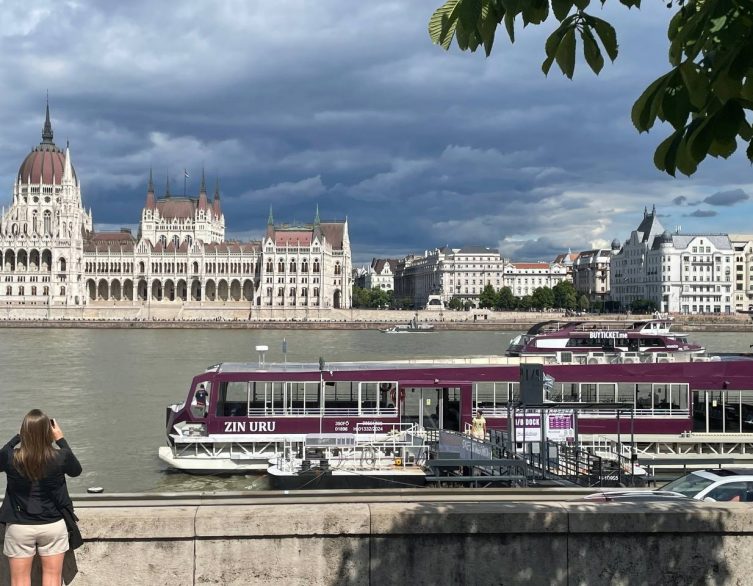
In practical terms, this means that if you’re standing near a bus shelter, a tram platform, or even just a signpost marking a stop, you’re very likely within the no-smoking zone, whether or not you can see a clearly painted line on the pavement.
The Transport Company Has Jokes, Too
Budapest’s public transport operator, the Centre for Budapest Transport, better known by its Hungarian acronym BKK, hasn’t just relied on fines and stern-faced inspectors to get the message across. The company has also taken to its official Facebook page with a cheeky public awareness post aimed at smokers who feel that irresistible urge the second they spot their bus approaching in the distance.
Instead of simply saying “don’t smoke,” BKK leaned into humor, offering commuters a menu of alternative ways to burn off nervous energy while waiting. Picture this: rather than fumbling for a lighter, why not challenge the stranger next to you to a lightning round of chess? Nothing says “productive use of your five-minute wait” quite like a rushed, slightly chaotic chess match played on an invisible board, with both players frantically trying to remember how the knight moves before the number 6 tram rolls in. Other suggested distractions floated in the same cheerful spirit included things like people-watching, mentally planning your day, or simply enjoying a moment of fresh air, which, ironically, is exactly what you’re supposed to be doing at a smoke-free stop in the first place.
The underlying message was simple and, frankly, fair: secondhand smoke drifting across a crowded platform isn’t exactly anyone’s favorite part of the daily commute, and cigarette butts tossed onto the pavement don’t do much for Budapest’s charm either. By poking fun at the habit rather than lecturing about it, BKK managed to make a serious public health point land a little more softly, proving that even a transport authority can have a sense of humor about traffic-adjacent vices.
A Word of Advice for Visitors
For tourists exploring Budapest’s excellent public transport network, which includes an extensive metro system, trams, buses, and the charming HÉV suburban trains, this is worth keeping in mind. Public space inspectors can currently only issue fines when they catch a violation in progress, meaning enforcement relies on officers witnessing the act directly, although camera footage can sometimes support a citation.
That said, with inspectors now actively patrolling high-traffic hubs and issuing citations at a much higher rate than before, the odds of getting caught have increased substantially. If you’re a smoker visiting the city, the safest bet is to step at least a few meters away from any stop, platform, or shelter before lighting up, and to avoid smoking in underpasses or near playgrounds as well. Or, take BKK’s advice: strike up a quick chess game, admire the architecture around you, or just enjoy five smoke-free minutes of people-watching before your ride arrives.
Budapest remains an incredibly walkable and transit-friendly city, and understanding a few local rules like this one, ideally with a laugh along the way, can help ensure your visit stays smooth, budget-friendly, and free of unexpected fines.
Related news
Join Budapest’s Pink Walk for Breast Cancer Awareness on 3 October
The Chain Bridge will glow pink during the first weekend of October, and on Saturday evening, people will gather beside the Danube to walk together...
BudapestGO Now Tells You Which Metro Car to Board
You’ve planned your route through Budapest, caught the right metro and arrived at your stop. Then the doors open, and you realise the exit is at...
Budapest’s Iconic Tram 4-6 Is Getting a Facelift: What Visitors Need to Know
If you’re planning a trip to Budapest between late September and late November 2026, there’s an important change to your city transport...
Budapest Is Rolling Out Digital Bus Stop Screens, and Tourists Will Notice the Difference
Budapest’s public transport network just got a genuinely useful upgrade for anyone navigating the city without perfect Hungarian skills. The...

Budapest’s Hilarious New “Don’t Be That Guy” Campaign: How to Ride Like a Human, Not a Troll
So, picture this: you’re on a Budapest tram, minding your own business, when suddenly someone whips out a sandwich that smells like it’s...