Bubi 3.0 Is Coming: Budapest’s Bike-Sharing System Is Entering a New Era
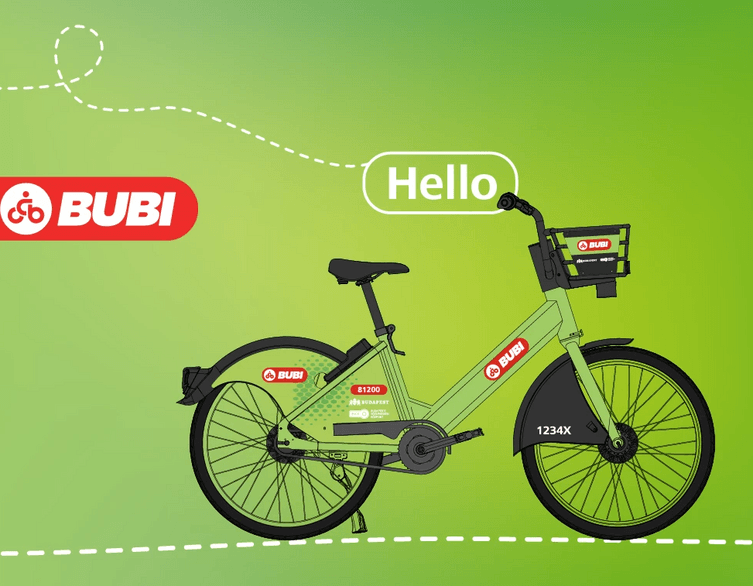
Budapest is getting ready for an exciting upgrade to one of its most useful and tourist-friendly transport services. The next generation of Bubi, the city’s public bike-sharing system, is moving into its final phase, and by June 2026 at the latest, visitors and locals alike will see a bigger, smarter, and more flexible network on the streets of the Hungarian capital. For tourists exploring Budapest, this means an even easier way to move between sights, parks, riverfronts, and neighbourhoods while enjoying the city at a slower, more local pace.
The familiar green bikes are temporarily disappearing from the streets as the system prepares for its relaunch, but the pause is part of a much larger transformation. Behind the scenes, the city is working on one of Hungary’s biggest micromobility developments, and the result will be Bubi 3.0: a redesigned bike-sharing system with at least 5,000 bikes, including 1,000 electric-assist bikes, a wider service area, and a new generation of micromobility points across Budapest.
A Bigger, Smarter Bubi for Budapest
Bubi has come a long way since its launch in 2014. What began as a pilot project has grown into a central part of Budapest’s transport network, and the latest version is designed to take that success much further. After a major refresh in 2021, the system expanded again and helped push total usage beyond 10 million lifetime rides by 2024. In 2025 alone, riders took more than 2.9 million trips, which shows just how deeply bike sharing has become part of everyday Budapest life.
Now the system is being rebuilt with a much broader vision. The initial rollout of Bubi 3.0 will include around 3,300 bicycles, and the fleet is expected to grow to 5,000 within the first year. Longer term, the city wants the system to reach as many as 8,000 vehicles if demand supports it. For tourists, that means better availability, wider coverage, and a much better chance of finding a bike near the places they want to visit.
Best deals of Budapest








This expansion matters because it will also push Bubi into parts of the city that were previously outside the network. The service area is expected to grow by up to 40 square kilometres, effectively doubling the size of the previous system. That should make bike sharing more practical not only for residents but also for visitors staying outside the most central districts.
What Will Change for Users
The most visible change in Bubi 3.0 will be the arrival of electric-assist bikes. That is a meaningful step for Budapest, especially for tourists who want a little extra help on longer routes or hillier stretches of the city. E-bikes make it easier to combine sightseeing with movement, especially if you are heading across the Danube, toward larger parks, or through parts of the city where you do not want to arrive tired.
The system is also becoming much more flexible in how it works. Instead of relying only on rigid dock-based stations, Bubi 3.0 will use a broader mix of virtual stations and the city’s Mobi Points, which are designated public spaces for shared mobility vehicles and private bikes. This is a practical improvement because it makes parking and pickup more convenient, and it helps integrate Bubi with the rest of Budapest’s transport ecosystem.
For tourists, this means a more natural experience. You will be able to use a bike in a way that feels closer to real city travel and less like a closed rental system. That is especially useful if you want to combine bike rides with metro, tram, or walking portions of your day.
Why Tourists Should Care
For visitors to Budapest, Bubi 3.0 is more than a transport upgrade. It is a way to experience the city in a more relaxed and immersive way. Cycling lets you move at street level, stop whenever you want, and discover neighbourhoods that might feel too far apart on foot but too interesting to skip entirely.
That is a big advantage in a city like Budapest, where some of the best experiences are spread across both sides of the river. You can ride from the historic centre to the banks of the Danube, explore Margaret Island, or move between cafés, baths, viewpoints, and parks without relying only on taxis or public transport. The new system is designed to support exactly that kind of flexible city exploration.
It also fits perfectly with Budapest’s growing reputation as a destination where sustainable travel is both easy and enjoyable. For environmentally conscious tourists, using Bubi is a simple way to reduce your footprint while still making the most of your stay.
A Better Fit for the City
One of the most interesting aspects of the new contract is its flexibility. Unlike older arrangements, the new model allows changes during the contract period, making it possible to introduce new features such as cargo bikes or child seats without restarting the whole process. That gives the system room to evolve with the city and with the needs of users.
The contract is also designed to respond to real demand. If ridership rises, the system can scale accordingly, which is important for a city service that needs to grow with popularity rather than stay frozen in one shape. In practice, that should help make the service more dependable over time, especially as more visitors and residents choose bikes over short car or taxi journeys.
This is one reason Bubi 3.0 feels like more than a cosmetic update. It is being built as a long-term mobility platform for Budapest, not just a new set of bikes on the street.
Exploring Budapest by Bike
For tourists, Budapest is especially well suited to bike exploration. The city is compact enough to make cycling practical, yet large and varied enough to make the ride interesting. A bike can be the easiest way to connect major attractions with less touristy neighbourhoods, or simply to enjoy the city’s riverside atmosphere at your own pace.
The new Bubi network should make that even easier. With more bikes, a larger service area, and better integration into Budapest’s mobility network, visitors will have a far more convenient way to discover the city. Whether you are heading to a museum, a thermal bath, a market, or a sunset ride along the Danube, Bubi 3.0 looks set to become one of the smartest ways to get around Budapest.
Related news
Budapest’s Beloved Bike-Share Is Getting a Major Upgrade: Meet the New Bubi 3.0
If you have ever spotted those cheerful green bicycles gliding through Budapest’s streets and thought about hopping on one, now is a very exciting...
Bringing Your Bike on Public Transport in Budapest: What Tourists Need to Know in 2026
Budapest is one of those cities that practically begs to be explored on two wheels. One minute you are cruising along the Danube with postcard views...

More Than 20,000 Cyclists Rolled Through Budapest at I Bike Budapest 2026
Budapest showed a different side of itself this weekend, as more than 20,000 cyclists took part in the I Bike Budapest parade on Saturday to draw...
Meet Manfred: Budapest’s New Bike-Sharing Service Filling the Gap Left by Bubi
If you’ve been planning a trip to Budapest and were counting on hopping on a city bike to explore the Hungarian capital, you might have noticed...
Budapest Builds New Covered Community Bike Storages Across the City
If you’ve ever explored Budapest by bike, you know the freedom it offers — gliding past the Danube, pausing at cafés, and discovering corners...