The Last Cargo: A 1,500-Year-Old Shipwreck Comes to Life in Budapest
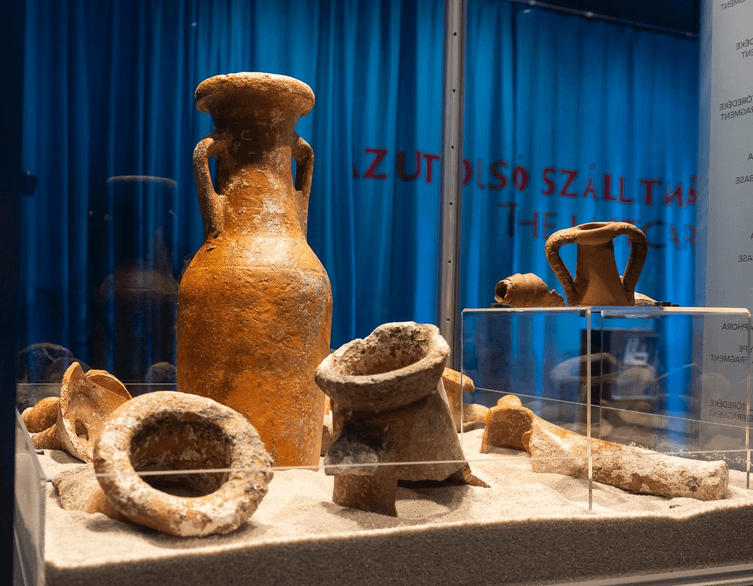
Somewhere beneath the warm waters off the Croatian coast, a merchant ship met its end in the mid-5th century AD. Caught in a violent storm near the southern shores of Istria, the vessel sank to the seabed with its cargo carefully stowed in the hold — and there it remained, largely undisturbed, for over fifteen centuries. This summer and autumn, the story of that final voyage is being told in one of Budapest’s most fascinating museum exhibitions, and if you’re visiting the Hungarian capital between now and late October, it deserves a spot on your itinerary.
Where to Find the Exhibition
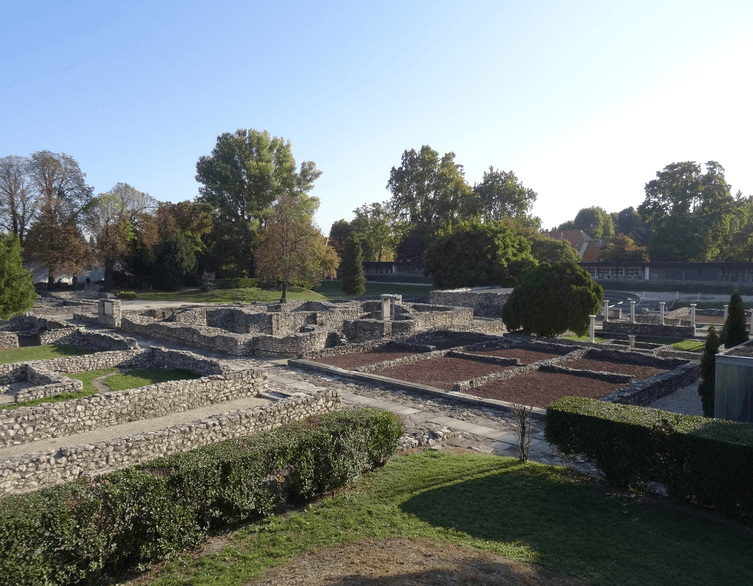
The temporary exhibition, titled The Last Cargo: A Late Antique Shipwreck from Piruzi and the Trade Connections of Aquincum, opened on June 11, 2026, at the Aquincum Museum, part of the Budapest History Museum (BTM). It runs until October 25, 2026, and is housed in the museum’s so-called “Two-Pillar” exhibition building within the Aquincum archaeological complex in the Óbuda district on the Buda side of the city. Admission is included with the museum’s general entry, and the site itself — the extensive ruins of the Roman city of Aquincum — is well worth exploring before or after you visit the show.
The Discovery That Started It All
In 2011, underwater archaeologists from the International Centre for Underwater Archaeology in Zadar (MCPA) were diving between the small islands of Veliki and Mali Piruzi off the Croatian coast when they came across a remarkable concentration of ancient artifacts lying just six meters below the surface. What followed was five years of meticulous underwater excavation, sample analysis, and documentation that gradually revealed the full picture: a medium-sized commercial vessel, estimated at roughly 10 to 18 meters long and 4 to 6 meters wide, had sunk here in the middle of the 5th century AD with its cargo still intact.
The international curatorial team behind the Budapest exhibition — including Dr. Luka Bekić, Maja Kaleb, and Roko Surić from the Zadar centre, alongside Dr. Orsolya Láng from the Aquincum Museum and Dr. János Attila Tóth from the Árpád Museum — has done extraordinary work reconstructing the ship’s final journey and contextualizing it within the turbulent world of late antiquity.
A Journey Across the Ancient Mediterranean
The story the artifacts tell is a compelling one. The ship set out from the North African provinces, most likely from the territory of present-day Tunisia, carrying amphorae — the large ceramic containers used to transport wine, olive oil, grain, and other goods across the Roman world. It made a stop at the island of Pantelleria, where additional vessels and lids were taken on board, then continued along the southern coast of Sicily, past the ports of southern Italy and through the Ionian Sea before heading north along the eastern Adriatic coast. It never completed that final leg. A fierce storm drove it onto the rocks near Istria, and the Veliki Piruzi island became its permanent resting place.
Best deals of Budapest








What makes this wreck especially poignant is its timing. The mid-5th century AD was one of the most turbulent periods in European history. The Western Roman Empire was crumbling under the pressure of economic crisis, political instability, and relentless incursions from migrating peoples along its northern frontiers. The North African provinces remained relatively stable and continued to produce enormous quantities of food — grain, wine, olive oil — that the empire’s European heartland desperately needed. The Piruzi ship was part of that lifeline, one of the last documented links in a supply chain that was rapidly becoming impossible to sustain. Within decades of this vessel sinking, the political collapse of the Western Empire would sever the Pannonian region from the Mediterranean world for centuries.
What You’ll Actually See
The exhibition brings together the salvaged cargo from the Piruzi wreck alongside specially selected pieces from the Aquincum Museum’s own collection, creating a dialogue between the seabed find and the Roman city that once stood where Budapest now sits. Among the highlights are rare North African amphorae rarely seen in Hungarian collections, a Roman octopus trap recovered from the seafloor, and a remarkable ancient depth sounder — a navigational instrument that gives a vivid sense of how Roman sailors managed the practical challenges of open-water travel. A working replica of the depth sounder is on display and can actually be tried out by visitors, which makes the exhibition particularly engaging for curious minds of all ages.
The Aquincum Museum has also contributed one of its own prized objects: an exceptionally well-preserved ancient wooden barrel, a rare survival given how rarely organic materials make it through fifteen centuries. Together, these objects paint a surprisingly detailed portrait of the economic networks that kept Roman Pannonia connected to the wider Mediterranean world.
Why This Exhibition Matters for Budapest Visitors
It’s easy to think of Budapest as a Central European city with a medieval castle and Ottoman-era baths — and it is all of those things — but Aquincum reminds visitors that this was also a major Roman city, the capital of the province of Lower Pannonia, with deep trade connections stretching all the way to North Africa and the eastern Mediterranean. The Piruzi exhibition makes those connections tangible in a way that dry historical narratives rarely can. Standing in front of an amphora that was loaded onto a ship in Tunisia, survived a Mediterranean crossing, and then sank off the Croatian coast before being raised from the seabed and brought to Budapest, you feel the full sweep of ancient history in a surprisingly immediate way.
The exhibition was opened by Dr. Mladen Andrlić, the Croatian Ambassador to Hungary, and Dr. László Csorba, Director General of the Budapest History Museum — a fitting reflection of the international collaboration that made the project possible.
Planning Your Visit
The Aquincum Museum is located in the Óbuda district (District III), easily reachable by the suburban railway HÉV from Batthyány Square in central Buda. The site includes extensive open-air Roman ruins as well as the museum buildings, so allow at least two to three hours for a proper visit. The temporary exhibition runs until October 25, 2026, so whether you’re visiting in the summer heat or during Budapest’s gorgeous golden autumn, there’s still time to catch it.
Related attractions
Related news
Beat the Heat: Budapest’s Best Indoor Exhibitions to Explore in August
August in Budapest means golden light on the Danube, packed rooftop bars, and a heat that can make even the most enthusiastic sightseer start dreaming...
History Awaits: Budapest’s Best Museum Exhibitions This Summer
Summer in Budapest can be a bit tricky weather-wise, with sudden thunderstorms rolling in just as often as heat waves, but the good news is that...