Fény/Törés: A New Look at Hungary’s Jagiellonian Age at the Hungarian National Museum
A major new exhibition opens at the Hungarian National Museum on 24 November 2026 and runs until 4 April 2027. It offers a fresh take on a period many visitors know only as the prelude to national tragedy.
Two Warriors Roam Budapest
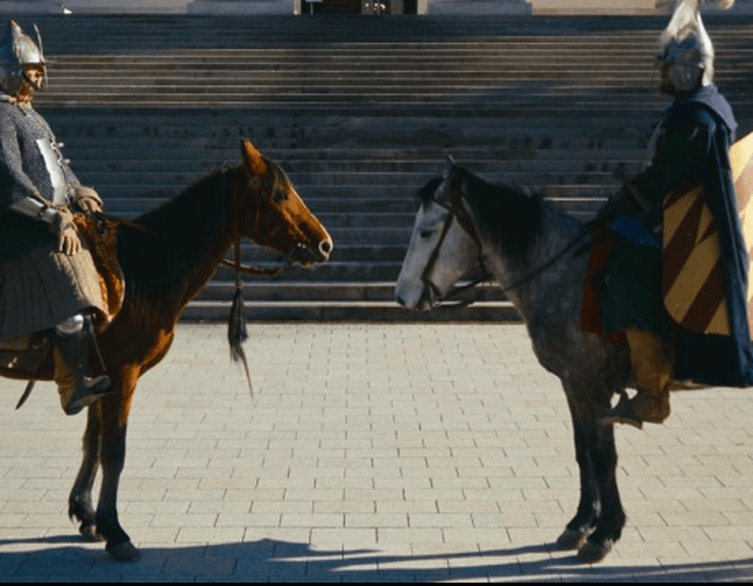
Before you even step inside, the museum has teased the exhibition with a video on its social media. In the epic Reels clip, an Ottoman sipahi cavalryman strides down Rákóczi Road, while a 16th-century Hungarian hussar crosses Liberty Bridge. Both seem to be searching for something, and their paths finally meet in front of the museum. The question the two warriors are chasing is the one the exhibition sets out to answer. It’s a fun, cinematic way to see the city’s familiar streets through the eyes of the early 16th century, and it’s worth a watch before your visit.
Two Warriors Roam Budapest
What Is the Fény/Törés Exhibition?
Ask most Hungarians about the decades between King Matthias and the Battle of Mohács in 1526, and you’ll hear a story of weakness and decline. “Fény/Törés – The Jagiellonians until Mohács (1490–1526)” sets out to challenge that view. The title plays on words: “fény” means light and “törés” means break or refraction. It hints at a bright, flourishing age that ended in rupture.
The show is part of the museum’s 225th birthday celebrations. It presents a Hungary that was economically thriving, culturally vibrant and closely woven into the European mainstream. The organisers argue that the defeat at Mohács did not come from internal decay. In their telling, it was the tragic result of European power relations that changed radically in the early 16th century.
Best deals of Budapest







To make the case, the museum has gathered 330 objects on loan from 53 Hungarian and international institutions. Everything is displayed in the museum’s Palatine Joseph Halls.
Highlights You Shouldn’t Miss
Several pieces are rarely seen in Hungary, and some have never been shown here at all. Among them is the childhood armour of King Louis II, lent by the Kunsthistorisches Museum in Vienna. There is also a ceremonial sword that Pope Julius II gave to King Vladislaus II, restored for the exhibition. A portrait of Louis II that has never before been seen in Hungary will be on show too.
Fashion and jewellery lovers will enjoy the garments attributed to Queen Mary. They include a green silk damask dress that tradition holds to be her wedding gown, along with a chemise and a diamond-set gold ring. The museum bought the dress in 1928 from the pilgrimage site of Mariazell in Austria.
Art and church history fans can look forward to restored, previously unseen parts of the Nyírbátor choir stalls. Other works recall the patronage of Cardinal Archbishop Tamás Bakócz, including devotional objects and chalices. A mysterious treasure hoard of ornate clasps adds intrigue. Some pieces turned up in Budapest in the late 19th century, while others were found near Likava Castle in present-day Slovakia.
Gothic, Renaissance and Global Trade
The exhibition suggests that Gothic and Renaissance styles did not simply replace one another. They lived side by side and enriched each other, and this was especially visible in Hungary at the time.
It also shows how important the Kingdom of Hungary was economically. It supplied a large share of Europe’s precious metals, with mines run on the capital of the Fugger family and the expertise of the Thurzó family. One of the most surprising stories involves copper from Banská Bystrica (Besztercebánya). Cargo from a ship wrecked off the coast of Namibia shows that Hungarian raw materials travelled as far as India. Hungary was no backwater. It was a key hub of raw materials and capital in the early modern world economy.
The Road to Mohács
The final sections turn to the shadow of the Ottoman Empire. The fall of Belgrade (Nándorfehérvár) in 1521 dealt a fatal blow to the country’s defences. The tragedy of 1526 is recalled through weapons, period leaflets, interactive installations and relics of those who fell.
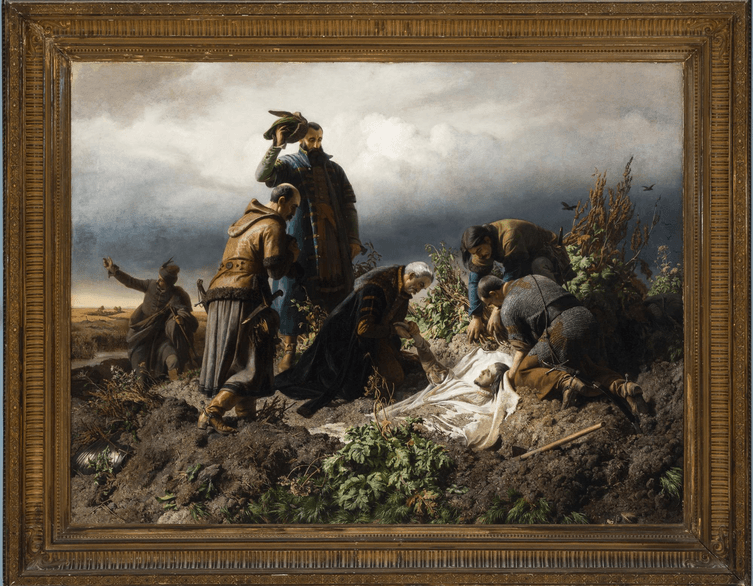
The closing part looks at how the battle has been remembered. It traces the cult of Louis II, which his widow, Queen Mary, began and 19th-century painting later lifted into the national pantheon. This includes Bertalan Székely’s famous painting, The Discovery of the Body of Louis II.
Planning Your Visit
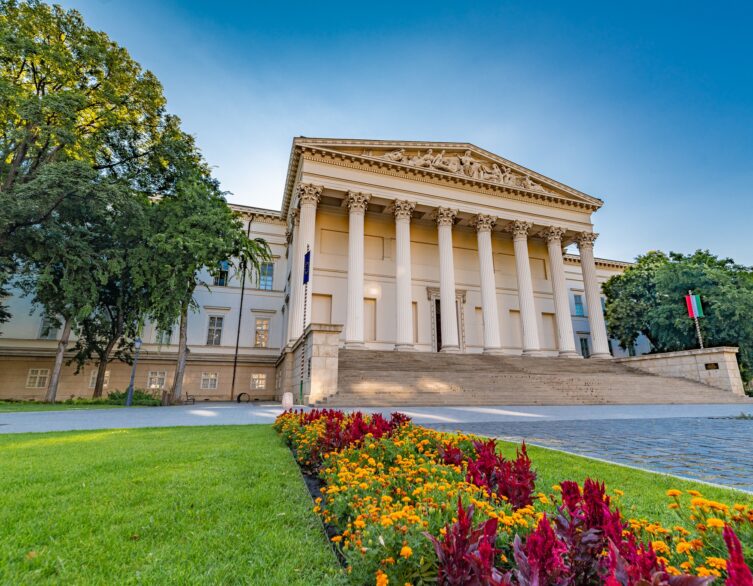
The Hungarian National Museum stands at Múzeum körút 14–16, in the heart of downtown Budapest (District VIII, 1088). It is only a 3–5 minute walk from Kálvin tér, so it is easy to reach by public transport. Metro lines M3 and M4 stop at Kálvin tér, and line M2 stops at Astoria. Trams 47, 48 and 49 also stop at Kálvin tér. Buses 9 and 15 go to Kálvin tér, while buses 5, 7, 8, 107, 110 and 112 go to Astoria.
If you’re driving, note that the museum has no car park of its own. The nearby underground garage at Pollack Mihály tér is the recommended option.
The museum is open Tuesday to Sunday, 10:00–18:00, and closed on Mondays. The ticket office closes at 17:00, and galleries begin to close at 17:30, so arrive in good time. With more than 300 objects on display, set aside at least an hour and a half to two hours. Before you go, check the museum’s website for holiday opening hours and current ticket prices.
Make a Winter Day of It
This exhibition is a great choice for a grey winter weekend, especially if you like spectacular artefacts as much as history. Afterwards, stroll through the museum garden or warm up in one of the cafés in the surrounding downtown streets.
Fény/Törés runs from 24 November 2026 to 4 April 2027 in the Palatine Joseph Halls of the Hungarian National Museum, Múzeum körút 14–16, Budapest.
Related events
Related attractions