Why Budapest Is One of the Best Cities in the World to Work Remotely

If you’re planning a trip to Budapest and thinking about stretching it into a few weeks of working while you travel, you’re onto something. The Hungarian capital has just landed the sixth spot on the IWG Work from Anywhere Index for 2026, confirming what a growing number of digital nomads and remote workers already suspected: this city is built for combining a laptop and a suitcase.
What the Ranking Actually Measures
The IWG index, now in its fourth year, doesn’t just look at pretty skylines. It scores cities on climate, broadband quality, accommodation options, transport links, food and culture, and the availability of flexible workspaces suited to people who don’t want to be chained to a single desk. This year, Bangkok took the top spot thanks to its low cost of living and lively international scene, followed by Tokyo in second and Barcelona in third. Rounding out the global top ten are Porto, Vancouver, Budapest in sixth, Naples, Medellín, Lisbon, and Seoul.
A separate ranking from the accommodation platform Holidu, which evaluated 147 cities worldwide using ten criteria including average wifi speed, number of coworking spaces, taxi and rental costs, coffee and beer prices, annual sunshine hours, and social media buzz, placed Budapest even higher: sixth in the world and third in Europe, right behind Lisbon and Barcelona. Interestingly, Budapest didn’t top any single category, but it scored consistently well across almost all of them, with its nightlife and infrastructure standing out as particular strengths.
Why Remote Work Travel Is Booming
This isn’t a niche trend anymore. According to IWG’s research, more than half of employees, 51 percent, now work for a company that supports flexible working, and 90 percent of them say it has improved their work-life balance, while 80 percent feel more productive because of it. The shift is even influencing job decisions: eight out of ten respondents say flexible work options make a job offer more attractive, and 62 percent would consider switching employers for better work-from-anywhere conditions.
Best deals of Budapest










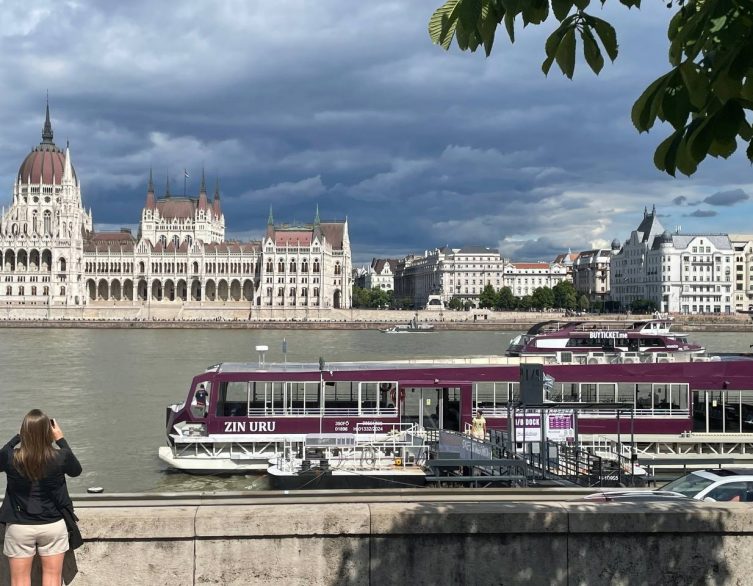
Nearly half of workers surveyed, 48 percent, say they plan to extend a holiday or short break in 2026 by working remotely from their destination. This is already happening in practice, with 43 percent having worked while traveling without taking formal leave, and 46 percent saying they’re more likely to do so than they were last year. The main motivations are avoiding burnout and protecting work-life balance, cited by 54 percent, spending more time with family and friends, mentioned by 53 percent, and making more efficient use of limited vacation days, noted by 52 percent. Rising living costs are part of the equation too, with 51 percent saying they’d be more likely to work during a trip specifically to make that trip longer and more affordable.
Mark Dixon, founder and CEO of IWG, summed up the shift well, noting that hybrid work and digital technology now let people work effectively from almost anywhere, whether that’s a local flexible workspace or a coworking hub on the other side of the world, and that companies increasingly recognize flexible work boosts both satisfaction and productivity.
What Makes Budapest Work So Well
Reliable internet remains the single biggest factor travelers weigh when picking a workcation destination, cited by 38 percent of respondents, followed by quality accommodation, food, and transport, each mentioned by around 12 percent. Budapest checks these boxes convincingly. The city offers a median download speed of around 46 Mbps, dozens of coworking spaces clustered mainly in the District VI, VII, and IX neighborhoods, and close to a thousand cafés where you can just as easily open a laptop as order a coffee.
Popular coworking spots include Kaptár, one of the city’s original and most beloved spaces right in the city center, known for its bright, design-forward interior and buzzing community events. Impact Hub Budapest, part of a global network, draws a socially minded crowd of entrepreneurs and creatives, while Loffice blends workspace with art and cultural programming across several locations. Hot desks typically run from around 4,500 to 10,000 forints a day, making it easy to test out a few spaces before settling on a favorite.
Add in Budapest’s famously affordable living costs, its extensive public transport network, its thermal baths for weekend recovery, and a food and nightlife scene that punches well above its weight, and it’s easy to see why remote workers keep coming back. Whether you’re here for a week of sightseeing or a month of laptop-and-latte mornings followed by Danube sunset walks, Budapest offers a rare mix of productivity and pleasure that’s hard to find elsewhere in Europe.
Related news

Dance the Night Away in Budapest This Late Summer
Budapest doesn’t slow down as summer winds toward its final weeks, it just changes rhythm. From salsa on a floating stage beside a fairy-tale...

Budapest’s Late-Summer Sports Calendar Is On Fire
Forget everything you thought you knew about a quiet Budapest getaway. Late August through mid-October 2026 turns the Hungarian capital into a full-blown...

Budapest Ranked Third Best City in Europe for Digital Nomads — And It’s Easy to See Why
Budapest has just landed on yet another must-visit list, and this time it’s not for its thermal baths or ruin bars — though those certainly...
How Budapest Dethroned Europe’s Digital Nomad Capitals
Walk through the tree-lined streets around Szent István Park or along the bustling Bartók Béla Avenue in Újbuda on any given afternoon, and you’ll...
Budapest: The Digital Nomad’s New European Capital
Welcome to the Future of Work Imagine waking up in a city where your office could be a sunlit café, a riverside coworking space, or even a historic...