Budapest’s Downtown Parking Lot Is Finally Becoming a Real Park
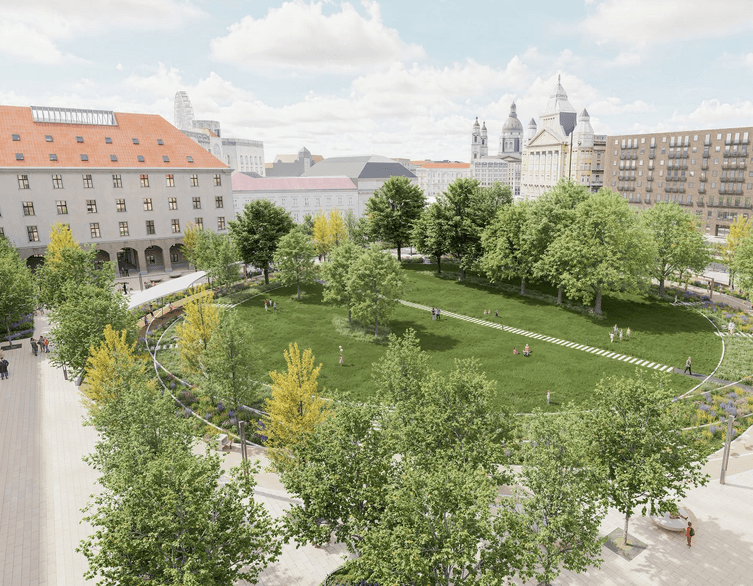
For decades, one of the most valuable pieces of real estate in downtown Budapest sat locked away behind a fence, serving no one but a handful of municipal cars. That’s about to change. City Hall Park, known locally as Városháza Park, has just received its final heritage protection permit, clearing the way for construction of what officials are calling Budapest’s new main square.
From Hidden Parking Pit to Public Green Space
If you’ve wandered around Deák Ferenc Square in recent years, you may have walked right past the courtyard without realizing what it used to be. For decades, this patch of land in the heart of the Inner City functioned as an office parking lot, a sunken, lifeless space where almost nothing green could grow. Budapest’s Mayor Gergely Karácsony has described first viewing the site from a ladder years ago, since the enclosed area couldn’t be seen any other way.
Turning that gray pit into a proper park has taken far longer than anyone hoped, largely because planning, public consultation, procurement, and project preparation are inherently slow processes, and state-level bureaucracy did little to speed things along. Before construction could even begin, the city first had to repair the badly deteriorated façade of the City Hall building itself and reopen the long-shuttered Merlin Theatre, both prerequisites for the larger transformation.
A Climate-Smart Park for a Warming City
Anyone who has walked through Budapest’s densely built downtown streets during a summer heatwave knows exactly why this project matters. Paved, built-up areas trap and radiate heat far more intensely than green spaces, a phenomenon experts call the urban heat island effect. Even a modest patch of trees and grass can noticeably cool the surrounding air, and City Hall Park has been designed with exactly that challenge in mind.
The finished park will include roughly 7,730 square meters of planned green space, paired with 6,966 square meters of rainwater-collecting paving and 850 square meters of permeable surfacing, all part of a so-called sponge city approach that lets the park absorb and reuse rainwater rather than letting it run straight into the sewer system. Eighty trees, planted using the Stockholm method to maximize root health and longevity, will eventually provide substantial shade, complemented by a wide variety of perennial plantings designed for long-term climate resilience.
Best deals of Budapest









City Hall Opens Its Doors to the Public
One of the most exciting parts of the plan goes beyond landscaping. The project includes what’s being called the Open City Hall concept, which will transform the ground floor of the City Hall building itself, opening it up and making it walkable for the public rather than closed off to city business alone. A key piece of this is the planned renovation of the Ratskeller, the enormous underground hall beneath City Hall’s ceremonial chamber, which will be revived to house cozy cafés, terraces, and other hospitality venues.
Once completed, the space is meant to function as far more than a typical public park. City officials envision it becoming the city’s new central square, a genuine meeting point in a part of downtown that currently has the lowest amount of green space per resident anywhere in Budapest.
Part of a Bigger Push for Healthier Streets
City Hall Park isn’t an isolated project. It fits into a much larger initiative this municipal term called Healthy Streets, one of the city administration’s largest current undertakings, which is redesigning 23 locations across 12 different districts of Budapest to be more pedestrian-friendly. Where possible, crews are breaking up asphalt, planting trees, installing benches and drinking fountains, expanding green coverage, and reducing car traffic, with the goal of making streets genuinely pleasant places to walk and linger rather than just corridors for getting from one place to another.
The Healthy Streets concept originated in London and evaluates streets against ten different criteria for how people-centered they are, intervening wherever improvements are needed. Participating districts are funding their share of this work through a 25 billion forint grant awarded by the City of Budapest, with the full rollout expected to continue through 2029.
What This Means for Visitors
For tourists exploring downtown Budapest, this transformation is genuinely good news. Once finished, City Hall Park will sit just steps from Deák Ferenc Square, one of the city’s busiest transit hubs and already a gateway to shopping streets, cafés, and nightlife. A shaded, walkable green square with outdoor seating and access to a historic building’s newly opened ground floor adds a fresh, relaxing stop to any downtown itinerary, especially valuable during Budapest’s increasingly hot summers. While construction timelines for major European infrastructure projects can shift, the completion of the permitting process marks a real turning point after years of delays, and travelers visiting the Hungarian capital in the coming seasons may get to watch one of downtown’s most anticipated public spaces come to life.
Related news

Watch the Skies, Not Just the Streets: Why Budapest’s Parks Come With a Summer Warning This Year
Budapest is having one of its hottest, driest summers in recent memory, and the city’s beloved green spaces are feeling the strain in a way...
Westend Goes Green: Budapest’s Biggest Rooftop Solar Park Opens Above One of the City’s Favorite Malls
If you’ve ever browsed the shops at Westend Shopping Center in Budapest, you might not realize that just above your head now sits the city’s...
City Park Budapest Is Getting a New Lease of Life: Fences Down, Cars Out, Green Space Back
Something significant is happening in one of Budapest’s most beloved — and most contested — green spaces. City Park, known locally as Városliget,...
Budapest’s Sponge City Initiative: A Sustainable Approach to Urban Water Management
In the heart of Hungary, Budapest is embracing an innovative approach to urban water management known as the “Sponge City” concept. This...
Related events