The Liszt Fest International Cultural Festival Returns to Budapest this Fall
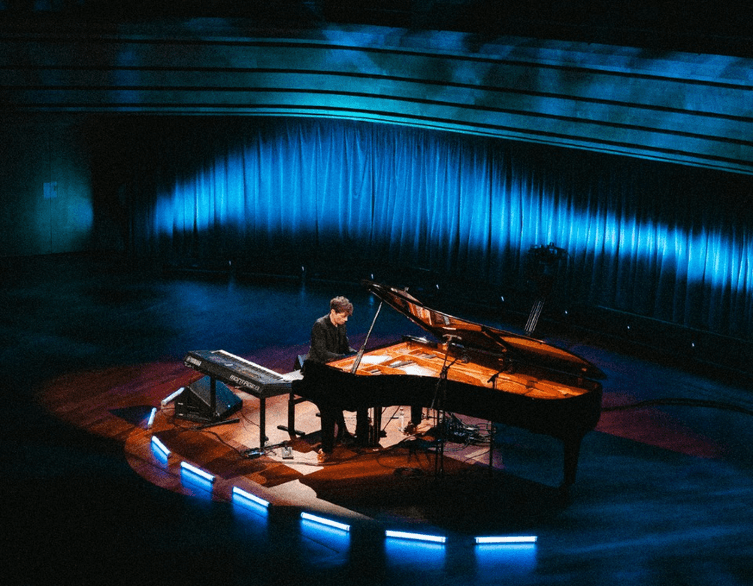
If you’re planning a trip to Budapest in autumn, you’re in for a treat that goes well beyond the golden light and cooling temperatures. October brings with it one of the Hungarian capital’s most ambitious and wide-ranging cultural events: the Liszt Fest International Cultural Festival, a multi-week program that takes the uncompromising artistic spirit of Franz Liszt as its founding principle and runs with it in every possible direction. Now in its sixth edition, the festival has grown into something genuinely extraordinary — a collision of world-class orchestras, experimental dance, electronic music, folk traditions, and literary encounters that together make a compelling case for Budapest as one of Europe’s great cultural capitals.
Who Was Liszt, and Why Does Budapest Celebrate Him?
Franz Liszt (1811–1886) was one of the most transformative figures in the history of Western music — a pianist of almost supernatural ability, a composer who invented entirely new forms, and a personality so larger-than-life that he is often credited as the world’s first pop star. Born in Hungary, he maintained a deep connection to his homeland throughout his life, spending his final decades between Budapest, Weimar, and Rome, and founding the Budapest Academy of Music that still bears his name. The Liszt Fest International Cultural Festival, established in 2021 to mark the 210th anniversary of Liszt’s birth, was built around the values that defined his career: refusal to compromise, elevation of art above all else, and a restless curiosity that pushed across every genre boundary he encountered. The festival’s October timing is no coincidence — Liszt was born on October 22, and the closing concert each year falls on his birthday.
Orchestras That Don’t Often Come to Budapest
One of the most exciting aspects of this year’s Liszt Fest is the caliber of international ensembles making the journey to Budapest, some of them returning after very long absences. The NDR Elbphilharmonie Orchestra — the resident ensemble of Hamburg’s iconic Elbphilharmonie concert hall and one of Germany’s foremost symphonic institutions — arrives on October 21 under its principal conductor Alan Gilbert. The program pairs Liszt and Ravel with Brahms’ monumental Second Piano Concerto, performed by Norwegian pianist Leif Ove Andsnes, one of the most admired and thoughtful keyboard artists working today. The concert takes place at the Béla Bartók National Concert Hall, Budapest’s largest and most acoustically refined venue.
Even more anticipated, perhaps, is the return of The Cleveland Orchestra on October 13 — a visit that comes after more than twenty years away from Budapest’s stages. The New York Times once called it simply “the best” orchestra in America, and its history has a particular resonance in Hungary: legendary conductors of Hungarian heritage, including George Szell and Christoph von Dohnányi, shaped the ensemble’s distinctive sound over decades. Their legacy is now carried by Austrian conductor Franz Welser-Möst, who has led the orchestra for an extraordinary twenty-four years and will step down at the end of the 2026–2027 season. His farewell tour program — featuring Martinů, Brahms’ Second Symphony, and Liszt’s symphonic poem Orpheus — promises to be a deeply felt occasion.
Best deals of Budapest










A Requiem from the Caucasus
Among the Liszt Fest’s most intriguing premieres in Budapest is the performance of Georgian composer and conductor Vakhtang Kakhidze’s Requiem on October 17, a work completed in 2021 after years of composition and dedicated to his father, the legendary conductor Jansug Kakhidze. What makes this Requiem unlike anything else on the festival program is its musical language: Kakhidze has woven the polyphonic traditions of Georgian folk song into the architecture of the Western classical requiem, creating something that feels both ancient and entirely contemporary. The performance will feature the Rustavi Ensemble, one of the most important exponents of traditional Georgian polyphonic singing in the world — a UNESCO-recognized art form that has survived centuries of history and remains strikingly alive. This is a rare opportunity to hear something genuinely unfamiliar, performed by artists who carry it in their bones.
Liszt’s Own Music, Heard Afresh
For visitors curious about Liszt’s actual compositional legacy, the Liszt Fest offers several illuminating angles. The closing concert on October 22 — his birthday — features a full performance of his vast oratorio Christus, a work in which the young Liszt laid out his uncompromising vision for the future of sacred music, combining the theatrical grandeur of opera with the devotional depth of liturgy. Performed at the Palace of Arts (Müpa Budapest) with Hungarian, Austrian, Slovak, and Swiss soloists alongside the National Choir and the Pannon Philharmonics, conducted by Gergely Kesselyák, this will be a fittingly large-scale birthday tribute.
More intimate but equally fascinating is the October 19 evening with pianist Balázs Fülei and cimbalom player András Szalai, who present their debut program En Rêve — Liszt Inspirations at the Budapest Music Center. The concept is quietly radical: Liszt’s late piano works, already among his most introspective and harmonically adventurous compositions, rearranged for the unusual pairing of piano and cimbalom — the hammered dulcimer that sits at the heart of Hungarian folk music. It is exactly the kind of unexpected encounter that the Liszt Fest was designed to enable.
Dance, Electronics, and the Edges of the Program
The Liszt Fest International Cultural Festival is not a classical music event in any narrow sense, and some of its most memorable moments come from outside the concert hall entirely. The FrenÁk Company premieres its new piece FrenÉsie on October 10 and 11, a dance work built around an ambitious choreographic concept involving unstoppable physical vortices, futurist stage design, and a probing examination of the boundary between fantasy and lived reality. FrenÁk Pál is one of the most celebrated Hungarian-French choreographers working today, and his productions consistently push dance into genuinely unsettling territory.
On October 8, the House of Hungarian Music — itself one of Budapest’s most spectacular recent buildings, a Sou Fujimoto-designed structure in City Park with a roof pierced by hundreds of circular skylights — hosts Autechre, the British electronic duo that has been quietly reinventing the boundaries of dance music since 1987. Rob Brown and Sean Booth perform in their characteristic fashion: in total darkness, with no visual distraction whatsoever, letting the music occupy the entire space of your attention. If you have any interest in electronic music, this is a genuinely rare opportunity.
The Duna Arts Ensemble also premieres a new show at the Liszt Fest, Faces of the Roma — Romangi Faca, a performance celebrating the rich and diverse traditions of Roma culture from across the Carpathian Basin, created in collaboration with the Göncöl ensemble and performers Franciska Farkas, István Szilvási, Pákó Horváth, and Dominik Balogh. Rooted in poetry and visual art as much as music and dance, it promises warmth, passion, and genuine cultural depth.
When Literature Joins the Festival
The Liszt Fest has always understood that Liszt himself moved freely between music, literature, and ideas, and the festival honors that tradition by incorporating a full literary strand. On October 21, the festival pays tribute to composer László Tihanyi on the occasion of his 70th birthday, with a performance at Müpa’s Festival Theatre featuring his newest work, Iron Box (Vaskazetta), which draws on the secret love letters and writings of the beloved Hungarian author Ferenc Móra.
Between October 15 and 18, the Liszt Fest also hosts the Autumn Margó Literary Festival at the National Dance Theatre and the Millenáris cultural complex, bringing together some of the most exciting voices in contemporary world literature. International guests include Basque novelist Bernardo Atxaga, Icelandic author Steinunn Sigurðardóttir, and Spanish writer Beatriz Serrano, alongside major Hungarian literary figures. The Margó Prize winner for best debut prose, Marcsi Tóth — whose novel There’s a Forest Inside Me took a decade to write and won the award in 2025 — will also speak at Müpa about her book and her creative process.
Planning Your Visit
The Liszt Fest International Cultural Festival runs across multiple venues that are all worth knowing. Müpa Budapest (Palace of Arts) on the Pest bank of the Danube is the main hub, hosting the largest orchestral concerts and theatrical performances. The Liszt Academy of Music, Budapest’s most beautiful concert venue, may also feature in the program. The Budapest Music Center in the ninth district offers a more intimate setting for chamber events, while the House of Hungarian Music in City Park is the destination for the Autechre concert. Tickets for the major orchestral events — particularly The Cleveland Orchestra and the NDR Elbphilharmonie — are likely to go quickly, so booking well in advance is strongly recommended.
October is one of the finest months to be in Budapest: the summer crowds have thinned, the light is soft and golden, the city’s café culture shifts into a cozier register, and the cultural calendar is at its richest. The Liszt Fest International Cultural Festival sits at the center of all of that, offering two weeks of programming that would be remarkable in any city. In Budapest, with Liszt’s spirit still so present in the concert halls and conservatories he helped build, it feels entirely at home.
Dates: October 8–22, 2026
Main venue: Müpa Budapest (Palace of Arts), Komor Marcell utca 1, Budapest (District IX)
Tickets and full program: lisztunnep.hu
Related news
Best Classical Concerts in Budapest This Autumn 2026
Budapest in autumn has a way of turning the volume up on its cultural life. As the summer crowds thin out and the light along the Danube softens...
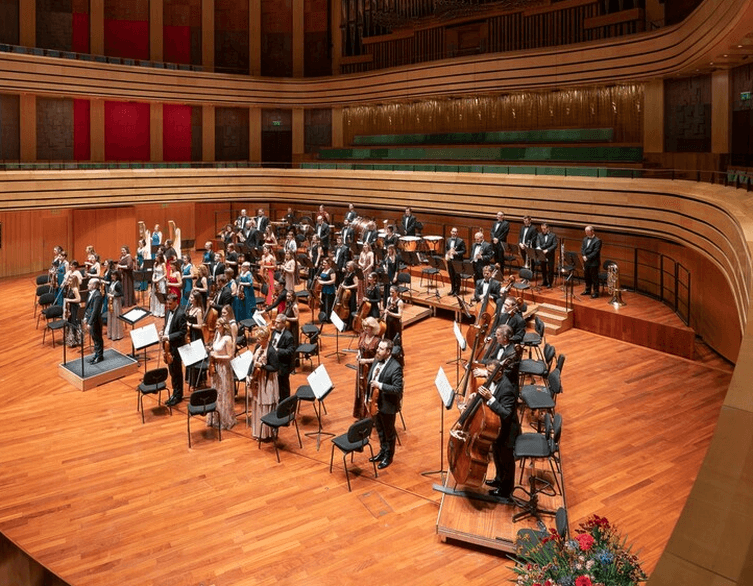
Two Weeks, One City, Zero Excuses: The Liszt Fest Is Back
Let’s be honest — Budapest in October barely needs an excuse to be magical. The city turns amber and gold, the thermal baths start feeling...
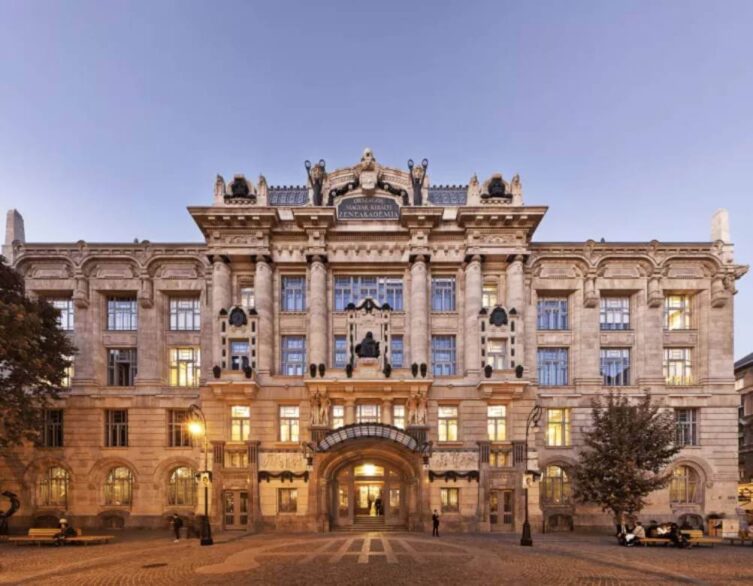
Liszt and Erkel’s Dream: The Budapest Academy of Music
Since it was World Music Day a few days ago, let’s take this opportunity to learn about the center of musical education in Hungary, specifically...