Iparkodjunk! LECHNER: The Pop-Up Exhibition That Could Save Budapest’s Most Beautiful Museum
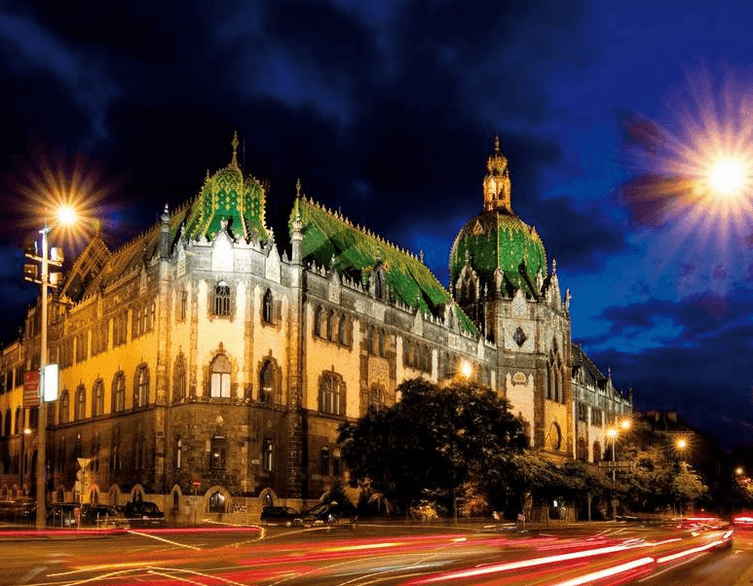
Budapest is full of architectural treasures, but few buildings carry as much drama, beauty, and controversy as the Museum of Applied Arts on Üllői Road. Designed by the visionary Hungarian architect Ödön Lechner and opened in 1896, this Art Nouveau masterpiece — with its dazzling Zsolnay ceramic roof and Ottoman-inspired dome — has been locked and largely silent since 2017. Now, a remarkable pop-up exhibition in one of the city’s most charming villas is bringing its story back into the spotlight, and it’s well worth a detour on your Budapest itinerary.
A Museum on Pause — and a City That Noticed
The Museum of Applied Arts (Iparművészeti Múzeum) closed its doors to the public nine years ago for a renovation that, by all accounts, never quite got off the ground. What was initially estimated at 25 billion forints and targeted for completion in 2022 ballooned into an unresolved saga, leaving one of Europe’s finest examples of Hungarian Art Nouveau slowly deteriorating behind scaffolding and locked gates. By autumn 2025, the frustration had reached a boiling point: museum staff, architects, heritage advocates, and hundreds of passionate citizens formed a human chain around the building — a dramatic public cry for action.
That grassroots pressure, organized under the banner of the “Phoenix Project” (Főnix Projekt) established in September 2025, appears to have made a real difference. Following a change in government, the newly formed Ministry of Transport and Investment and the Ministry of Social Relations and Culture made the museum’s reconstruction one of their very first shared priorities. To mark this renewed political commitment, the Iparkodjunk! LECHNER exhibition was assembled at record speed and opened on June 13, 2026.
Two Exhibitions, One Beautiful Villa
Before diving into the new pop-up show, it’s worth knowing that the György Ráth Villa is already a rewarding destination in its own right. The museum has been welcoming visitors here with its permanent collection exhibition, Our Art Nouveau (A mi szecessziónk), which showcases the finest pieces from the Museum of Applied Arts’ outstanding Art Nouveau collection. Think exquisite glasswork, ornate ceramics, and applied art objects that capture the full flowering of Hungary’s distinctive take on the movement — a style that was never merely decorative, but deeply rooted in national identity and folk traditions. If you have any love for the sinuous lines and organic forms of Art Nouveau, this permanent display alone makes the villa essential viewing.
The villa is open Tuesday through Sunday, 10 AM to 6 PM (closed on Mondays), so plan your visit accordingly.
What the Pop-Up Exhibition Brings
Now layered on top of this permanent offering is Iparkodjunk! — which roughly translates as “Let’s get to work!” or “Let’s get a move on!” The title says everything about the mood surrounding this show. On the villa’s upper floor, visitors encounter original furnishings, decorative ceramics, and artifacts from the main building on Üllői Road, alongside Lechner’s own original architectural drawings and historic photographs taken during the palace’s original construction. Monitors screen candid, unfiltered footage shot inside the building earlier this spring, offering a raw look at the current state of the interiors — crumbling plasterwork, faded grandeur, and all.
A Room Wallpapered in Plans
One of the exhibition’s most immersive spaces has been taken over by the architects at Vikár és Lukács Studio — the firm that won the international renovation competition back in 2013 — who have literally wallpapered an entire room with reconstruction plans, blueprints, and detailed documentation. For anyone curious about how a 19th-century architectural gem gets brought back to life, this room alone is worth the visit. Every question you could possibly have about what the future museum will look like, how the historic fabric will be preserved, and what the new extension along Hőgyes Endre Street will entail — the answers are pinned to the walls around you.
Best deals of Budapest







Made With Zero Budget, Full of Heart
Perhaps the most striking thing about this exhibition is how it came to exist at all. The Museum of Applied Arts received exactly zero forints from its supervising umbrella organization for its entire 2026 exhibition program — a fact the museum’s director-general, Zoltán Cselovszki, stated plainly at the opening ceremony. The institution operates under the Hungarian National Museum Public Collection Center, which controls a budget of 33 billion forints this year, none of which was allocated to the Applied Arts Museum’s programming.
So the team built the show anyway, with no money. The result — displayed on unrestored walls, atop worn plinths, using recycled display materials — accidentally mirrors the very building it celebrates. The graphic design studio Anagraphic and the Vikár és Lukács architectural firm contributed their work voluntarily, transforming budgetary hardship into an unexpectedly honest and poignant curatorial statement. There is something quietly radical about a zero-budget exhibition that manages to feel more alive and urgent than many lavishly funded shows.
Why This Matters for Visitors
For foreign tourists, the Iparkodjunk! LECHNER exhibition offers a rare double opportunity: a chance to learn about one of Budapest’s most celebrated architects and his extraordinary building, and a front-row seat to a living piece of the city’s cultural history unfolding in real time. Ödön Lechner (1845–1914) is to Hungarian architecture what Gaudí is to Barcelona — a singular talent who fused folk motifs, Eastern ornamental traditions, and modern construction techniques into something entirely his own. The Museum of Applied Arts was his crowning achievement, and understanding its story deepens any visit to Budapest considerably.
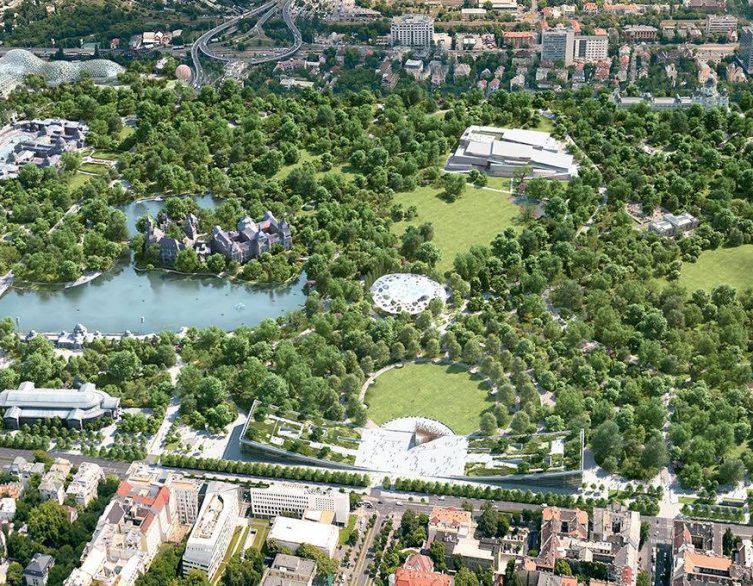
The György Ráth Villa is easy to reach from the city center, sits near the popular Városliget (City Park) area, and pairs naturally with visits to the nearby House of Terror, the Fine Arts Museum, or a stroll along Andrássy Avenue, a UNESCO World Heritage boulevard.
A Building Worth Waiting For
At the opening ceremony, state secretary Samu Szemerey put it plainly: “We will do everything in our power to get the museum — as a building and as an institution — back on track as soon as possible, in the best possible hands.” Whether those words translate into swift action remains to be seen; Budapest has heard renovation promises before. But the political momentum feels different this time, the civic energy around the building is real, and the exhibition itself makes a compelling case that this is a story with a happy ending still to be written.
If you visit Budapest this summer, make time for the György Ráth Villa. Between the gorgeous permanent Art Nouveau collection and the urgent, heartfelt story told by Iparkodjunk! LECHNER, you’ll leave knowing this city’s cultural soul a little better.
Where: György Ráth Villa, Városligeti fasor 12, Budapest (District VI)
Open: Tuesday–Sunday, 10 AM – 6 PM (closed Mondays)
Pop-up exhibition open from: June 13, 2026
Related attractions
Related news