Europe’s First Teen Synagogue Opens Its Doors in Budapest
Tucked away in a quiet courtyard in Budapest’s sixth district, a small, weathered building has just reopened after standing silent for more than a decade, and its rebirth is turning heads far beyond Hungary’s Jewish community. The historic Orthodox synagogue at Dessewffy utca 23 reopened in early September, this time as the new home of CTeen, a youth organization that makes it, by all accounts, the first synagogue in Europe run largely by and for teenagers. For visitors curious about Budapest’s layered Jewish heritage, this reopening adds a fascinating and very much alive chapter to a story that usually gets told through museums and memorial plaques.
From Horse Stable to House of Prayer
The building’s story begins in 1870, when a group mostly made up of Jewish porters and coachmen working near the nearby Western Railway Station decided they needed a place to pray during the day, in between shifts. These were the so-called “red-capped” porters, easily recognizable by their distinctive headwear, who spent their days carrying parcels and messages across the city and wanted somewhere close by to gather, study, and mark the rhythms of Jewish life. They pooled resources through a mutual aid association and bought a modest property tucked behind a row of houses on Dessewffy utca, a plot that had originally served as a horse stable. According to local lore, many of the porters carried the bricks for the new prayer house themselves after finishing their day jobs, a detail that gives the building an unusually working-class origin story compared to Budapest’s grander, more architecturally famous synagogues.
Following the medieval custom that a synagogue should not open directly onto the street, the building was tucked into a courtyard behind high firewalls, a layout that most Budapest synagogues eventually abandoned but which this one preserved. That’s part of why so few visitors ever stumble across it. Formal construction of the prayer hall itself didn’t happen until 1894, when master builder Károly Heinrich designed a two-nave hall supported by cast-iron columns, and the building was substantially expanded and remodeled in 1925 under the Bikur Cholim Society, a charitable association dedicated to visiting and supporting the sick. That renovation gave the synagogue its current Art Nouveau-meets-Art Deco facade, with arched openings, red brick cladding, and a raised pediment symbolizing the tablets of the Ten Commandments, while keeping the blue, gold, and white color scheme inside. A striking white Carrara marble Torah reading platform, donated in 1936, still stands at the heart of the sanctuary today.
A Building That Refused to Disappear
What makes the Dessewffy synagogue remarkable isn’t just its age but its resilience. Community elders recall that during the entire twentieth century, the building closed for only a single day, a Tuesday in 1956. It survived the Holocaust and decades of communist suppression, remaining one of Budapest’s key sites for Orthodox Jewish life even as the community around it shrank dramatically. A pivotal figure in keeping it alive was László Herczog, who served for decades as prayer leader, Torah reader, teacher, and effectively the building’s caretaker until his death in 2014, mentoring young people and running educational programs long before anyone spoke of a dedicated “youth synagogue.” By the late 2010s, though, the congregation had dwindled to the point where it struggled to gather the minimum quorum for services, the building fell into disrepair with water damage and structural problems, and it eventually closed its doors entirely.
That closure lasted more than ten years, until Gábor Keszler, president of the Hungarian Autonomous Orthodox Jewish Community, decided the building deserved a second life. When he first raised the idea of reopening a long-shuttered synagogue during what he describes as a genuinely difficult period for the community, some people questioned the timing. His response became something of a rallying cry for the whole project: a community doesn’t heal by having fewer places to pray in, it revives when it starts seeing its young people not as its future, but as part of its present.
Best deals of Budapest








The Reopening Ceremony
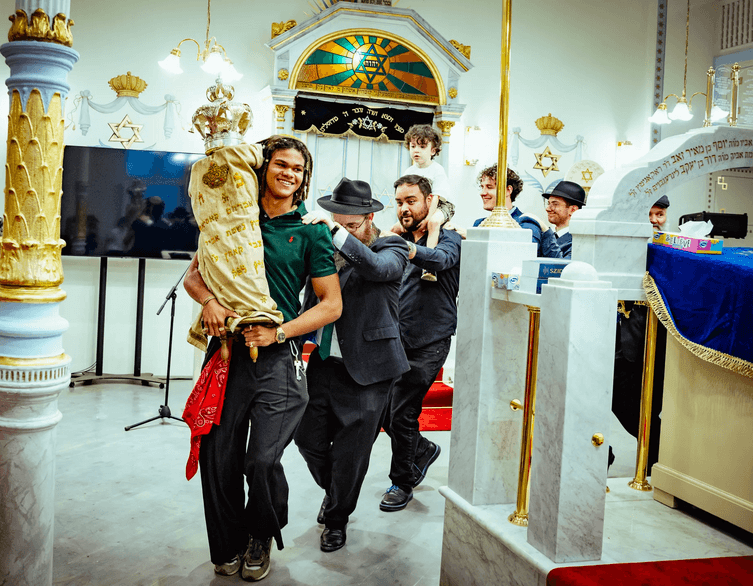
The synagogue formally reopened on the first Sunday of September, deliberately timed five days before Rosh Hashanah, the Jewish New Year, giving the celebration an extra layer of symbolic weight. The streets around Dessewffy and Hajós utca took on a genuine block-party atmosphere, with music, singing, and dancing accompanying a Torah scroll, dressed and crowned, as it was carried into the building under a wedding canopy by community leaders, CTeen youth, and a crowd of relatives, friends, and curious onlookers. That scroll wasn’t a new acquisition but the synagogue’s own original Torah, restored and repaired, finding its way back into the ark it had occupied decades earlier.
Rabbi Slomó Köves, head of the United Hungarian Jewish Congregation, spoke at the ceremony about the reopening fitting into his organization’s broader mission of bringing Jewish life back to abandoned or shuttered synagogues wherever there’s community demand for it. Rabbi Baruch Oberlander, who leads Chabad Lubavitch’s Orthodox rabbinate in Budapest and himself attended study sessions in this very building as a young man in the 1990s, offered a blessing built around the phrase “new year, new beginning, new synagogue.” Tamás Soproni, the mayor of Terézváros district, joined the ribbon-cutting alongside representatives of both participating Jewish communities, describing the moment as one where the district “got back a synagogue, a community space, and above all, a voice.”
Europe’s First Youth-Run Synagogue
What truly sets this reopening apart is the governance model. Every leadership position in the synagogue except the rabbi will be filled by people under the age of eighteen: there will be a teen president, a teen sexton, a teen ritual coordinator, and an elected youth board making real decisions about community life. This is the project of CTeen, an international Jewish teen network whose Hungarian branch was founded six years ago by Rabbi Tzemmy Bassman and his wife Sophie, who moved to Budapest from the United States to build it. Today the group’s weekly programming draws ninety to a hundred teenagers, and the Dessewffy building finally gives them a permanent home rather than a series of borrowed spaces. The weekly schedule includes Friday evening Kabbalat Shabbat services and dinners, Saturday evening Havdalah gatherings, and Sunday morning Shacharit prayers, alongside social, educational, and volunteer initiatives.
One of those initiatives deliberately revives a piece of the building’s own history. The synagogue once housed the Chevra Bikur Cholim, a society dedicated to visiting and aiding the sick, and CTeen’s teenagers are now reestablishing that tradition by preparing challah bread and food packages for elderly and vulnerable members of the community. It’s a nice full-circle touch: a building built by working-class porters looking after each other is now home to teenagers doing much the same thing for a new generation of neighbors in need.
Why It Matters for Visitors
For tourists exploring Budapest’s well-known Jewish Quarter around the Dohány Street Synagogue and Kazinczy Street, the Dessewffy synagogue offers something different: a smaller, quieter, deeply human counterpoint hidden away in Terézváros, a short walk from Andrássy Avenue and the Oktogon. It’s not set up as a tourist attraction and doesn’t run public admission the way the larger synagogues do, but its story is a compelling illustration of how Budapest’s Jewish heritage isn’t confined to grand nineteenth-century monuments; it also lives in modest courtyard buildings built brick by brick by porters and coachmen, and now carried forward by a new generation of teenagers determined to keep the lights on. Anyone with a serious interest in the city’s Jewish history, or in contemporary Jewish life more broadly, will find the story of “Dezső,” as locals affectionately call the building, one of the more moving footnotes to add to a Budapest itinerary this year.
Related attractions
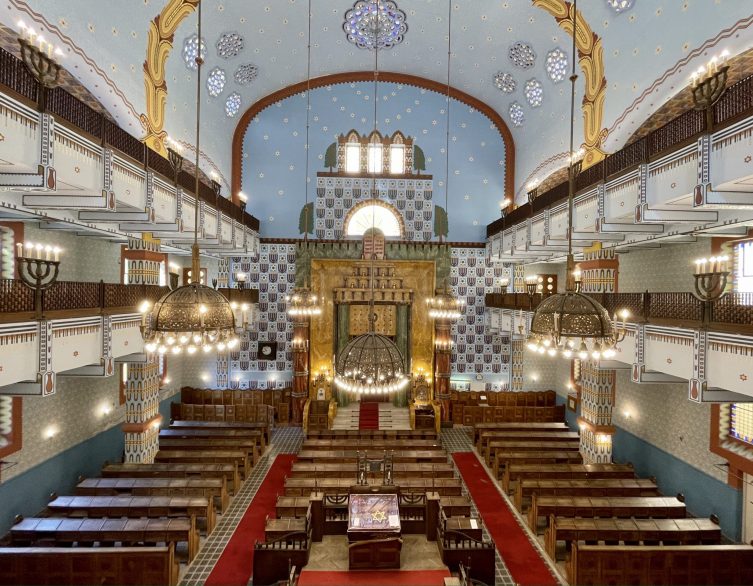
The Kazinczy Street Synagogue: The Center for the Orthodox Jewish Community
When visiting Budapest, one of the must-see attractions for foreign tourists is the Kazinczy Street Synagogue. This architectural marvel, built between...
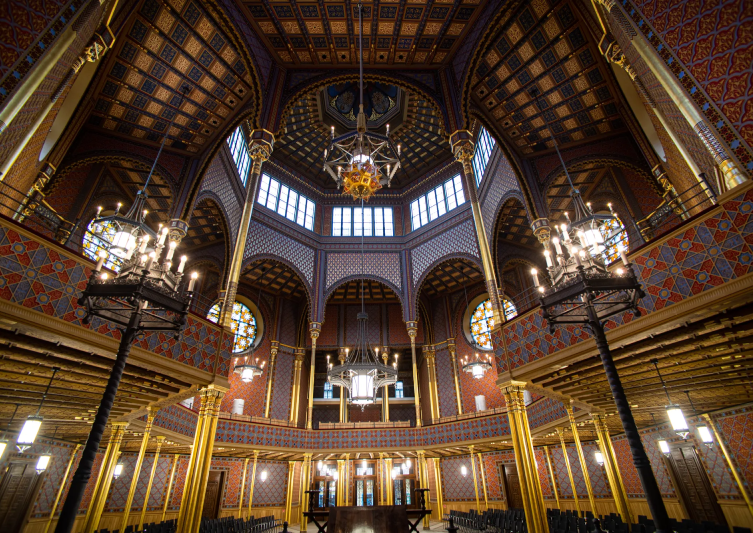
The Rumbach Street Synagogue: Discover The Restored Sacred Center
The Rumbach Street Synagogue, located in the heart of Budapest, is a stunning architectural masterpiece that showcases the genius of Austrian architect...
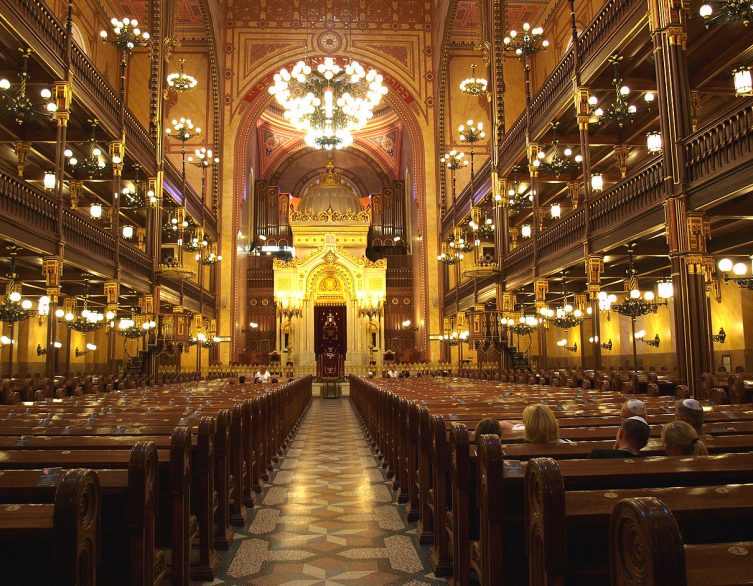
Dohány Street Synagogue: Budapest’s historic Jewish gem
The Dohány Street Synagogue, located in the heart of Pest, Budapest, stands as a monumental beacon of Jewish history and culture. Built in the 19th...