Two and a Half Nuclear Plants Are Hiding on Budapest’s Roof
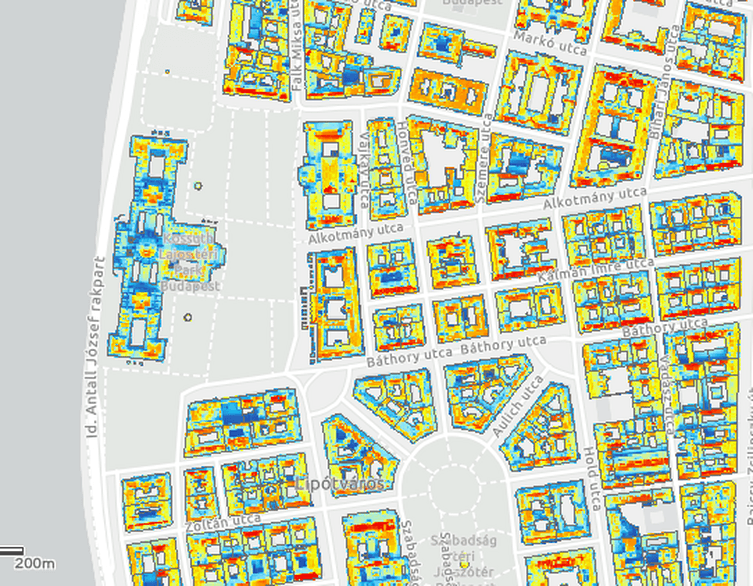
Here’s a fun thought experiment for your next visit to Budapest: nobody in their right mind is proposing to build a nuclear reactor in the middle of a UNESCO World Heritage skyline, wedged somewhere between the Fisherman’s Bastion and a Zara. And yet, without a single control rod or containment dome, Budapest’s rooftops are apparently sitting on enough potential solar power to outproduce two and a half Paks nuclear power plants, Hungary’s only nuclear facility. That’s roughly 5,000 megawatts of theoretical capacity, quietly baking in the sun above the goulash and the gothic spires, waiting for someone to notice. And this summer, timing being everything, Hungary suddenly had every reason to notice.
Why Everyone’s Suddenly Talking About This
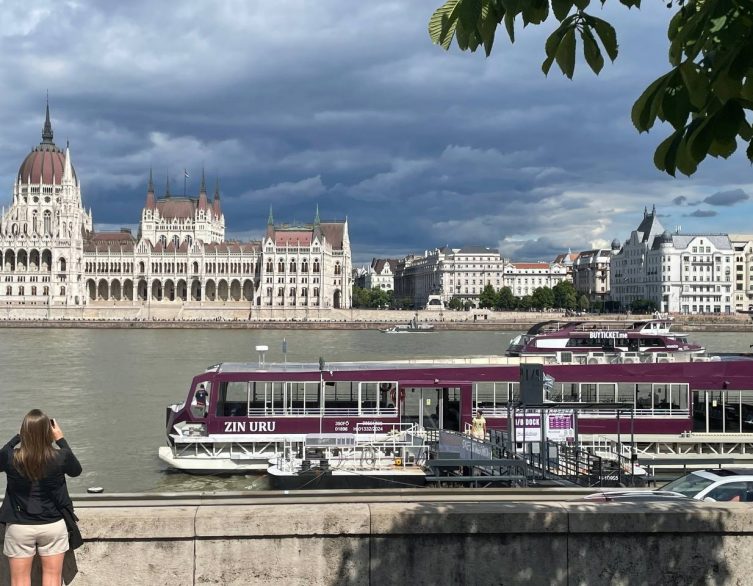
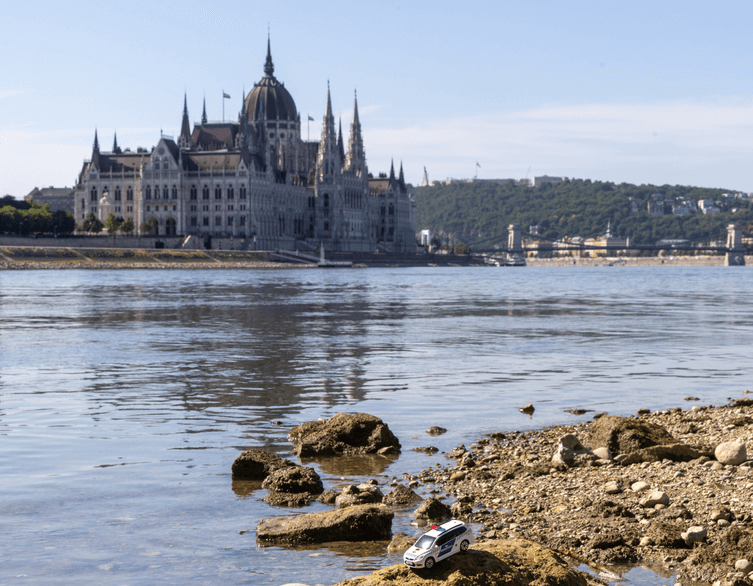
If you were in Budapest in late July or August this year, you may have wondered why the floodlights on some of the city’s most photogenic landmarks looked a little dimmer than usual. That wasn’t a mood choice. It was survival math. The Danube, the same river postcards love to show reflecting Parliament at sunset, dropped to record-low levels after a brutal, prolonged heatwave and drought swept across Central Europe. The problem is that Paks, Hungary’s only nuclear plant, sits about 50 miles south of the capital and depends entirely on Danube water to cool its four reactors. When the river shrinks, the plant’s intake nozzles literally can’t reach enough water to do their job.
By early August, Paks, which normally supplies close to half the country’s electricity, was running at barely 10 percent of its 2,000-megawatt capacity, and Hungary came within a hair’s breadth of a total shutdown for the first time in the plant’s 44-year history. Three of its four reactors went dark. Prime Minister Péter Magyar warned of “critical days ahead” and, in a plot twist that sounds almost too on-the-nose, the government actually sank two barges into the Danube near the plant and floated plans for a submerged riverbed sill, essentially a makeshift dam, just to nudge the water level up enough to keep the last working turbine cooled. Picture a country negotiating with a river using naval engineering, and you’ll understand why this suddenly became front-page news rather than a dry policy footnote.
Meanwhile, next door in Romania, things went even further off the rails. The Cernavodă plant, which normally generates around a fifth of Romania’s electricity, had to shut down both of its reactors entirely for the first time ever, a domino effect that immediately squeezed neighboring Moldova’s power supply too. France and several other European countries with river-cooled power stations hit similar trouble. Suddenly a very old assumption, that nuclear power is the dependable, weatherproof backbone of the grid, looked a lot less bulletproof.
What Hungary Actually Had to Do About It
This wasn’t just an abstract crisis playing out in engineering reports. Hungary asked households and more than 300 companies to voluntarily cut electricity use during peak hours, and people actually listened, trimming demand by 400 to 700 megawatts a day during the critical stretch. Freight trains were barred from running between 5pm and 10pm to ease pressure on the grid. Remote work became mandatory in parts of the public sector. Parliament itself, the building on all those postcards, canceled sessions that week to save power. And in a detail that feels almost poetic given the subject, the decorative lighting on some of Budapest’s most famous landmarks was switched off at night. The city that lights up its bridges and domes for tourists every evening was, for a few tense weeks, deliberately dimming itself to keep the lights on everywhere else.
Best deals of Budapest










By mid-August, some rain over the Danube’s catchment area brought modest relief, water levels crept up, one extra turbine came back online, and the emergency measures were eventually eased. But the whole episode left an obvious question hanging in the humid summer air: if a single river having a bad month can rattle nearly half the country’s power supply, maybe it’s worth spreading the bets around a little. Rooftops, notably, don’t need river water to keep cool.
The Mall That Beat Everyone to It
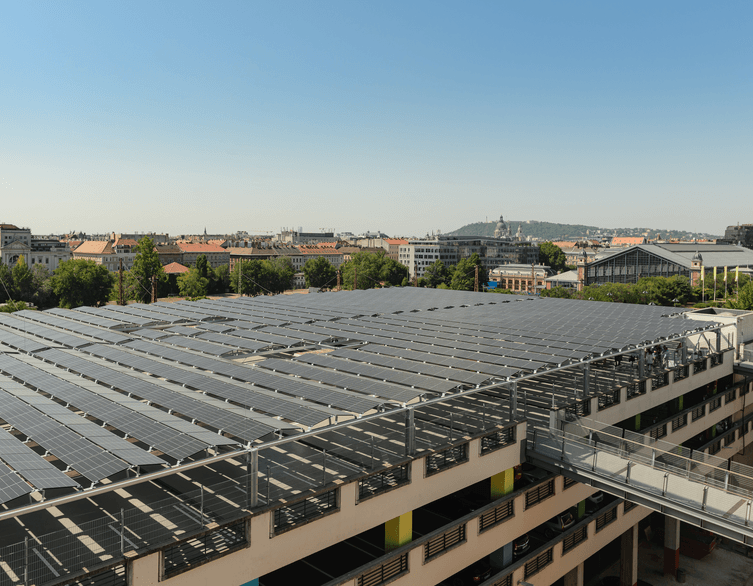
While city planners were still admiring their spreadsheets, one Budapest institution had already quietly built the alternative. Westend Shopping Center, that reliably crowded mall on Váci Road where every tourist eventually ends up buying socks they didn’t know they needed, unveiled the largest rooftop solar park in the city this summer. We’re talking about 6,500 square metres of panels, roughly a full football pitch, sitting above the parking structure where nobody was looking.
The numbers are almost comically large for a shopping mall. The installation, part of a four-year, ten-million-euro sustainability makeover, now covers 80 percent of the building’s electricity needs and cut its carbon footprint by more than 80 percent compared to before. It generates over 17.5 gigawatt-hours a year, enough to power around 300 Hungarian households, meaning somewhere out there, an entire neighborhood is basically running on the electricity equivalent of Black Friday sales at Westend. The building even scored Hungary’s first A+ energy rating of its kind, complete with AI-controlled climate systems, because apparently even the air conditioning needed an upgrade to match the ambition. While Paks was negotiating with a shrinking river, Westend was just sitting there, unbothered, harvesting sunshine.
So, Can You Spot the Parliament?
Now here’s where it gets interesting for anyone strolling around with a phone camera. If solar planners started looking at Budapest’s rooftops purely as sun-catching real estate, certain buildings would be obvious front-runners: broad, flat-ish, unobstructed roofs with maximum daylight exposure and minimal spires getting in the way, think shopping centers, office blocks, and large residential complexes rather than anything with a dome, a spire, or a UNESCO plaque taped to its front door.
Take a look at the rooftop image above. Somewhere in that jumble of red tiles, domes, and skylights sits the Hungarian Parliament, arguably the most photographed building in the country and, ironically, the very building that went dark and canceled its own sessions to save power during the drought. It’s also definitely not on anyone’s shortlist for a rooftop solar farm, mostly because nobody wants to be the city planner who suggested drilling into a neo-Gothic national landmark. Can you actually pick it out? And more importantly, can you spot which of the buildings nearby actually look like decent solar candidates, the plain, flat-roofed ones that wouldn’t send preservationists into a panic?
It’s a genuinely fun little game to play while wandering the city: look up, guess which grand old building is secretly hopeless for solar panels, and which boring flat-roofed office block next door is actually the unsung hero of Hungary’s energy future. Budapest’s skyline has always rewarded people who look up. This summer, for the first time in decades, it also gave everyone a very good reason to.
Related news
Summer’s Grip on Budapest Is About to Loosen: What Visitors Should Know About Next Week’s Cooling Trend
If you’ve been soaking up Budapest’s late summer sunshine and wondering whether to pack that light jacket, now’s a good time to...
September 1: Budapest Gets Back to Its Rhythm
September 1 is famous around Budapest for one obvious reason: it’s the first day of the new school year. But this year, the date carries an...

Lights Down, Spirits Up: How Budapest and Hungary Are Conserving Energy Together
If you’ve noticed that a few of Budapest’s famously glittering landmarks look a touch less dazzling after dark this summer, or that your...

Take Only Photos: The Sunken Ghost Bridge Reappearing in the Danube
Budapest’s Danube is running so low this summer that it’s giving up one of its best-kept secrets: the skeletal remains of a bridge that...
The Danube Just Hit Its Lowest Water Level Ever Recorded in Budapest
If you’re strolling along the Danube this week, you might notice something unusual: the river looks strikingly low, almost dramatically so....
Westend Goes Green: Budapest’s Biggest Rooftop Solar Park Opens Above One of the City’s Favorite Malls
If you’ve ever browsed the shops at Westend Shopping Center in Budapest, you might not realize that just above your head now sits the city’s...