Budapest’s Late Summer Lineup of “Food for Thought” Events You Shouldn’t Miss

Budapest in late summer isn’t just about riverside sunsets and thermal baths, though those are still very much on the menu. Tucked between the last warm days of August and the crisp start of autumn, the city turns into a genuine playground for curious minds. If you’re the kind of traveler who likes to come home from a trip with new ideas rattling around in your head, not just souvenir magnets, this stretch of the calendar has something rare: a cluster of events built entirely around big questions, sharp conversations, and ideas that stick with you long after you’ve left. From artificial intelligence to chess, from the invisible workers who keep a European capital running to festivals that quite literally ask you to think about the future, here’s your guide to the “food for thought” side of Budapest this late summer.
Bartók Feszt’: A Free Riverside Festival About What We Never Notice
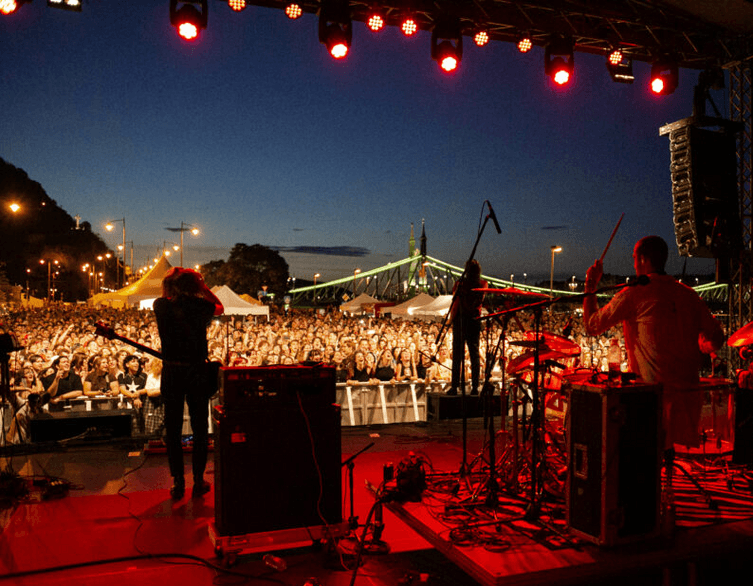
Kicking things off on Saturday, August 29, 2026, Bartók Feszt’ is proof that a festival doesn’t need a hefty ticket price to leave an impression. Spread across Szent Gellért Square, Budafoki Road, and the BME Garden on the Buda side of the Danube, this free, all-day event runs from 9:00 AM until 1:00 AM the following morning, and it’s built around a wonderfully simple theme: invisibility. Behind every clean street, every functioning tram line, and every quiet act of civic care, there are people and systems doing work nobody ever really stops to notice. Bartók Feszt’ asks its visitors to spend a day thinking about those hidden hands while enjoying live music, good food, and a relaxed atmosphere by the river.
For international visitors, it’s worth knowing upfront that the festival’s talks and civil society programming run in Hungarian, so some of the deeper thematic content may go over your head if you don’t speak the language. That’s not a dealbreaker, though, because the music is the real draw for most out-of-towners and it needs no translation. Two stages carry the day: the Dezső Stage opens gently in the morning with acts like Kiskalász and the Veronaki Trió before a set from Für Anikó and Hrutka Róbert, while the Zsiga Stage takes over as evening falls with Csinszka, a large collaborative performance called Wavy, and headline closers Bluster and Budimpešta Orkestar.
Beyond the music, more than 40 local organizations and grassroots initiatives set up shop across the BME Garden and Budafoki Road, covering everything from human rights to urban development to community libraries. Even without perfect Hungarian, wandering through this civil society quarter gives you a genuine, unfiltered sense of Budapest’s community spirit, something most tourist itineraries never touch. There’s also a proper festival kitchen serving healthy local dishes, drink stalls throughout the grounds, and a clear sustainability push, with reusable cups, rentable porcelain plates, and free water stations, so bring a refillable bottle. Getting there is easy: the number 4 metro line stops right at Gellért Square, and trams 19, 49, 41, 47, 56, and 56A along with buses 7 and 133E all serve the area, or you can simply stroll along the riverside from the city center.
AI Summit Budapest 2026: Central Europe’s Biggest AI Conference Lands in City Park
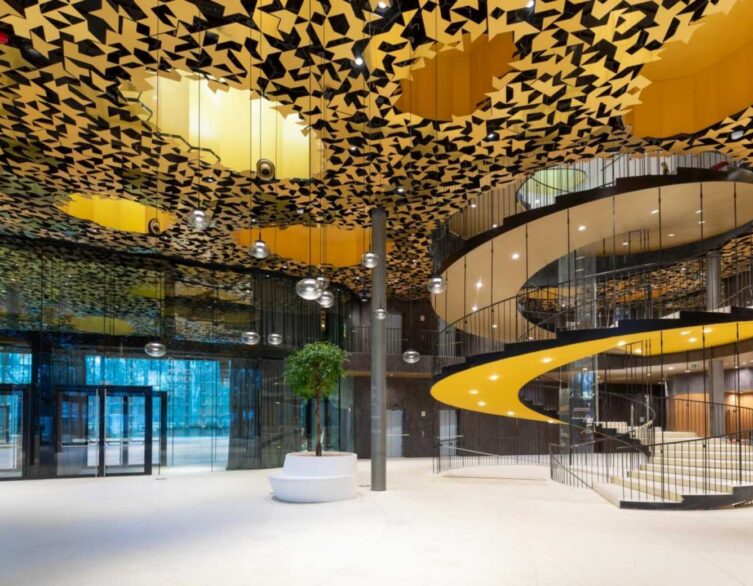
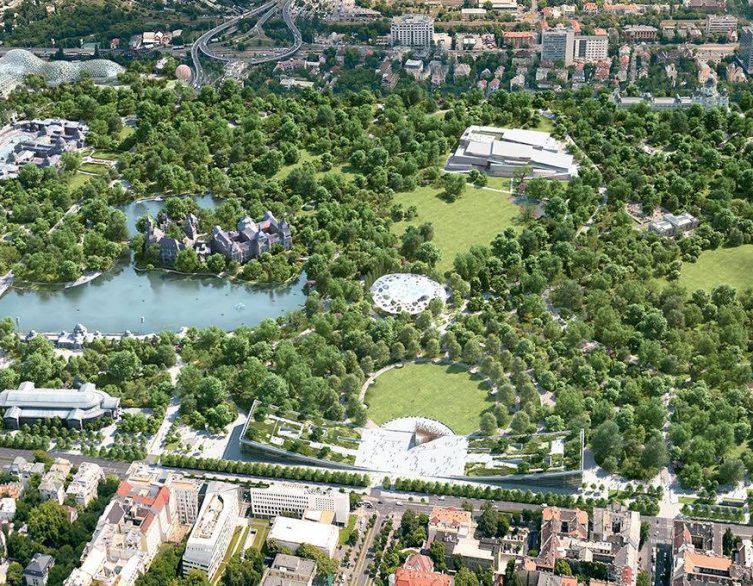
If your idea of a great travel story involves sitting inside architectural landmarks while listening to the people actually shaping artificial intelligence, block out September 7 and 8, 2026. The AI Summit Budapest returns for its fourth edition, running from 9:00 AM on the 7th through 6:00 PM on the 8th, and this year it’s bigger than ever: two full days, three venues, ten thematic sections, and more than 300 speakers. What makes this conference genuinely different from a typical convention-center affair is where it happens. Sessions unfold inside the House of Music Hungary and the Museum of Ethnography, both set within the leafy grounds of City Park, known locally as Városliget. These aren’t neutral function rooms; they’re two of the city’s most striking pieces of contemporary architecture, so wandering between talks means wandering through buildings worth visiting on their own merits.
Last year’s edition drew more than 3,500 attendees and over 125 talks, and this year’s theme, “the year the AI tool becomes a collaborative partner,” tackles the questions everyone in the industry is currently arguing about: what’s actually new in AI heading into 2026, which industries are pulling ahead versus falling behind, and whether workplaces are genuinely getting comfortable with AI agents as coworkers. Topics range across economics, finance, education, the creative industries, and ethics and regulation, and the whole thing is structured as a “conference of Mini Summits,” meaning you pick the specialized tracks that interest you rather than sitting through a rigid, one-size-fits-all agenda.
Best deals of Budapest










The speaker lineup is stacked with recognizable names. Christian Eggers, President of Alibaba Cloud’s Europe Central Region, opens the keynote track on AI trends, while Dr. Kristóf Schum from Amazon Web Services’ generative AI team returns after a well-received appearance last year to talk about where large language models are headed next. Elsewhere on the program, expect roundtables on AI and immortality, sessions tracking humanoid robots moving from demo stages to actual factory floors, and a conversation on AI’s role in art and music featuring Károly Gerendai, founder of the legendary Sziget Festival. Academic heavyweights like Professor Wim Vanhaverbeke from the University of Antwerp and Hungarian media scholar Professor Petra Aczél round out the education and society tracks. Sessions run in both Hungarian and English, so international visitors are well covered.
Every ticket comes with a nice bonus: a free copy of “AI is NOW,” a nearly 150-page bookazine featuring interviews and analysis with speakers and leading AI experts, a keepsake that outlasts the two conference days by a long shot. If you’re traveling as a group, discounts apply automatically at checkout, with 20% off for five or more tickets, 25% off for ten or more, and 30% off for parties of twenty or larger. Whether you’re extending a business trip, working remotely from Budapest, or just a curious traveler who wants a break from the usual sightseeing checklist, the AI Summit turns a City Park stroll into something considerably more thought-provoking.
Brain Bar 2026: Europe’s Largest Festival on the Future
Running right on the heels of the AI Summit, Brain Bar takes over the House of Music Hungary on September 17 and 18, 2026, and it might be the single best “food for thought” event on this entire list for tourists specifically. Billed as Europe’s largest annual festival on the future, Brain Bar has been running since 2015 and has built a loyal following by refusing to be a passive, sit-and-listen affair. Across five stages, expect more than 100 discussions, talks, workshops, music, and art shows, all designed with audience participation baked in from the start. This is a festival where you’re expected to challenge speakers, ask questions, and actually join the debate rather than just absorb it.
The 2026 lineup already features some genuinely compelling names. Nataliya Kosmyna from the MIT Media Lab brings research at the crossroads of AI, neuroscience, and brain-computer interfaces. David Bessis offers a refreshingly democratic take on mathematics, arguing that mathematical thinking isn’t some rare gift but a skill everyone already uses and can sharpen. Lily Rafferty, the mind behind the bold, internet-native social voices of brands like Ryanair and Duolingo, brings a sharp lens on modern communication and online culture. The broader roster mixes scientists, entrepreneurs, creators, and cultural figures, which matters if you’re traveling with friends or a partner who don’t share identical interests, since it’s easy to split up and reconvene later.
Sessions run in either English or Hungarian, always clearly marked in the program, so if you’re comfortable following idea-dense conversations in English, you’ll get plenty out of the Q&As and hallway debates that spill out between talks. Most visitors go with the two-day pass covering all stages, and groups get a solid discount when buying four passes at once. Students and teachers can even apply for free entry through an English-language registration survey, worth trying if you’re a younger traveler or an educator passing through. One practical tip: some sessions prioritize paid ticket holders first before letting free-pass attendees in as seats open up, so arrive early for anything you really don’t want to miss.
The venue itself is a big part of the appeal. The House of Music Hungary sits in City Park, meaning you can easily combine a festival day with a walk to Heroes’ Square, the Museum of Fine Arts, or a soak at the famous Széchenyi Thermal Bath afterward. September also happens to be one of the most pleasant months to visit Budapest, with comfortable weather and a city that still feels lively after the summer crowds thin out, so an evening plan of a Danube cruise, cocktails in the Jewish Quarter, or dinner near Andrássy Avenue slots in naturally after a day of big ideas.
The 12th Judit Polgár Global Chess Festival: Strategy Meets Fine Art
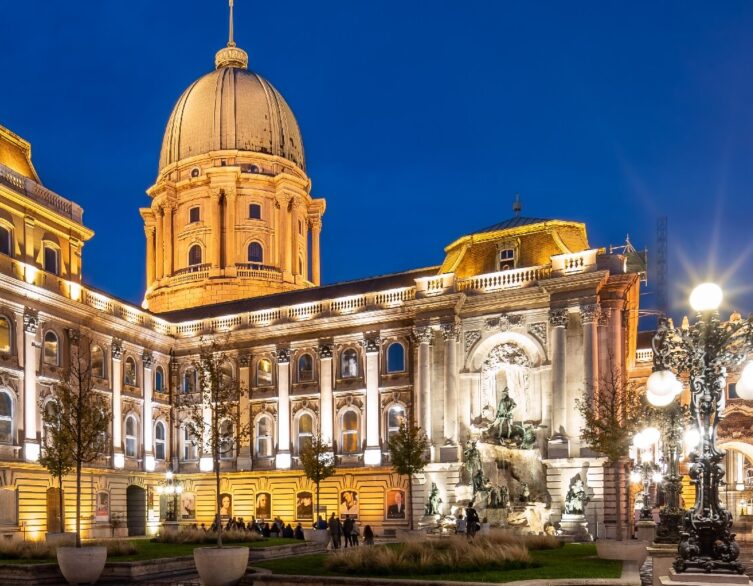
On Saturday, September 26, 2026, the Hungarian National Gallery inside Buda Castle transforms from a quiet home of centuries-old Hungarian art into a lively playground for the mind. The 12th Judit Polgár Global Chess Festival runs from 10:00 AM to 5:30 PM and is built around the legacy of Judit Polgár, widely regarded as the strongest female chess player in history, who has spent her post-competitive career turning this event into one of the largest chess-themed family gatherings in the world. Past editions have featured AI-powered chess robots and giant outdoor matches between the famous Polgár sisters, so expect plenty of playful surprises this year too.
This year’s theme couldn’t feel more timely: as artificial intelligence increasingly shapes how people think and make decisions, the festival explores how chess sharpens critical thinking and helps sort out what’s real from what’s illusion in an increasingly blurred digital world. It’s a neat thematic echo of the AI-focused events happening elsewhere in the city this same season, just approached through a very different, hands-on lens.
The day’s schedule is packed with activities that don’t require any serious chess background to enjoy. There’s a RubikChess tournament combining speed chess with Rubik’s Cube solving, an interactive quiz, an infinite chess simultaneous exhibition, and specially designed chess adventure courses built for kids and families. The undeniable highlight for many visitors will be the chance to meet Judit Polgár in person during a Q&A session and book signing, a rare, up-close encounter with a genuine legend of the game.
What makes this festival particularly appealing for tourists is the setting. The Hungarian National Gallery overlooks the Danube and the rooftops of Pest from within Buda Castle, making it one of the most scenic museum locations anywhere in the city. For one day, its elegant galleries fill with chessboards and playful energy, creating a striking contrast between classical fine art and lively, interactive entertainment. Since the festival sits right in the heart of the Castle District, it pairs effortlessly with nearby landmarks like Fisherman’s Bastion and Matthias Church, both an easy walk away, so you could start your morning with a chess puzzle and end your afternoon with panoramic Danube views.
Budapest Job Fair: A Rare Look Behind the City’s Everyday Operations
Not every “food for thought” event needs to be about grand ideas. On September 16 and 17, 2026, the Budapest Municipality hosts the fourth edition of the Budapest Job Fair, locally known as Budapest Állásbörze, inside the striking glass-domed Biodome in City Park. It’s free, open to everyone, and while its main purpose is connecting jobseekers with employers, it doubles as an unexpectedly interesting cultural touchpoint for travelers curious about who actually keeps a European capital city running.
Tens of thousands of people work for what locals affectionately call the “Budapest Family,” the network of municipally owned companies handling public transport, waste management, water services, and dozens of other essential functions. This fair puts a human face on all of that, bringing together dozens of employers including BKV (the Budapest Transport Company), BKK (Centre for Budapest Transport), BKM (Budapest Municipal Waterworks), and FCSM (the Budapest Sewage Works), collectively offering several hundred open positions across both physical and office-based roles.
Beyond rows of company booths, the event is genuinely well organized around practical services: one-on-one résumé advice, professional coaching, a dietitian available for workplace wellness questions, and even a free CV photography station. There’s a kids’ corner for families, a selfie point, and a full schedule of HR talks and hands-on workshops running both days, giving the whole thing more of a community-event feel than a stiff corporate expo. Accessibility is clearly a priority too, with a sign language interpreter present throughout both days, a tactile audio map developed with the Hungarian Federation of the Blind and Partially Sighted, and a dedicated Inclusive Budapest stand promoting workplaces open to people of all abilities.
The fair runs from 9:00 AM to 6:00 PM both days at the Biodome’s reception hall, right next to Budapest Zoo, and entry is completely free, though on-site registration is required. Getting there is simple via the M1 metro line, Budapest’s oldest underground railway, to Széchenyi fürdő station, or trolleybus 72 to the Kós Károly promenade stop. Even if job hunting isn’t remotely on your radar, the Biodome itself is worth the detour. Once named Europe’s best leisure venue, it recently added a major new indoor section with exotic wildlife, dinosaur-themed exhibits, and a dramatic fourteen-meter indoor waterfall, all steps from the thermal waters of Széchenyi Baths and the wider Budapest Zoo and Botanical Garden.
Researchers’ Night 2026: Free Science Fun Across Budapest
Every September, Budapest turns its universities, museums, and research institutes into open playgrounds for the curious, and Researchers’ Night 2026 is no exception. Taking place on September 25 and 26, 2026, this Europe-wide science festival gives locals and visitors alike a rare chance to peek behind the scenes of scientific research, completely free of charge. If you happen to be in the city that weekend, it’s an easy and rewarding way to spend an evening somewhere unexpected, whether that’s a university lab, a research institute, or a museum you’d normally walk right past.
Researchers’ Night is an initiative backed by the European Commission’s Marie Skłodowska-Curie Actions, running annually since 2005 with one clear goal: making science and research careers approachable and exciting for the public, especially younger audiences. Across Europe, the event now spans more than 200 venues, around 2,500 individual programs, and over 140 organizing institutions, all opening their doors on the same late-September weekend. In Budapest, that means universities, national research centers, museums, and public libraries all take part, turning the city into a giant open house for science.
The format keeps things playful rather than academic. Expect hands-on experiments, lab tours, talks, workshops, exhibitions, competitions, film screenings, and creative activities covering everything from physics and biology to medicine, social sciences, humanities, and even the arts. Past editions in Budapest have included everything from robotics demonstrations to sessions on the Hungarian language and even talks on childbirth and home births, so the variety on offer tends to be genuinely wide rather than narrowly academic.
Planning Your Late Summer Budapest Itinerary
What’s striking about this particular stretch of the calendar is how naturally these events cluster around City Park and the surrounding neighborhoods, meaning you don’t need to crisscross the city to catch several of them. Bartók Feszt’ opens the season on August 29 with free live music by the Danube, followed almost back-to-back by the AI Summit on September 7 and 8, the Budapest Job Fair on September 16 and 17, Brain Bar on September 17 and 18, and finally the Judit Polgár Chess Festival on September 26 over in the Castle District. With a little planning, a single September trip to Budapest could realistically include a global AI conference, Europe’s biggest future-focused festival, and a chess tournament inside a national art museum, on top of the city’s usual thermal baths and river views.
September in particular tends to be one of the most comfortable months to visit, with mild weather and a city that’s shaken off the peak summer crowds but hasn’t yet slowed down for winter. Whether you’re drawn in by artificial intelligence debates, curious about the invisible machinery that keeps a capital city functioning, or just want to watch chess grandmasters at work inside a Habsburg-era palace, this late summer window offers a version of Budapest that goes well beyond the postcard.
Related news

Total Chess World Championship Tour Comes to Budapest This November
If you’re in Budapest between November 10 and 20, get ready to share the city with some of the sharpest minds on the planet. The Hungarian...
Bartók Feszt’ 2026: Budapest’s Free Late-Summer Festival You Shouldn’t Miss
If you’re planning a trip to Budapest toward the end of August, mark August 29 on your calendar. That’s when Bartók Feszt’ takes...

Budapest Zoo Is About to Open Something Spectacular: Get Ready for the Biodome Urban Oasis
If you’re in Budapest this week, you’ve timed your visit perfectly. On July 1, 2026, Budapest Zoo and Botanical Garden will throw open...
Related events
Related attractions
The Hungarian National Gallery in Budapest
Nestled within the historic Buda Castle in Budapest, the Hungarian National Gallery is a treasure trove of Hungarian art, showcasing the country’s...
The House of Hungarian Music in Budapest – An Architectural Marvel Filled with Melodies
The House of Hungarian Music, located in Városliget, is a must-visit attraction for music lovers and architecture enthusiasts alike. This iconic...
Városliget: Budapest’s Green Oasis for Nature and Culture
Nestled in the heart of Budapest, Városliget (City Park) stands as a verdant oasis, offering a refreshing escape from the bustling city life. Right...