Buda’s Lower Embankment Closes for Five Days: What Visitors Need to Know About Budapest’s New Tram Line
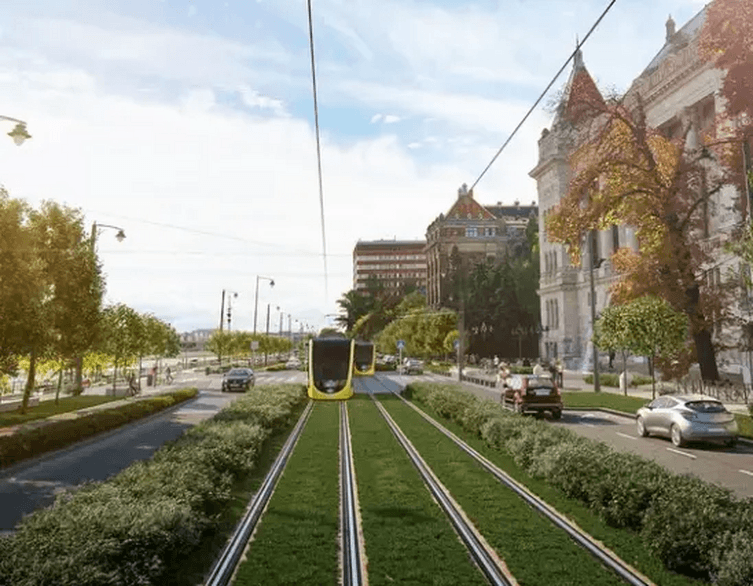
If you’re visiting Budapest this week, you may notice a stretch of the Buda riverbank closed to cars. The closure marks the start of a big project that will bring a new tram line to southern Buda. The works are mostly invisible to sightseers, but a few traffic changes could affect your taxi or rental car, and the finished line will be useful for future visitors.
What Is Closing and When
From Thursday, 26 November, the Buda Lower Embankment will be closed to road traffic along the section between Rákóczi Bridge and Bertalan Lajos Street. The closure applies to the full width of the road. The Budapest transport authority, BKK, expects it to last until the evening of Monday, 30 November, with the works running between 26 November and 1 December. Transport Minister Dávid Vitézy described it as a four-day closure, from Thursday to Sunday. Plan for the longer period, because the exact end time may vary.
Crews will lay cable conduits under the road. These are needed to move the utility lines out of the way before tram tracks can go in. In practice, this is preparation, so you won’t see rails going down yet.
Best deals of Budapest












How Traffic Will Be Rerouted
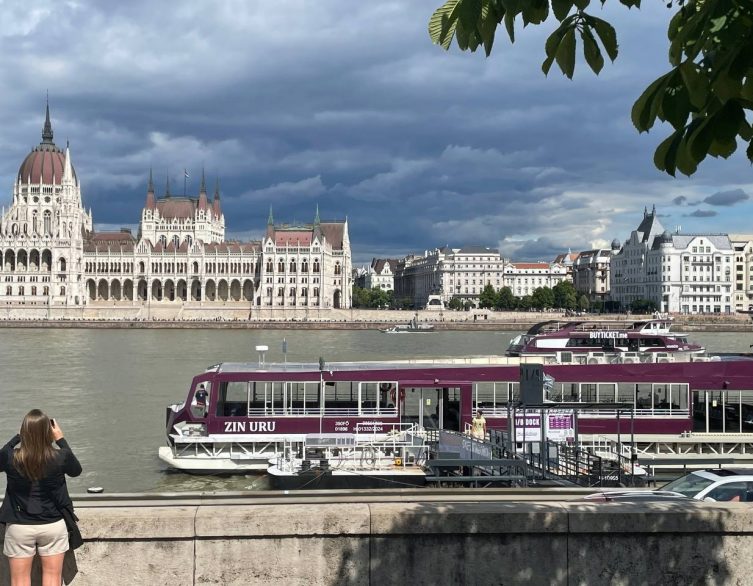
For most tourists on foot, by tram or on public transport, little changes. If you’re in a taxi, a ride-hailing car or a rental car, the detours matter. Drivers heading south toward Rákóczi Bridge will be sent up to the Upper Embankment at Bertalan Lajos Street. South of that point, the Lower Embankment becomes a dead end up to the bridge. Drivers heading north toward the city centre can only enter the Lower Embankment at the Egry József Street ramp. Anyone coming off Rákóczi Bridge or from Dombóvári Road can’t enter the Lower Embankment during the closure. They’ll use the Upper Embankment and Pázmány Péter Promenade up to Egry József Street instead.
BKK asks everyone in the area to drive carefully and check current traffic changes before setting out. If you’re staying in Buda, allow extra time for airport transfers or for trips near the river.
The New Tram Line
The project is part of the second phase of the Buda Interlaced Tram Network. It will build a 2.8-kilometre double-track line from Gellért Square, along the Műegyetem Embankment by the Budapest University of Technology, to the Budafoki Road and Dombóvári Road area. The line will have seven pairs of new accessible stops. It will connect directly to Kopaszi Dam, the BudaPart district, Infopark and several university campuses. It will also link to tram 1 and to a new railway stop planned near Nádorkert.
The project costs about 32.3 billion forints, with European Union funding and co-financing from the Hungarian state. After the project, the line should make southern Buda much easier to reach by public transport. Kopaszi Dam is a popular riverside park with cafés, running paths and views over the Danube, and it is currently easier to reach by car or bus than by rail.
A Greener, More Bike-Friendly Riverbank
The plan is for more than just tracks. More than half of the new line, about 1.6 kilometres, will have grass-covered track. The project will plant 394 new trees and more than 27,000 shrubs. There will also be 2,660 metres of new cycle path. Along the Műegyetem and Pázmány Péter Embankments, car traffic is meant to fall and cycling conditions to improve. There will also be a new riverside promenade. For visitors, the result should be a more pleasant walk along this part of the Danube. It’s a good route when you’re heading from the Gellért Hill area toward the university district.
Timeline: What About Future Trips?
The first works start with this short closure. Construction proper is due to begin in January 2027 around Pázmány Péter Promenade. Then comes the area in front of the university and the Lower Embankment, and finally the Dombóvári Road area. According to the minister, the promenade will have to close completely from spring to autumn 2027 while the tracks are laid. He also warns of longer, multi-month closures in 2027 on the Upper Embankment, Műegyetem Embankment, Pázmány Péter Promenade and Lower Embankment. The whole line is expected to open at the end of 2029.
If you’re planning a trip in 2027, check the traffic situation before you go, especially if you’re staying near Gellért Square, in the Gellért Hill area or in southern Buda. The main sights, including Buda Castle, Gellért Hill and the thermal baths, will remain open. Public transport will keep running, though with some diversions.
Part of a Bigger Change
Budapest’s mayor, Gergely Karácsony, says the city will see about as much development in the next four years as in the last forty. He cites 68 transport, public-space and infrastructure projects. These include suburban railway (HÉV) upgrades and work on the Grand Boulevard and Bajcsy-Zsilinszky Road. A separate BKK tender is also underway to find a designer for a future tram extension along Budafoki Road toward Savoya Park.
The upshot for visitors is simple. Expect some detours over the next few years, but also a better-connected, greener city. For now, if you’re heading south along the Buda riverbank this week, take the Upper Embankment, give yourself a little extra time and enjoy the view.
Related news
Budapest’s New Riverside Tram Line: A Greener Way to Explore South Buda
Exploring Budapest’s Buda riverbank could become easier—and more enjoyable—thanks to a planned tram extension linking St. Gellért Square with...
A Greener Budapest: How Trees, Rainwater and Healthier Soil Could Transform the City
A shady street can make all the difference when you’re exploring Budapest on a warm afternoon. But the capital’s trees and planted spaces do...
Budapest Digital Tickets: Easier Validation on Buses and Trams from October 2026
Catching a tram just before it pulls away? A new Budapest public transport update should make that moment a little less stressful. BKK, the Centre...

Budapest’s Next Chapter: Greener Parks, Better Transport and a Revamped Riverside
Budapest is preparing for a new wave of urban development, with plans to transform its riverside, refresh major public spaces and improve public...