Budapest’s Airbnb Rules Are Changing Fast: What Tourists Need to Know About the New EU Housing Law

If you’re planning a trip to Budapest and hoping to book a short-term apartment rental, there’s important news you should factor into your travel plans. On September 9, 2026, the European Commission unveiled a sweeping new proposal called the Affordable Housing Act, and it could reshape how cities across Europe, including Budapest, handle Airbnb-style rentals. For travelers, this isn’t just abstract policy chatter. It directly affects where you can legally book a place to stay, which neighborhoods have already banned short-term lets, and what the next few years might look like for anyone hoping to rent an apartment rather than a hotel room in Hungary’s capital.
Here’s what’s actually happening, why it matters, and how to navigate Budapest’s patchwork of local rules right now.
A New EU-Wide Rulebook, Not a Blanket Ban
Despite the alarming headlines, the Affordable Housing Act does not outlaw Airbnb across Europe. Instead, it creates a common legal framework that gives city governments clearer permission to restrict short-term rentals, second homes, and long-term vacant properties, but only if they can prove it’s genuinely necessary. This is a regulation rather than a directive, which is a meaningful legal distinction: once adopted, it becomes directly applicable across all EU member states without needing to be separately written into national law first.
European Commission President Ursula von der Leyen framed the initiative around fairness, noting that essential workers and students increasingly cannot afford to live in the cities where they work and study. The driving concern is stark: a recent Eurobarometer survey found that half of Europeans living in cities consider housing a pressing personal problem, and average home prices across the EU rose 64.9% between 2015 and 2025, while rents climbed 21.8% over the same period.
Cities like Lisbon, Barcelona, and Prague have all seen residents blame platforms like Airbnb for pulling apartments out of the long-term rental market and driving up costs. Short-term rentals account for just 1.2% of total EU housing stock overall, but in hotspot tourist areas, that figure can spike to 20%, according to Commission estimates.
What Cities Must Prove Before Restricting Rentals
The proposal’s core innovation is that it demands evidence, not politics. Before any municipality can restrict short-term lets, second homes, or vacant properties, it has to clear three hurdles.
First, the area must genuinely qualify as under “housing stress,” a term that now gets a concrete definition for the first time. A location counts as housing-stressed when the average home price equals at least eight years of a resident’s average disposable income; if that ratio reaches ten years, the pressure is considered severe enough that authorities don’t even need to separately prove the trend has worsened over the past decade.
Second, authorities must show with real data that the activity they want to restrict, whether that’s short-term rentals or second-home ownership, has caused a significant negative effect on housing affordability or availability for at least three consecutive years.
Third, any restriction has to be targeted and proportionate, meaning cities must demonstrate there isn’t a lighter-touch alternative, such as an annual day cap, a quota system, or zoning rules, that would work just as well. Any restriction imposed under this framework can last a maximum of five years before it must be reassessed.
Crucially, the rules distinguish between someone renting out a spare room or their own primary home occasionally, and investors or companies operating entire apartments purely as tourist accommodation. The former is treated far more leniently, since it typically doesn’t remove genuine housing stock from local residents.
Budapest’s Confusing Local Landscape
For visitors, the more immediately relevant story is what’s already happening on the ground in Budapest, because the city’s short-term rental rules vary dramatically by district, and some of them are stricter than almost anywhere else in Europe.
Best deals of Budapest








Hungary currently has no single national “Airbnb law.” Instead, short-term rentals are governed by a tangle of commercial regulations, government decrees, tourism data-reporting requirements through the National Tourism Data Supply Center, a citywide moratorium, and individual district ordinances. It’s a genuinely fragmented system, and the rules you need to follow depend entirely on which district your rental sits in.
The most dramatic example is District VI, known internationally as Theresa Town, home to the Andrássy Avenue and the Hungarian State Opera House. Since January 1, 2026, Theresa Town has enforced a complete ban on short-term rentals, setting the annual allowable rental days at exactly zero. Hungary’s supreme court, the Kúria, upheld this rule in November 2025, ruling that Hungarian commercial law sets no minimum number of permitted rental days, meaning a local zero-day rule is legally valid. Roughly 2,700 apartments, about 8 to 10% of the district’s housing stock, were affected. If you’re booking accommodation in Budapest, this means you should not attempt to book a short-term apartment rental in Theresa Town for a 2026 stay; the listing is almost certainly operating illegally, and operators face significant fines.
District VII, known as Erzsébetváros or Elizabeth Town (home to the famous ruin bars and the Jewish Quarter), took a different approach. Its rule also defaults to zero rental days annually, but jumps to 365 days if the building’s condominium association formally consents to short-term rentals. Existing operators registered before the end of 2025 have until December 31, 2026, to secure and submit that condominium agreement, so the situation there remains genuinely fluid.
District V, the Inner City and Leopold Town, chose not to ban rentals outright but instead layered on operational requirements to protect residents. Hosts there must post the building’s house rules in both Hungarian and English and display the 24-hour contact information of the property operator at the entrance.
District VIII, Józsefváros or Joseph Town, takes a more administrative approach: short-term rentals must be formally registered with the local authority under national government decree, with the process handled by the district notary.
Layered on top of all these local rules is a citywide freeze: since 2024, no new short-term rental registrations have been permitted anywhere in Budapest through the end of 2026, and even a change of operator for an already-registered property cannot be processed during that window. This doesn’t shut down existing legal listings, but it does mean the market can’t expand or change hands easily, so if you’re browsing rental platforms, stick to established, clearly licensed listings.
Why Hungary Is Under Particular Scrutiny
The European Commission’s background analysis on Hungary, published alongside the broader proposal, paints an unusually stark picture. Hungarian home prices rose 265% in nominal terms between 2013 and 2024, the fastest increase anywhere in the EU. The Commission attributes this partly to housing policy that has long emphasized encouraging homeownership without meaningfully expanding overall housing supply, while the country’s stock of social or municipal rental housing sits at just 0.8%, among the lowest shares in Europe.
Interestingly, Hungary also has around 570,000 vacant homes, roughly 12 to 13% of its total housing stock. On paper that sounds like an obvious solution, but the Commission notes that many of these properties are in poor condition or located in areas with little real housing demand, meaning simply bringing them to market wouldn’t solve the affordability crisis on its own.
What This Means If You’re Planning a Trip
For now, nothing changes overnight. The Affordable Housing Act still needs to be negotiated and approved by the European Parliament and EU member states before it becomes binding law, a process that will likely take many months. Existing Budapest district rules, including the Theresa Town ban, remain fully in force regardless of what happens in Brussels.
The practical takeaway for travelers is straightforward: check exactly which district your accommodation is in before booking. Short-term rentals remain legal in most central districts, including the Inner City, Elizabeth Town, and Joseph Town, though double-check that any listing shows valid registration, since no new registrations are being approved citywide until at least 2027. If you’re set on Theresa Town’s beautiful Andrássy Avenue area, you’ll need to book a hotel or a longer-term serviced apartment instead, since short-term Airbnb-style stays there are simply off the table.
Looking further ahead, if the EU proposal passes in anything close to its current form, expect Budapest’s various district rules to face fresh legal tests, since a blanket ban like Theresa Town’s would become one of the hardest measures to defend without robust housing-stress data behind it. For now, though, Budapest remains a fantastic, walkable, and welcoming city to visit. Just do a little homework on your accommodation before you book, and you’ll avoid any unpleasant surprises when you arrive.
Related news
Budapest’s Airbnb Rules Are Shifting: What It Means for Your Next Stay
If you’re planning a trip to Budapest and eyeing a cozy apartment rental instead of a hotel, there’s a quiet but important shift happening...

Buda Castle District Puts Airbnb’s Future to a Public Vote — What It Means for Your Budapest Trip
If you’re dreaming of waking up in a cozy apartment just steps from Buda Castle, Fisherman’s Bastion, or Matthias Church, pay close attention:...
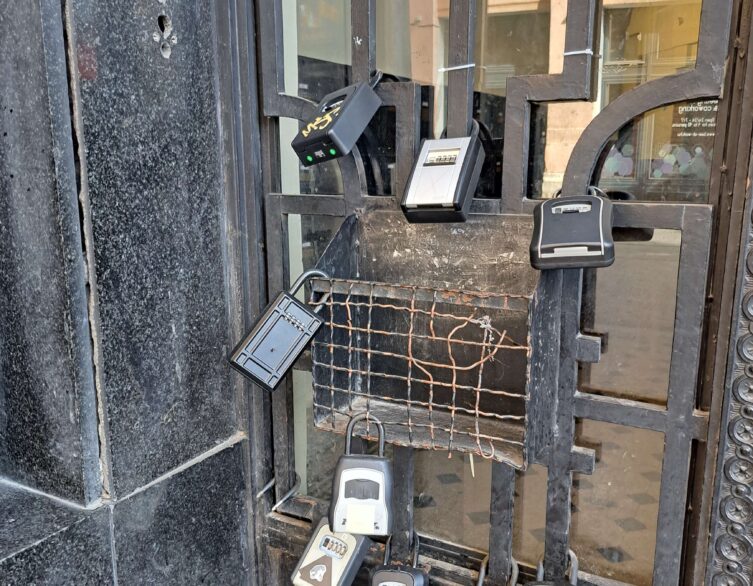
Józsefváros Is Cracking Down on Airbnb: What Tourists Need to Know Before They Book
If you’re planning a trip to Budapest and considering an Airbnb, there’s some news worth knowing about. The Hungarian capital is quietly...
Airbnb in Budapest: What Terézváros’ 2026 Ban Means for Tourists
Budapest’s vibrant inner districts have long been a favorite among travelers, offering historic streets, lively nightlife, and easy access to iconic...
Airbnb Ban Comes into Effect in Budapest’s District VI: What Tourists Need to Know
As of January 1, 2026, the central district of Terézváros — one of Budapest’s busiest and most popular areas among tourists...
Budapest Airbnb Crackdown: What Foreign Tourists Need to Know About Staying in District VI from 2026
Picture this: you’re scrolling through Airbnb for your dream Budapest getaway, eyeing that chic apartment on Király Street in the heart of...