Budapest Is About to Host the Richest Show in Track and Field History
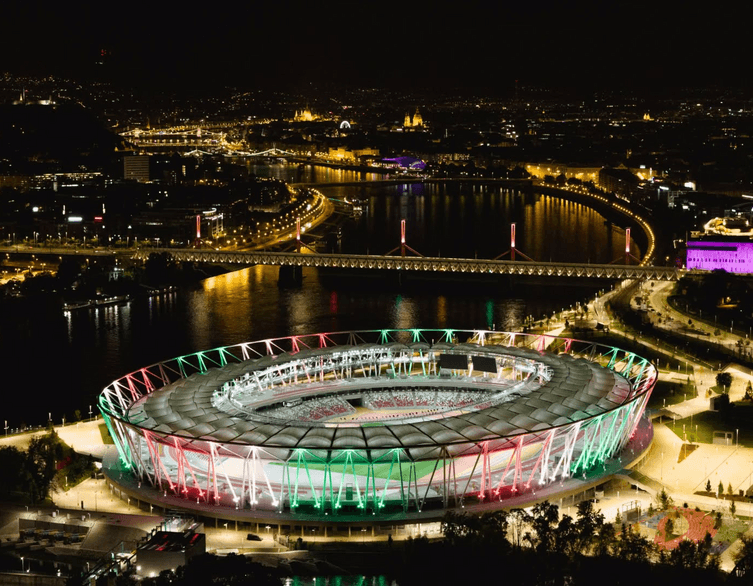
In exactly one week, Budapest turns into the epicenter of world sport. From September 11 to 13, the Hungarian capital hosts the first-ever World Athletics Ultimate Championship, a brand-new invitational built around a jaw-dropping ten million dollar prize pot, the largest ever offered in the history of the sport. If you’re already in the city or planning a trip around these dates, you’re arriving at the exact right moment to witness something that has never happened before anywhere in the world.
A Completely New Kind of Track Meet
Forget everything you know about how a typical track and field championship unfolds. The Ultimate Championship, staged at the Gyula Zsivotzky National Athletics Centre on the eastern bank of the Danube, ditches the old format where four or five events used to run simultaneously across the track. Instead, organizers built the schedule around tight thirty-second blocks so that, whenever possible, only one thing happens on the track at a time. That means no more missing a photo finish because a javelin throw stole the camera’s attention, and no more watching a jump or a throw get replayed later because it happened in the background of a race.
Each of the three evenings runs as a compact three-hour session, yet packed with far more drama than a typical five-hour championship session used to deliver. Expect somewhere between eight and eleven finals per night, one after another, with barely a pause to catch your breath. Marton Gyulai, World Athletics’ Director of Sport and Events, explained that this restructuring was deliberate: the goal is a show where every single attempt happens live, in front of the crowd, rather than getting lost in the shuffle.
Fields are deliberately small and stacked with talent. A maximum of sixteen athletes compete in any single event, and for the technical disciplines like jumps and throws, only eight make the final because there simply isn’t time for more. Sprints and middle-distance races over 100m, 200m, 400m, 800m, and 1500m get semifinals followed by finals, but even there, nobody gets a second shot at redemption. One mistake and the biggest paycheck in the sport’s history slips away.
Money Talks: Understanding the Ten Million Dollar Purse
The numbers here are staggering by track and field standards. Across the three nights and nine total hours of competition, organizers are distributing that full ten million dollar prize fund, which works out to over a million dollars changing hands every single hour. Individual event winners walk away with $150,000 each, the runner-up takes home $75,000, and third place earns $40,000. Even finishing near the bottom of a sixteen-athlete field still nets an athlete a payout, and eighth place alone is worth $10,000. For context, winning an entire Diamond League meeting typically earns an athlete around $10,000, meaning an eighth-place finish at the Ultimate Championship pays the same as winning one of the sport’s most prestigious annual meets outright.
There’s another twist that separates this event from every world championship or Olympic Games that came before it: there are no medals. Instead of the usual podium ceremony, only the outright winner of each event, dubbed an “Ultimate Champion,” receives a trophy. Every single athlete who competes, win or lose, also receives a personalized token, and champions additionally get a bracelet designed to physically connect with their trophy, a mark of having competed among the sport’s most elite company. Sebastian Coe, President of World Athletics, has been candid about why medals were scrapped entirely, describing it as a deliberate choice to keep the focus purely on determining who the single best athlete in the world is, rather than diluting that with a traditional podium.
The bracelet-and-trophy concept itself came from an unexpected source: American sprint star Noah Lyles pitched the idea as creative input, and Hungarian designers, jewelers, and sculptors brought it to life. The stone trophy, shaped around the championship’s star motif, is deliberately left unfinished until the champion clicks their own named bracelet into a matching groove, physically completing the piece only at the moment of victory. Winners don’t wait for a formal ceremony either; they grab their trophy straight off the podium as fireworks, music, and lighting effects erupt, then walk through the crowd on their way to television interviews.
Best deals of Budapest









The Athletes Chasing History
Only Olympic and world champions, Diamond League final winners, and a handful of special invitees earn a place on the entry list, which makes this one of the most exclusive fields ever assembled in the sport. Middle-distance fans have circled the 1500m final for good reason: mile world record holder Josh Kerr returns to top form after an injury-hit stretch, and Norwegian star Jakob Ingebrigtsen is back on the entry list too, adding fuel to one of the most anticipated rivalries in the sport. Former Olympic high jump champion Gianmarco Tamberi also picked up a special invitation, ensuring the jumps events carry serious star power as well.
Hungary’s home crowd has plenty to cheer for. Both national relay squads earned invitations, and the host nation’s individual roster includes European champion hammer thrower Bence Halász and sprinter Attila Molnár, alongside sprinter Boglárka Takács, who reached a major sprint final for the first time in fifty-five years for a Hungarian athlete on the European stage. Watching a home athlete compete for this kind of prize money, on home soil, in a brand-new global format, is the sort of moment that doesn’t come around often, and it’s happening right in Budapest this September.
Track and field’s biggest global ambassador is also making an appearance, though not as a competitor. Usain Bolt, who turned 40 this year, arrives in Budapest as the event’s honorary “Ultimate Legend,” giving fans one more reason to be in the stands.
What the Show Actually Looks Like
Visually, this is track and field reimagined as a television spectacle. The competition arena itself is painted matte black, with LED strips marking out the different event zones, giving the whole space the feel of a concert stage rather than a conventional stadium infield. Broadcast graphics lean heavily on real-time statistics, including live win-probability percentages generated from performance data, so spectators in the stands and viewers at home get a genuine sense of the stakes shifting attempt by attempt.
The competition rules themselves have been tweaked for drama and pacing. Jumping and throwing events run over just four rounds instead of the usual longer format: eight athletes compete in the first two rounds, six in the third, and only four remain for the deciding final round. High jump no longer allows ties to stand, thanks to new jump-off rules, and sprinters even get to choose their own preferred lane before each race. Every one of these tweaks exists to guarantee a decisive champion is crowned within the scheduled broadcast window, solving a problem that has occasionally embarrassed track and field in the past, when a competition dragged on past its television slot without a clear winner.
Planning Your Visit
The action takes place across three consecutive evening sessions from September 11 through 13, running from early evening into the night each day, at the Gyula Zsivotzky National Athletics Centre, the same striking riverside venue that hosted the 2023 World Athletics Championships. It sits on the eastern bank of the Danube in the southern part of the city, easily reachable by public transport from central Budapest. A limited number of tickets remain available through the official ticketing site, with more affordable options starting from around 10,000 forints, so if you’re hoping to catch a session, it’s worth securing seats sooner rather than later given how much international attention this debut event has already attracted.
Whether you’re a lifelong track and field fan or simply a traveler who happens to be in Budapest at the right time, this is a rare chance to watch sporting history unfold in real time. No world championship or Olympic final closed out the 2026 season, which is exactly why this event exists in the first place, and it’s set to return every two years going forward. Being in the stands for the very first edition, in the city that’s hosting it, is not an experience you’ll be able to repeat.
Related news

Mondo Duplantis Just Turned Budapest Into a Music Video, and It’s the Perfect Hype for September
If you needed one more reason to be excited about visiting Budapest this September, pole vault legend Armand “Mondo” Duplantis just handed...

Budapest’s Late-Summer Sports Calendar Is On Fire
Forget everything you thought you knew about a quiet Budapest getaway. Late August through mid-October 2026 turns the Hungarian capital into a full-blown...
World Athletics Ultimate Championship Budapest 2026: The Ultimate Guide for Visitors
Budapest is about to host a sporting event that has never existed before anywhere in the world, and if you’re planning a trip to Hungary this...