When Budapest Becomes Moscow: How the City Steals the Show in Ponies

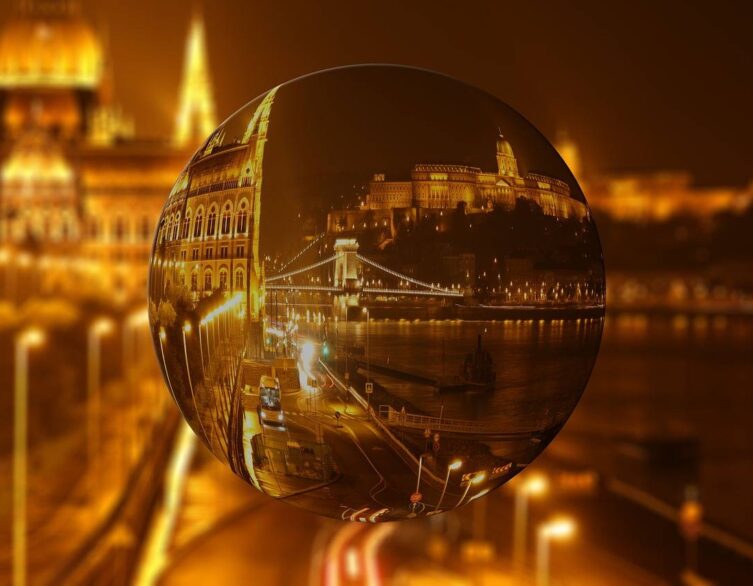
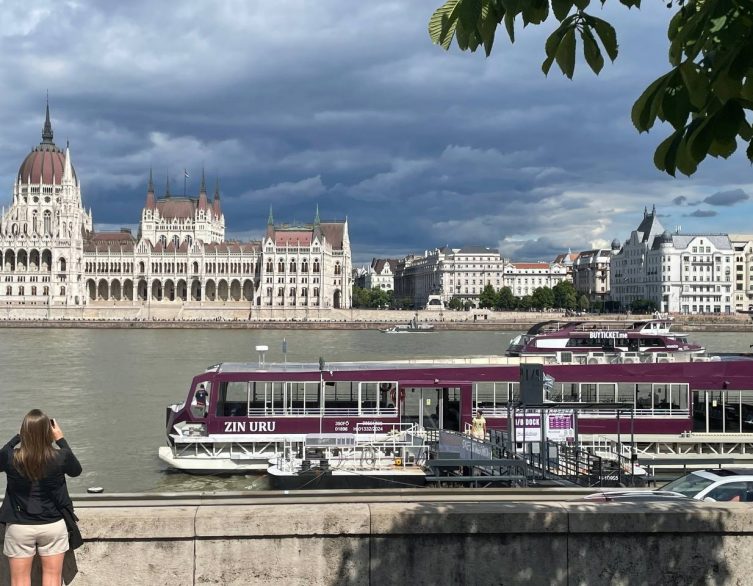
There is a running joke among Budapestians that their city has a second career as every other city in the world. One week it is 1930s Berlin, the next it is Cold War Moscow, and somewhere in between it quietly doubles as Buenos Aires, Saint Petersburg, or a dystopian metropolis that does not technically exist. The latest and perhaps most charming example of this shapeshifting talent is Ponies, the Cold War spy thriller now streaming on SkyShowtime, starring Emilia Clarke and Haley Lu Richardson — and filmed almost entirely in Budapest.
The Show: Spies, Widows, and Cold War Moscow
Ponies is set in Moscow in the late 1970s, at the height of the Cold War. Two women — Bea, played by Emilia Clarke, and Twila, played by Haley Lu Richardson — work as secretaries at the American Embassy when their CIA-agent husbands are killed under mysterious circumstances. Rather than accept the official story and go home, they decide to stay and investigate, taking on undercover roles themselves despite having absolutely no training for the job. The title comes from the intelligence term PONI — Person of No Interest — which is precisely the status that allows them to move relatively freely under the KGB’s radar.
The eight-episode series was created by Susanna Fogel and David Iserson and premiered on January 15, 2026. Fogel is no stranger to Budapest — she previously filmed The Spy Who Dumped Me here in 2018 — and she clearly liked what she found, because she came back with a bigger story and a bigger cast. Filming began in Budapest in February 2025 and wrapped in July of the same year, with the production spending nearly 60 percent of the shoot on location across the city.
How Budapest Became Cold War Moscow
Transforming a 21st-century European capital into 1977 Soviet Moscow is no small feat, and the production team behind Ponies pulled it off with remarkable conviction. The key, as any filmmaker who has worked in Budapest will tell you, lies in the city’s extraordinary architectural diversity. Budapest’s layered history — Habsburg grandeur, Art Nouveau elegance, socialist-era brutalism, and everything in between — means that a skilled production designer can find almost any visual language they need within a few square kilometres.
For Ponies, the production leaned heavily into the socialist and Soviet-era aesthetic that parts of Budapest still carry with quiet authority. The Fiumei Road Cemetery, with its monumental mausoleums, provided the visual weight and gravity of Soviet architecture. The Gellért Thermal Bath, elegant and timeless, became an embassy-adjacent interior space. Industrial districts and the wide, austere boulevards of certain Buda and Pest neighbourhoods delivered exactly the kind of grey, watchful atmosphere the story demanded. The Hungarian Theatre was transformed into the Pushkin Cinema — which, the reviewers note with some amusement, is a name that actually belongs to a real Budapest cinema too. Heroes’ Square, Fisherman’s Bastion, the Opera House, Chain Bridge, and even the industrial town of Dunaújváros all made appearances, with digital effects adding Kremlin spires and Stalinist high-rises to complete the illusion.
What makes the transformation especially impressive is the attention to period detail off-camera. The production team researched Soviet-era electrical systems, street infrastructure, and architectural specifics to ensure the world felt genuinely inhabited rather than decorated. Flea markets were scoured for authentic props, furniture was custom-built, and some Budapest buildings that were already scheduled for demolition were carefully photographed and incorporated into the production before they disappeared for good.
Hungarian Talent Takes Centre Stage
One of the most quietly exciting aspects of Ponies for anyone interested in Hungarian cinema is the role played by the local cast. This is not a production that hired Hungarian actors as background extras and left it at that. Two of the recurring supporting roles went to some of Hungary’s most respected performers, and they hold their own entirely against their internationally famous co-stars.
Best deals of Budapest








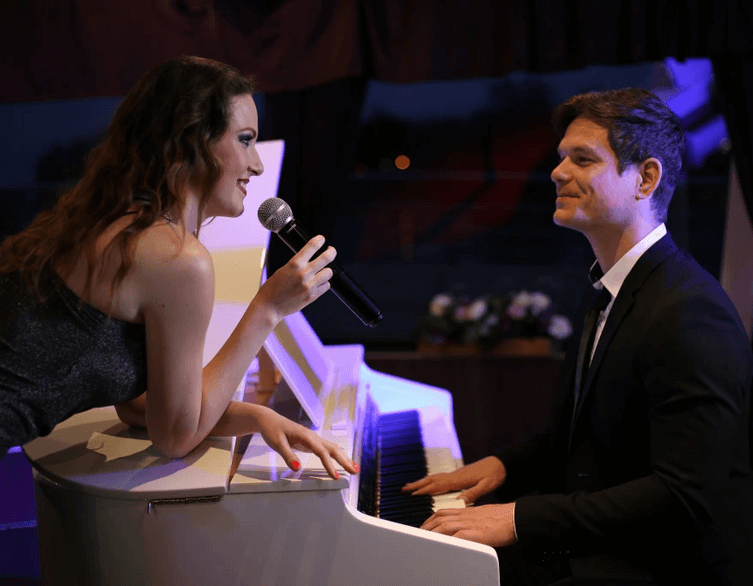
Lili Walters — known to Hungarian audiences from Drakulics elvtárs, Apatigris, and Senki szigete — plays Ivanna, a young Soviet market vendor who becomes a recurring presence throughout the series. Pál Mácsai, one of Hungary’s most celebrated stage and screen actors with a career spanning Hanussen, Rokonok, Terápia, and Testről és lélekről, plays Emile, a spy trainer whose knowledge and experience becomes essential to Bea and Twila’s survival. Both characters have dialogue, both have genuine dramatic weight, and both, according to reviewers, are fully equal to the international cast around them.
Beyond Walters and Mácsai, sharp-eyed viewers will recognise a string of beloved Hungarian faces in smaller roles: Franciska Törőcsik, Nóra Trokán, Panna Fehér, Attila Ferencz, Ágnes Bartos, Zsuzsanna Holl, Sára Schmidt, Piroska Mészáros, Levente Törköly, and others. Watching Ponies with a Hungarian viewer turns the experience into a delightful game of recognition that, fair warning, may require a second viewing to actually follow the plot.
Budapest’s Secret Superpower
Ponies is the latest chapter in a long and impressive story of Budapest standing in for other cities on the world’s screens. The city has played Cold War Moscow in Red Sparrow, divided Berlin in Atomic Blonde, late 19th-century New York in The Alienist, Renaissance Rome in The Borgias, and even the future Los Angeles in Blade Runner 2049. Major productions including Black Widow, Gemini Man, World War Z, The Witcher, and Marco Polo have all used Budapest’s streets, studios, and landmarks to build worlds that audiences around the globe never suspected were Hungarian.
The reason is not simply that Budapest is beautiful — though it is. It is that the city’s architectural vocabulary is uniquely versatile, allowing it to convincingly represent a wide array of European cities including Berlin, Paris, Vienna, Saint Petersburg, and Moscow. The Origo and Korda Studios on the outskirts of the city provide world-class stage facilities, while the city itself offers a density of genuinely historic, unmodified streetscapes that simply cannot be replicated on a set.
There is also something deeper at work. Budapest’s buildings are not just architecturally interesting — they are emotionally loaded. The communist-era structures are not re-creations; they are memories. The concrete, the monumental proportions, the rigid symmetry — these are real, and they read as real on camera in a way that a Hollywood back-lot version never could. For a story like Ponies, set in the paranoid heart of the Soviet era, that authenticity is not just a production value. It is the soul of the show.
Where to Spot the Locations Yourself
If Ponies inspires you to do a little location scouting of your own while you are in Budapest, you will not have to look far. Heroes’ Square and the Museum of Fine Arts in City Park are among the most recognisable exteriors. The area around Fiumei Road Cemetery in the 8th district is well worth a visit in its own right — it is one of the most atmospheric and undervisited landmarks in the city. The Gellért Thermal Bath on the Buda side of the Danube combines a cinematic backdrop with the very practical pleasure of a long soak in thermal waters. And if you want to understand at a glance why Budapest keeps getting cast as Soviet-era cities, a walk along certain stretches of the outer ring roads or through the 13th district’s wide, grid-planned streets will make it immediately obvious.
Budapest does not shout about its film career. It simply gets on with it, quietly becoming whatever the story needs — and that, more than any particular building or boulevard, is what makes it one of the great filming cities in the world.
Related news