Budapest Is Finally Becoming a Bathing City on the Danube — Here’s Where to Swim
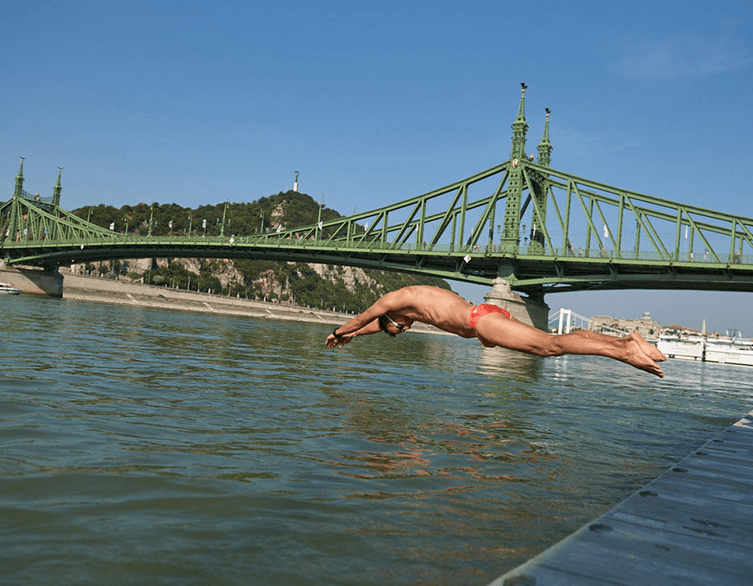
Ask a first-time visitor to Budapest what the Danube is for, and they’ll probably say “photos.” Bridges, boat cruises, the Parliament building glowing at sunset — the river as backdrop, never as a place to actually get in. That’s changing fast. After decades of being off-limits, the Danube is opening back up for legal, supervised swimming in the Hungarian capital, and two of the three official riverside beaches now in operation exist thanks in large part to the work of VALYO (City and River Association), a Budapest-based civic group that’s spent 16 years pushing to reconnect the city with its river.
For tourists sweating through a Budapest summer, this is genuinely useful news: you no longer have to choose between a crowded thermal bath and an illegal, risky dip off some random embankment. There are now real, marked, lifeguarded spots to swim in the river itself.
Where You Can Actually Swim Right Now
The most established option is Római Beach (Római-part) in the Óbuda district, on the Buda side of the river. It’s free, open until around 8pm in peak summer, and has the loose, slightly scruffy charm of a proper riverside hangout — pebbly shoreline, shade trees, and enough bars and lángos stalls nearby that you can turn an afternoon swim into a full evening out. It was the first legal Danube bathing spot to reopen in the capital after years of pollution kept swimmers away, and it remains the go-to for locals in District III.
The newer arrival is Duna-fürdő Árasztó-part, tucked into District XI (Újbuda) on the Buda bank. It opened as a modest 20-metre pilot strip in the summer of 2025 and proved so popular that for the 2026 season it’s been expanded fivefold, to a 100-metre stretch of riverbank with a swimming zone dredged to a controlled depth of about 1.2 metres. Run by Budapest Spas and Thermal Baths (BGYH), it’s open daily from 10am to 6pm through the summer, water quality is lab-tested regularly, and a professional lifeguard is on duty the entire time. It’s reachable by BKV bus line 33 or by bike along the dedicated path on top of the levee — a nice option if you want to combine sightseeing with an actual swim rather than just admiring the river from a bridge.
Round out the trio with Flava Beach at Kopaszi-gát, near the base of the MOL Tower, which offers a more resort-style, paid setup with loungers and a livelier social scene if you’d rather sip a drink by the water than rough it on a pebble beach, alongside free bathing and paddleboard rental.
Best deals of Budapest










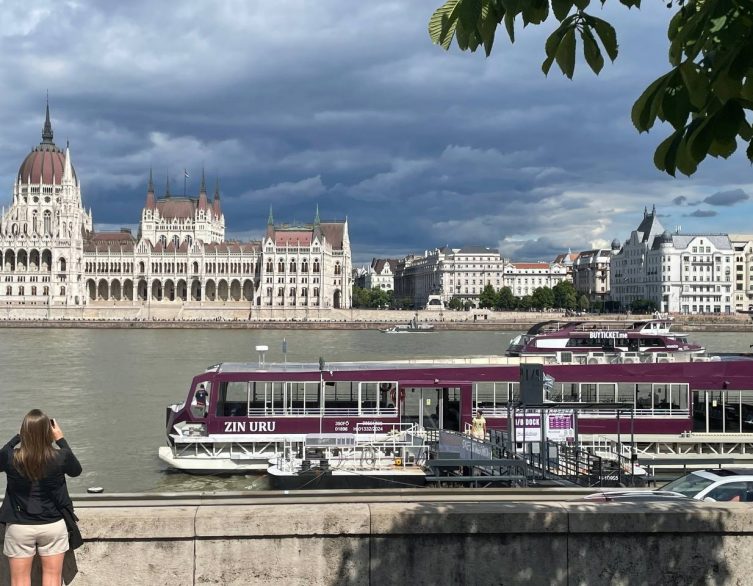
One important safety note for visitors: swimming anywhere else along the embankment — near the Chain Bridge, Parliament, or the city-centre quays — is illegal and genuinely dangerous, thanks to strong currents, shipping traffic, and underwater debris. Stick to the three designated beaches.
The Group Behind the Comeback
The organisation driving much of this is VALYO, whose name is shorthand for “Város és Folyó” — City and River. Since its founding, VALYO’s whole mission has been making the Danube approachable, touchable, and lovable as an urban space rather than just a scenic divider between Buda and Pest. Its annual Budapest Cross-Swim event (Budapest Átevezés) has spent years demonstrating just how much appetite there is among Budapest residents to actually get in the water, not just look at it.
VALYO had a direct hand in creating both Római Beach and the Árasztó-part beach, and its influence goes further still. In December 2024, Budapest’s Municipal Assembly voted to commission a feasibility study into building a proper Dunafürdő — a river bath, sometimes described as a “wooden floating pool” or fauszoda — somewhere along the city’s Danube frontage. At the request of Budapest Spas and Hot Springs (BGYH), VALYO co-authored that study, digging into the history of Danube bathing, surveying successful international examples of cities that treat their rivers as swimmable public space, and assessing 49 potential locations across the capital for their suitability.
A River Bath Tradition That Goes Back 200 Years
What’s striking is that none of this is actually new — Budapest used to be a proper river-bathing city, and lost that identity only fairly recently in historical terms. The first Dunafürdők (Danube baths) were built in the 1810s and 1820s: seasonal wooden structures with cabins, pools, and bathing baskets that operated from May to September and were dismantled or towed away each winter, then rebuilt the following spring. The city’s first public bath of this kind opened in 1836, the same year Budapest held its first major open-water swimming race, a short “swim-out” from the bath toward the royal Sóház (Salt House).
That race eventually grew into something much bigger: a city-spanning swim stretching from Margaret Island all the way to Csepel Island, a tradition that lasted into the 1860s. By the early 20th century, at least nine river baths operated along the Budapest Danube, even as organised competitive swimming gradually displaced casual open-water bathing.
World War II badly damaged the Danube baths, and a subsequent shortage of timber, followed by worsening industrial pollution, sealed their fate. Danube bathing was banned outright in 1973, and the riverside quays that once held bathhouses were gradually taken over by cars. It’s a history that’s easy to forget while walking along today’s traffic-heavy embankments — but VALYO brought it back to public attention in 2023, installing peephole viewing boxes called SKUBIs at the former sites of Budapest’s historic river baths as part of the city’s first Contemporary Public Art Biennale, letting passers-by glimpse both the vanished baths of the past and contemporary Western European examples of what riverside bathing could look like again.
Why the River Is Swimmable Again
None of this expansion would be happening if the water itself hadn’t changed. For most of the late 20th century, industrial pollution made the idea of swimming in the Budapest Danube unthinkable, which is precisely why the 1973 ban stuck for so long. That’s no longer the case. Years of environmental investment along the river have measurably improved water quality, to the point where Hungary’s own open-water swimmers used the Danube to train ahead of the Paris Olympics, crediting the river conditions as a real competitive advantage. Budapest’s mayor, Gergely Karácsony, has pointed to this shift directly, stating that more and more sections of the river are now genuinely suitable for bathing. Regular accredited testing has already confirmed water quality is good enough for swimming at several additional spots beyond the current beaches, including the northern tip of Óbuda Island and stretches along Antall József Quay and Hengermalom Road. In other words, the constraint on expanding Danube swimming in Budapest is no longer really the river — it’s political will, funding, and infrastructure.
What Budapest’s Future Swimming Map Could Look Like
The 2024 feasibility study didn’t just look backward — it mapped out where Budapest could realistically build new bathing spots going forward, sorting the riverbank into categories based on shoreline type, current strength, shipping traffic, and how close each site sits to existing parks or recreational infrastructure.
Along the main channel of the Danube, natural sandy or pebbly stretches lend themselves to open-air free beaches, exactly like Római Beach and Árasztó-part — the study flagged 13 potential locations of this type. Sheltered inlets, or “bay beaches,” are considered friendlier for less confident swimmers and children because the water is calmer; Flava Beach at Kopaszi-gát already fills this role, and the study proposed a similar setup for the bay at Palotai Island in Újpest. The calmer, lock-controlled Ráckevei-Soroksári Danube branch on the city’s southern edge was assessed for five possible beach sites, with the area near Pesterzsébet Thermal and Bath complex singled out as the strongest candidate.
For the true city-centre stretch of the river, where currents run strong and the banks are lined with stone embankments rather than sand, the study leaned into that historic river-bath tradition — proposing 15 possible sites for a “Central Dunafürdő,” with the stretch of Jane Haining Quay near the Vigadó concert hall coming out on top, potentially even reclaiming space currently occupied by permanently docked hotel boats. Ten further sites were assessed for smaller-scale “local” river baths, including one near the city’s new Athletics Stadium, while three sections — around Óbuda Island, Margaret Island, and along Bert Promenade — were earmarked as potential buoy-marked swimming lanes for more serious open-water swimmers. City councillor Dávid Vitézy, who first proposed the downtown river-bath project, has framed it explicitly as reviving the city-centre swimming culture of the 1920s and 1930s, when floating pools were a normal part of everyday Budapest life rather than a novelty.
Why This Is About More Than Just Cooling Off
It’s tempting to file all of this under “nice-to-have summer infrastructure,” but that undersells what’s actually at stake. A city-centre Dunafürdő near the Vigadó, or swimming lanes around Margaret Island, wouldn’t just give people another way to beat the heat — they’d fundamentally change how Budapest residents and visitors relate to the river that defines the city’s geography and identity. Right now, the Danube in central Budapest functions almost entirely as a transportation corridor and a scenic backdrop: something you cross, sail past, or photograph from a bridge, but rarely touch. Every new bathing site chips away at that separation, turning stretches of embankment that currently serve cars and cruise boats back into genuine public space where people gather, linger, and interact with the water directly rather than observing it from a distance.
That shift matters for how a city breathes, especially as summers get hotter. Heat resilience is increasingly a public-health issue in European capitals, and unlike air-conditioned malls or paid thermal baths, a free river beach is accessible cooling infrastructure available to everyone regardless of income — a point city officials and VALYO have both made explicitly when discussing why expanding bathing access is a priority rather than a luxury. A swimming lane at Margaret Island or a beach near the Athletics Stadium isn’t just recreation; it’s climate adaptation woven into the urban fabric.
There’s also something less measurable but just as real: the sense of civic ownership that comes from being able to physically use a shared natural resource. Cities like Paris, Vienna, and Basel have all invested heavily in reopening urban rivers for swimming precisely because it reshapes how residents feel about their city — the Danube stops being something Budapest merely sits beside and becomes something Budapest actually lives in. For tourists, that shift is a gift too: instead of experiencing the river only through a cruise ticket, you get to share the water with the people who actually live there, which is about as close to authentic local life as a visit to Budapest can offer.
Why This Matters for Your Trip
If you’re visiting Budapest in summer, the practical takeaway is simple: you’re arriving at a genuinely interesting moment in the city’s relationship with its river. Rather than just crossing the Danube on a sightseeing boat or admiring it from Fisherman’s Bastion, you can actually swim in it — legally, safely, and for free at two of the three current sites. Bring your swimsuit to Római Beach or the Árasztó-part beach in Újbuda, both easily reached by public transport, and you’ll get a side of Budapest that most guidebooks still don’t mention: locals cooling off in the same river that flows past the Parliament, the Chain Bridge, and Buda Castle.
The plans on the table — a revived central river bath near the Vigadó, swimming lanes around Margaret Island, expanded hours at existing beaches — suggest this is only the beginning. Budapest spent much of the 20th century turned away from its river. It’s now turning back toward it, one beach at a time.
Related news
Swimming in the Danube: What Every Visitor to Budapest Should Know Before Jumping In
Budapest is in the grip of a brutal heatwave this summer, and with the Danube’s water level dropping to record lows, the temptation to cool...

Budapest’s Magical Danube Mayfly Bloom: A Rare Summer Spectacle Worth Catching
If you happen to be strolling along the Danube in Budapest during the first weeks of August, you might witness one of nature’s most delicate...
Swimming in the Danube Is Back — and Budapest Can’t Get Enough of It
There’s something wonderfully romantic about the idea of swimming in the Danube as it flows through the heart of Budapest. For much of the...
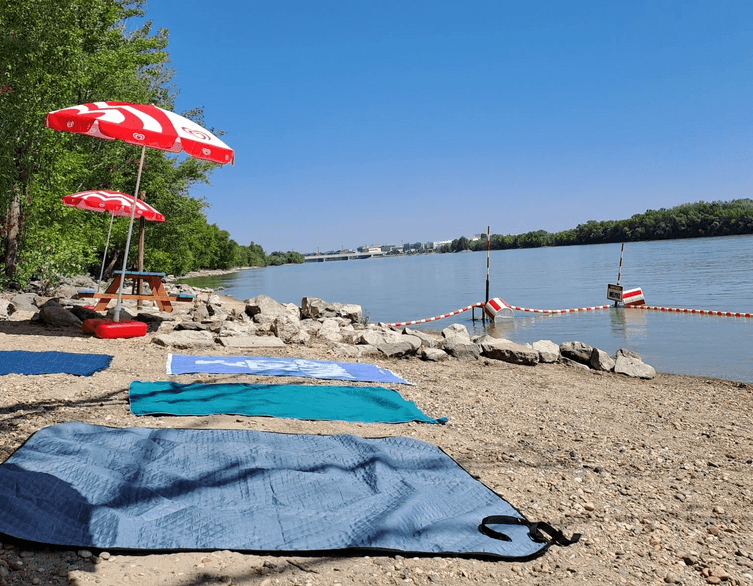
Swimming in the Danube: Discover Budapest’s Free Riverside Beach at Árasztó-part
Budapest is famous for its thermal baths, but what if you could take a refreshing dip right in the Danube? In summer 2026, this unique experience...
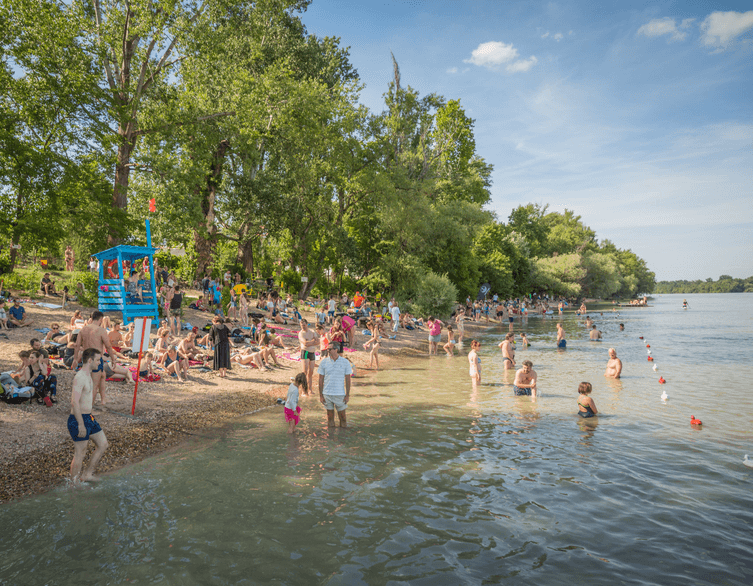
Swimming in the Danube Is a Thing in Budapest — And It’s About to Get Even Better
When most people think of Budapest, they picture grand thermal baths, steaming pools, and tourists in fluffy robes looking deeply content with their...
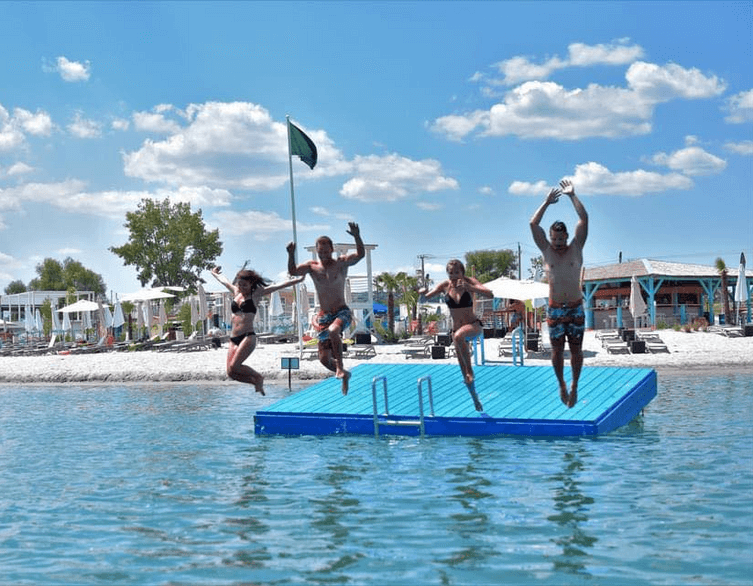
Budapest Beach Season 2026: When to Hit the Outdoor Pools
The May sunshine is out, the temperatures are flirting with something almost summery, and you’re standing in Budapest wondering: can I finally...
Related events