Budapest Airport’s Summer 2026: More Flights, More Destinations, More Reasons to Visit Hungary
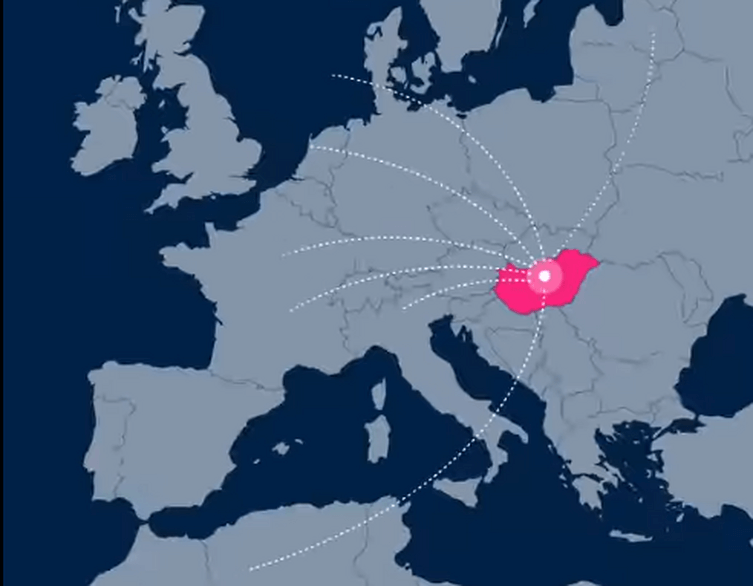
If you’ve been thinking about visiting Budapest, 2026 might just be the best year to finally make it happen. Budapest Franz Liszt International Airport is launching its most ambitious summer schedule yet, offering travellers an impressive choice of 160 destinations, 220 routes, and more than 15 million available seats — making it easier than ever to reach the Hungarian capital from across the globe.
Transatlantic Flights Are Back
The headline news for travellers from the Americas is unmissable. After a seven-year absence, American Airlines is reinstating its daily Budapest–Philadelphia service starting in May 2026, while Air Canada is resuming its popular Budapest–Toronto route in June, operating four times a week. Together, these two airlines will unlock access to over 100 destinations across North America and the Caribbean, turning Budapest into a genuine gateway between Europe and the Western Hemisphere.
This is especially exciting if you’re planning a transatlantic trip that combines Budapest with wider European travel. Philadelphia and Toronto both serve as major hub airports, meaning you can seamlessly connect to dozens of onward destinations once you land. And with river cruise tourism on the Danube continuing to boom, expect to see more and more North American visitors floating through the city’s iconic waterfront.
Direct Flights from Asia Expanding Fast
Budapest is also cementing its status as a regional hub for Asian connectivity. From April 2026, Asiana Airlines joins Korean Air in offering direct flights between Seoul and Budapest, bringing the total number of weekly connections to the South Korean capital to six. That means if you’re travelling from South Korea — or indeed connecting through Seoul from elsewhere in Asia — getting to Budapest has never been more convenient.
Chinese connections are surging too. Direct passenger traffic between Budapest and China has grown by a remarkable 43% compared to 2024, and around a third of those passengers are using Budapest as a connecting point to or from third countries. That speaks volumes about how the city is evolving from a regional tourist destination into a true intercontinental transit hub.
Best deals of Budapest









Frankfurt and the Power of Diversification
One of the strategic pillars behind Budapest Airport’s impressive growth is its diversification approach — the idea that having multiple airlines serving the same route creates healthy competition and more options for travellers. This philosophy gets a real-world showcase on the Budapest–Frankfurt corridor. From May 2026, Condor will launch a direct Budapest–Frankfurt service, joining Lufthansa’s already well-established flights on the route and bringing the combined weekly seat capacity to approximately 10,000. For tourists flying in from Germany — one of Hungary’s top source markets — this is a welcome development that should keep prices competitive and frequencies high.
A Treasure Trove of New European Destinations
Even if you’re already in Europe, this summer’s schedule gives you plenty of new ways to reach Budapest. Low-cost carriers Wizz Air and Ryanair have between them announced 17 new European flights covering 12 brand-new destinations. Wizz Air is adding routes from Ankara, Bergen, Billund, Lamezia Terme, Kefalonia, Kalamata, Menorca, Sofia, Varna, Dubrovnik, and Zadar, while Ryanair is expanding its network with new services from Kraków, Lamezia Terme, and Dubrovnik, among others.
What this means practically is that Budapest is increasingly within easy reach of travellers from Scandinavia, the Balkans, and the wider Mediterranean. Seat capacity to the Baltic capitals alone is set to hit 125,000 this summer, while the Scandinavian market will have a staggering 910,000 seats available in the schedule — a sign that high-spending visitors from northern Europe are very much on Budapest’s radar.
Why This All Matters for Your Budapest Trip
Beyond the numbers and airline names, this expansion has real implications for the experience of visiting Budapest. More flights typically mean lower fares and more flexibility in how you plan your trip. It also signals growing international confidence in Budapest as a destination — one that continues to attract both leisure travellers drawn to its thermal baths, ruin bars, and stunning architecture, and business visitors taking advantage of its increasingly well-connected airport.
Budapest Franz Liszt International Airport sits about 16 kilometres from the city centre, and getting there is straightforward. The 100E airport express bus runs directly to Deák Ferenc Square in the heart of Pest, with a journey time of around 30 to 40 minutes. With the airport’s growing network now spanning 160 destinations across Europe, North America, Asia, and beyond, it’s fair to say that Budapest has well and truly arrived on the world stage — and the summer of 2026 is shaping up to be its most connected season ever.
Related news
Your Stress-Free Guide to Budapest Airport: Everything Just Got a Whole Lot Easier
Traveling through a foreign airport can feel like navigating a maze — especially when you’re in a country whose language looks and sounds...

Budapest Airport Named Best in Eastern Europe — Again
If you’re flying into Budapest this year, you’re landing at one of the most consistently acclaimed airports in the world. Ferenc Liszt...
Budapest Airport Parking Update for Travelers: Refunds and No Overstay Fees During Flight Disruptions
If you’re flying to or from Budapest right now, you may have noticed that flight schedules can change quickly due to the ongoing conflict in the...

Budapest Airport’s New Digital VAT Refund: Save Big on Your Shopping Spree
Hey, fellow traveler—if you’re jetting into Budapest from outside the EU, get ready for a game-changer at Ferenc Liszt International Airport...

Budapest Airport Made Easy: How to Use the 100E Airport Express Like a Local
If you are already dreaming of spring or summer in Budapest and busy booking flights, there is one thing you really do not have to stress about:...