Hanukkah in Budapest – History, Light and Living Tradition
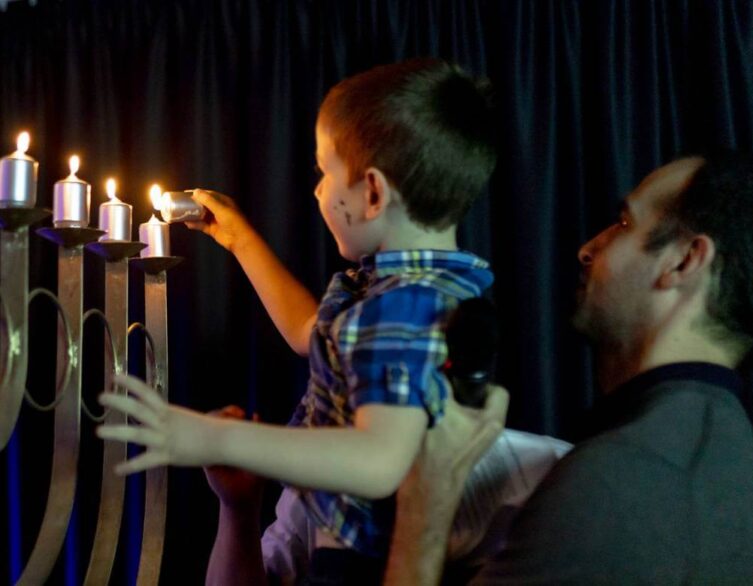
Hanukkah in Budapest is more than a “Jewish Christmas” or a private family ritual – it has become a visible, vibrant part of the city’s winter identity. As Christmas markets glow on Vörösmarty Square and Andrássy Avenue lights up, another kind of light appears in the windows of the 7th district: the warm flames of Hanukkah candles and the scent of doughnuts fried in oil.
For anyone curious about Jewish culture, whether you are a local rediscovering your roots or a visitor exploring Budapest, Hanukkah offers a welcoming way in. It is a holiday of joy, resilience and community – and Budapest is one of the best places in Europe to experience it up close.
The origins of Hanukkah – from the Maccabees to the miracle of the oil
The story of Hanukkah reaches back to the 2nd century BCE, to a time when the Jewish people lived under the rule of the Seleucid (Syrian-Greek) Empire. The king, Antiochus IV, attempted to suppress Jewish religious life, banning core practices and desecrating the Temple in Jerusalem. In response, a small group of Jewish rebels, the Maccabees, rose up and eventually recaptured the Temple despite overwhelming odds.
When they entered the sanctuary to rededicate it – the Hebrew word “hanukkah” literally means “dedication” or “inauguration” – they found only one small container of ritually pure olive oil, enough to keep the Temple’s seven-branched menorah burning for a single day. According to tradition, that oil burned for eight days, just long enough to prepare new, pure oil. This miracle of the oil is the reason Hanukkah lasts eight nights and why light and oil are at the heart of the festival.
What Hanukkah celebrates today – light over darkness, joy over fear
Historically, Hanukkah marks both a military victory and a spiritual renewal: the reclaiming of Jewish self-determination and the rededication of a sacred space. Over time, the focus has shifted from battles to values – the triumph of light over darkness, religious freedom over oppression, and identity over forced assimilation.
Best deals of Budapest
In modern Jewish life, Hanukkah is considered a relatively “minor” festival in terms of religious law, but it is one of the most beloved holidays among families. It is associated with songs, gifts for children, relaxed evenings, and plenty of fried food. Unlike fasts or solemn holy days, Hanukkah is about celebrating a public miracle: the guiding idea is to make the story of the oil visible through candlelight, shared rituals, and open doors.
The hanukiah and the art of lighting – How the candles are lit – and why it matters
The central ritual of Hanukkah is lighting the hanukiah, a nine-branched candelabrum often (incorrectly) called a menorah. The classic menorah has seven branches; the hanukiah has eight for the eight nights of the festival, plus a ninth holder for the “helper” or “servant” flame, the shamash, which is used to light the others.
The lighting order has its own elegant logic. Each evening, one extra candle is added, placed from right to left. When lighting, the shamash is used to kindle the newest candle first, then the rest, moving from left to right. This way, the “new light” of the day always takes priority. Candles are lit after dark and are meant to burn for at least around half an hour, during which people traditionally don’t work but instead sit, talk, sing, play or simply watch the flames.
A key principle of Hanukkah is “pirsumei nissa” – publicising the miracle – so the hanukiah is often placed in a window or doorway where others can see it. In Budapest, a December evening walk through inner Erzsébetváros or along narrow side streets of Pest reveals glowing hanukiot in apartment windows, a quiet visual sign that the city is breathing in rhythm with the festival.
Hanukkah at home – and in Budapest’s Jewish Quarter – from Judaica shops to kitchen traditions
If you want to celebrate Hanukkah in Budapest, the historic Jewish Quarter (around Kazinczy, Dob and Wesselényi streets) is the ideal starting point. Judaica shops sell hanukiot in every style – from simple metal stands to minimalist designer pieces – as well as packs of candles or small glass cups for olive oil. Many sets are calculated so they contain all 44 candles needed for the eight nights plus shamash flames, saving you from last-minute shopping on night five.
The type of light is a matter of preference and tradition: some families prefer vivid coloured candles, while others swear by oil-filled glasses that more closely echo the original Temple light. In many homes, the hanukiah is placed on the windowsill above a sheet of foil or a tray, creating a shimmering line of reflections on cold winter evenings.
The taste of Hanukkah – doughnuts, latkes and the “miracle of oil” on your plate
Because the miracle of Hanukkah is tied to oil, its food customs embrace frying with enthusiasm. Around the holiday, bakeries in Budapest compete with different versions of sufganiyot, the classic Jewish Hanukkah doughnut: a round, filled pastry without a hole, often dusted with powdered sugar and oozing jam, chocolate or cream.
For traditional flavours, visitors head to long-established patisseries in the Jewish Quarter, where classic jams and custards dominate. New-wave bakeries and Israeli-inspired cafés experiment with fillings like pistachio cream, salted caramel or halva. On the savoury side, latkes (grated potato pancakes similar to Hungarian tócsni or lapcsánka) are fried crisp and served with sour cream or apple sauce. The combination of crackling oil, steam and winter air turns streets like Kazinczy into temporary food trails.
Dreidels and games by candlelight
Once the candles are lit and the food is served, many families and groups of friends turn to the classic Hanukkah game: spinning the dreidel, known in Hungarian as trenderli. It is a four-sided spinning top, each side marked with a Hebrew letter: nun, gimel, hei and shin. Together, these letters form an acronym for the phrase “Nes gadol haya sham” – “A great miracle happened there”; in Israel, the final letter changes to pe, meaning “here”.
The game uses small tokens – coins, nuts, chocolates – that players contribute to a central pot. Each spin determines what happens next: nun means nothing happens, gimel lets you take the whole pot, hei entitles you to half, and shin means you must put one piece in. Simple rules and the escalating stakes make it easy for children and adults to play together, and the game’s symbols subtly keep the story of the miracle in mind.
Hanukkah in public spaces
In recent decades, Hanukkah has moved from behind closed doors into public squares in many cities, and Budapest is no exception. Large outdoor hanukiot are set up in busy locations such as Nyugati Square or other central hubs. Rabbis and community leaders lead blessings and songs, musicians play klezmer or pop-inflected Jewish music, and volunteers hand out sufganiyot and hot drinks.
These events are usually organised by local Jewish communities and are explicitly open to everyone, regardless of background. Watching a crowd in thick coats and hats singing together under a giant menorah while trams ring past and Christmas lights glow nearby captures something unique about winter in Budapest: multiple traditions sharing the same streets, each adding its own layer of light.
Hanukkah’s modern meaning
Although Hanukkah grew from a specific historical moment, its themes feel surprisingly contemporary. The struggle to preserve identity under pressure, the rediscovery of sacred spaces, and the choice to respond to darkness with light all resonate in a world facing uncertainty and change.
For Jewish communities in Budapest, especially after the 20th century’s traumas and decades of state atheism, Hanukkah has also come to symbolise cultural revival and confidence: a chance to say “we are here” in a joyful, welcoming way. For visitors, joining a Hanukkah celebration – whether at a public menorah lighting, a neighbourhood bakery, a synagogue concert or a friend’s kitchen table – is a powerful way to encounter living Jewish culture rather than just its history in museums.
It is an invitation to slow down, watch a small flame grow into many, and remember that even in the darkest season, it takes only a little light to change the atmosphere of an entire city.
Related events