When Angels Dance: William Blake Inspires a Budapest Sensation
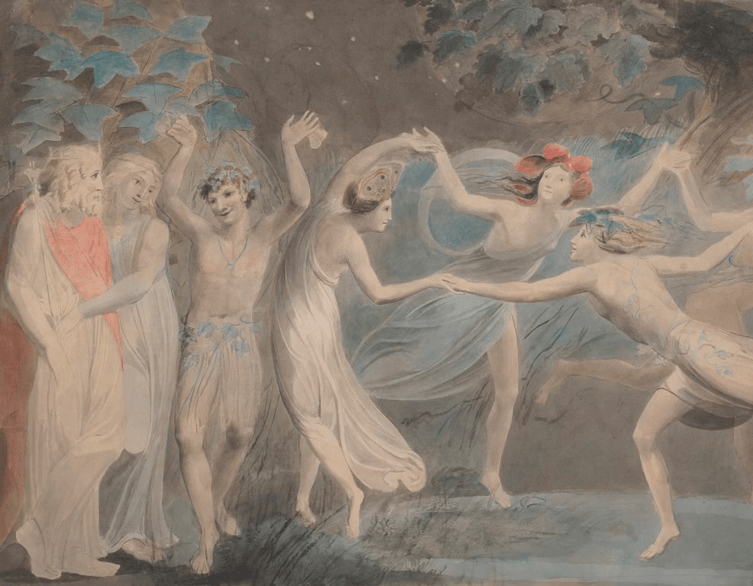
Budapest once again proves why it stands among Europe’s most imaginative cultural capitals. Since its grand opening in September, the exhibition The Marriage of Heaven and Hell – William Blake and His Contemporaries at the Museum of Fine Arts has attracted over 60,000 visitors, drawing art lovers from around the world. And as the show closes its doors, it goes out not with quiet reverence, but with rhythm, light, and movement — a groundbreaking event where William Blake’s angels, quite literally, danced through the museum halls.
An English Visionary in the Heart of Hungary
There’s something timeless about William Blake — the English poet, painter, and visionary who lived between 1757 and 1827. Known for blending mysticism with moral and spiritual depth, Blake blurred the lines between heaven and earth, imagination and reality. His influence extends far beyond Britain, and the Budapest exhibition, curated with pieces from the Tate’s prestigious collection, brought that imaginative world vividly to life.
Visitors wandering through the Szépművészeti Múzeum (Museum of Fine Arts) stepped into halls filled with Blake’s haunting prints, illuminated books, and mythological figures. The exhibit not only revealed his genius but also showed how Hungarian artists — from painter Béla Kondor to contemporary duo Borsos Lőrinc — have absorbed and reinterpreted his vision. Even literary icons like Antal Szerb and Lőrinc Szabó found their place here, highlighting how Blake’s poetry resonates across time and language.
Best deals of Budapest








A Silent Disco Among Angels and Demons
But it was the exhibition’s finale that truly made headlines. On a chilly January night, the museum transformed its classical halls into a world where sound, light, and mythology collided. The event, titled Blake the Silence, replaced traditional closing ceremonies with something never before seen in Hungarian museum culture — a silent disco beneath Renaissance, Baroque, and Neoclassical frescoes.
Guests donned wireless headphones and wandered through the galleries, moving to parallel DJ sets by Дeva and Zságer Balázs. Through layered ambient tones and hypnotic rhythms, the music captured the eternal dualities that defined Blake’s art — heaven and hell, order and chaos, light and shadow. One channel shimmered with ethereal harmonies evoking celestial realms, while the other pulsed with deep, resonant bass, conjuring the underworld’s energy.
Against the background of projected textures and flowing lights, the paintings seemed to breathe. Figures swirled in spectral hues, biblical floods rippled with rhythm, and the angels of Blake’s imagination appeared to dance again — this time through light, sound, and human movement.
Art as Experience
According to Polgár Péter, Head of Corporate Relations at the museum’s managing foundation, the aim was to create something that wasn’t just an exhibition, but a total sensory experience. “We believe museums have to offer not only knowledge but emotion and participation,” he explained. “Blake’s world is built on contrasts — angels and the devil, heaven and hell — so the silent disco became a perfect way to make that duality come alive.”
The event sold out a week in advance and exceeded all expectations, sparking a wave of conversation about what museums can be in the 21st century. No longer are they only temples of quiet contemplation; they are evolving into spaces of interaction, curiosity, and creative experimentation.
A New Vision for Budapest’s Museums
Budapest’s cultural institutions have long embraced innovation, from immersive exhibits at the Hungarian National Gallery to light-based installations at the Ludwig Museum. Yet Blake the Silence raised the bar — fusing visual art, contemporary music, and historical architecture into one continuous narrative. Visitors described feeling as if they had stepped inside one of Blake’s visions — walking through clouds, flames, and celestial songs.
This kind of experience shows how Budapest’s museums are redefining engagement for a global audience. For tourists, it means there’s always something unexpected: a classical masterpiece paired with modern interpretation, an ancient sculpture reimagined with sound, or in this case, a poetic universe turned into dance.
A Heavenly Farewell
As the final notes faded and the light projections dimmed, guests returned their headphones and lingered a moment longer among the artworks. The silence that followed felt almost sacred — the kind that exists after revelation. And perhaps that’s exactly what William Blake would have wanted. His vision of art was never static; it was alive, transformative, and eternally searching for the divine through human expression.
With The Marriage of Heaven and Hell exhibition, the Museum of Fine Arts didn’t just honor Blake’s legacy — it extended it. And for those lucky enough to be in Budapest during its run, witnessing angels dance in silence will remain an unforgettable memory.
Related events