Of Kings and Ice: The Enchanting History of Budapest’s Frozen Danube
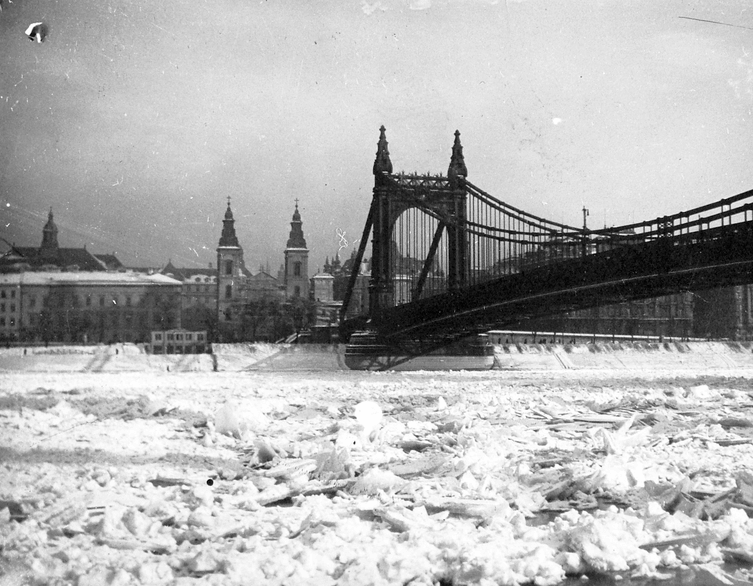
Budapest is currently gripped by a rare Arctic freeze, transforming the Danube into a moving mosaic of ice floes. For today’s travelers, it is a stunning photo opportunity, but for the people of old Pest and Buda, a frozen river was a stage for grand drama, royal coups, and even a booming “ice business.” To truly appreciate the drifting ice you see today, you have to look back at a time when the river was the city’s most unpredictable highway.
The Ice King: A Coronation on the River
The most legendary moment in Hungarian history took place right here on the ice. In January 1458, the river froze so thick that it became a solid bridge. According to legend, thousands of nobles and citizens swarmed onto the ice to elect Matthias Hunyadi—popularly known as Matthias the Just—as their king . While historians now believe the actual voting happened on the Rákos field, the frozen Danube was the crucial factor; it allowed thousands of people to cross safely from Buda to Pest to join the celebration . It was a “miracle freeze” that changed the course of Central Europe, turning the river into a massive, open-air ballroom for a nation .
The Count Who Got Stuck: The Secret Origin of the Chain Bridge
Did you know that Budapest’s most famous landmark, the Chain Bridge, was born out of a winter tantrum? In December 1820, Count István Széchenyi was in a frantic rush to visit his dying father in Vienna . He reached the Danube only to find it filled with drifting ice floes—too thin to walk on, but too thick for boats to row through. He was stranded for a week, fuming on the riverbank . It was during this frustrating wait that he famously vowed to donate a whole year’s income to build a permanent bridge so that “no traveler would ever be held hostage by the ice again” .
“Fattening” the River: The World’s Most Dangerous Road
Before bridges existed, the city authorities didn’t just wait for the ice to freeze—they “farmed” it. To ensure a safe crossing, workers would “fatten” the ice by pouring water over it to add layers, much like an ice rink . They would then lay down paths of straw and sand for traction and light the way with torches at night . It became a bustling winter boulevard where entrepreneurs even set up temporary taverns and stalls directly on the frozen water . However, it wasn’t always safe; the thermal springs beneath Buda would often thin the ice from below, creating “death traps” for unsuspecting travelers .
Best deals of Budapest










The Great Ice Disaster of 1838
The frozen river wasn’t always a winter wonderland. In 1838, the most catastrophic event in Budapest’s history occurred when the ice “piled up” near Csepel Island, forming a massive natural dam . This ice jam caused the river to back up, eventually bursting through the city’s dikes in a terrifying “icy flood” . Over half the buildings in Pest were destroyed, and heroes like Baron Miklós Wesselényi became legends by rowing boats through the frozen, flooded streets to save people trapped on their roofs . This disaster is the reason the Danube was eventually narrowed and deepened—to keep the ice moving so it could never trap the water again .
The Industrial “Ice Harvest”
Long before refrigerators, the Danube was the city’s freezer. In the mid-1800s, “ice harvesters” would saw giant blocks of ice from the river and transport them on horse-drawn wagons throughout the city . These blocks were stored in deep, sawdust-lined “ice cellars” where they would stay frozen even in the heat of July, allowing the wealthy to enjoy chilled wine and preserved meats all summer long .
A View into the Past
Today, as you watch the white floes drift under the bridges, you are seeing a rare echo of this history. Because of modern river regulation and the city’s “heat island” effect, the Danube rarely freezes solid anymore—the last time people could safely walk across was 1963 .
If you’re out exploring today:
- Look for the “Ice Jams”: Watch how the floes struggle to pass the bridge pylons, just as they did in the 1800s.
- Respect the Power: The police have currently banned all small boats because these moving floes can crush a hull with ease .
- Stay on the Shore: While it looks tempting to step out for a “Matthias-style” selfie, modern ice is notoriously unstable and thin .
Enjoy the spectacle from the safety of the embankments, perhaps with a hot kürtőskalács (chimney cake) in hand, and remember that you are witnessing one of the oldest and most powerful traditions of this historic city .
Related news
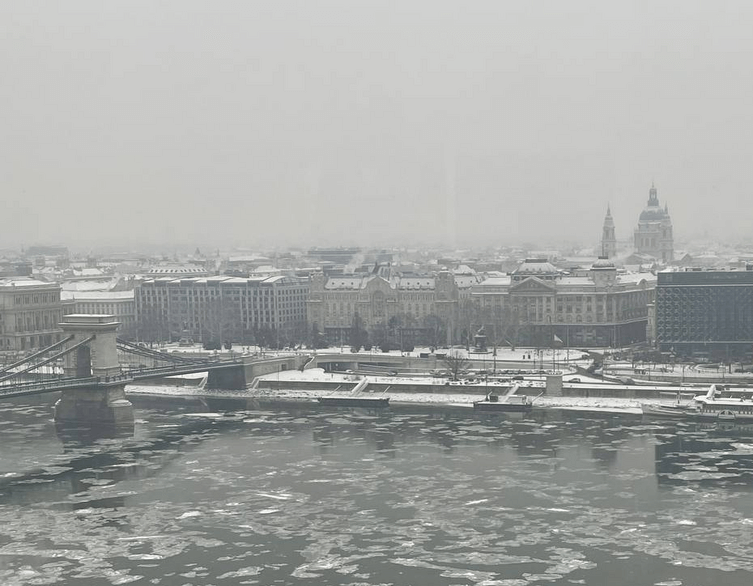
Winter Alert: The Danube’s Rare Ice Flow and Treacherous Conditions in Budapest
Budapest has been transformed into a breathtaking but hazardous winter landscape this January. The most striking development for visitors is the...
From Deep Freeze to Winter Thaw: Budapest’s January Weather Shift
Budapest is in the middle of a strikingly cold and snowy winter, creating a dramatic, almost storybook backdrop for anyone visiting the city. Recent...