Inktober Inspo from Budapest: 3. miniature
Budapest is celebrated for grand views, from the Hungarian Parliament Building and Buda Castle to the Danube and its bridges. Yet some of the city’s most rewarding discoveries are tiny enough to miss completely. For the third Inktober prompt, “miniature”, look beyond the obvious landmarks and into the playful bronze world of Mihály Kolodko.
The Ukrainian-Hungarian sculptor has made a habit of placing miniature artworks in unexpected public spaces. His tiny figures appear on railings, walls, steps, fences and riverside corners, turning a Budapest walk into a treasure hunt. This selection of newer Kolodko mini-statues offers plenty of inspiration for travellers with a sketchbook, a camera or simply a sharp eye.
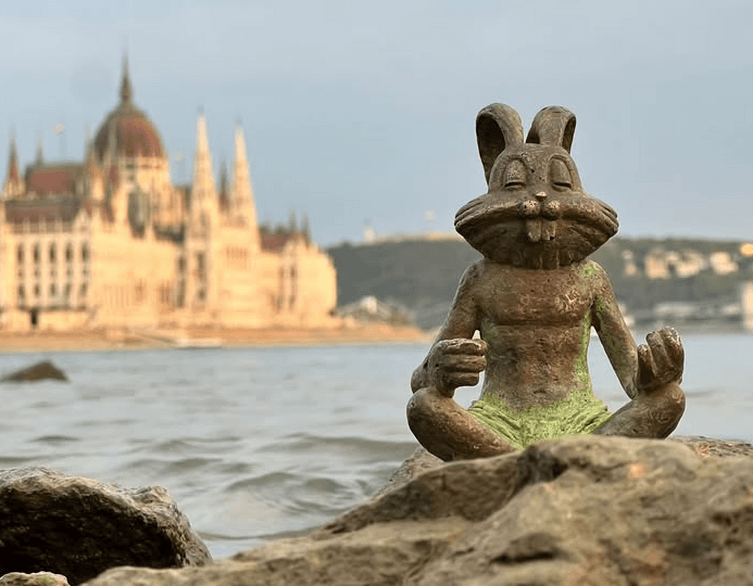
The Zen Rabbit on Margaret Island
At the southern tip of Margaret Island, Kolodko’s meditating rabbit has returned after the original sculpture disappeared soon after its installation. The replacement rabbit now sits beside the Danube near a pillar, in a slightly different position from the first version.
The little figure is easy to overlook, but that is the point. Look towards the water and you will find the Hungarian Parliament Building forming a spectacular backdrop across the Danube. It is an ideal miniature-versus-monumental composition for an Inktober sketch.
The rabbit sits very close to the river, so higher Danube levels may sometimes make it difficult to see or temporarily submerge it. Enjoy the hunt from a safe spot on the riverside rather than stepping onto wet or slippery surfaces.
Best deals of Budapest








Pinocchio by Széchenyi Square
Near the Tram 2 stop at Széchenyi Square, immediately beside the Hungarian Academy of Sciences, a small bronze Pinocchio hangs from a stone wall. He is shown as a wooden-jointed puppet rather than a real boy, and a tiny graduation cap adds another layer to the joke.
The placement is full of Kolodko’s dry humour. Pinocchio is one of literature’s most famous liars, while the academy represents scholarship, knowledge and the search for truth. Whether the statue comments on misinformation, credibility or academic authority is left open to interpretation.
The sculpture is close to the Chain Bridge, the Danube Promenade and the Parliament area, making it an easy stop during a central Budapest walk. Piszok Alfréd, another Kolodko mini-statue, is only a few metres away, so this small stretch of the riverfront is especially rewarding for statue hunters.
Leo and Fred at BudaPart
At BudaPart, near Kopaszi Dam, Leo and Fred sit beside a tiny circus wagon on the upper steps of the amphitheatre. The silent lion and his trainer are nostalgic figures from a beloved Hungarian animated series, and their small bronze scene is full of quiet character.
Their presence also refers to the area’s forgotten past. Near Lágymányosi Bay, a lively entertainment district called “Little Constantinople” once flourished around the turn of the 20th century. In Kolodko’s story, the circus has arrived too late: the old district has vanished, replaced by the modern riverside buildings and promenades of BudaPart.
While exploring the area, look towards the Buda end of the Rákóczi Bridge for another recent Kolodko work: a small Khanty hunter carrying a deer on his back. With the MOL Campus tower, the tallest building in Hungary, rising nearby, this part of Budapest offers an intriguing contrast between miniature art, riverside nature and modern architecture.
Yoda at Gellért Square
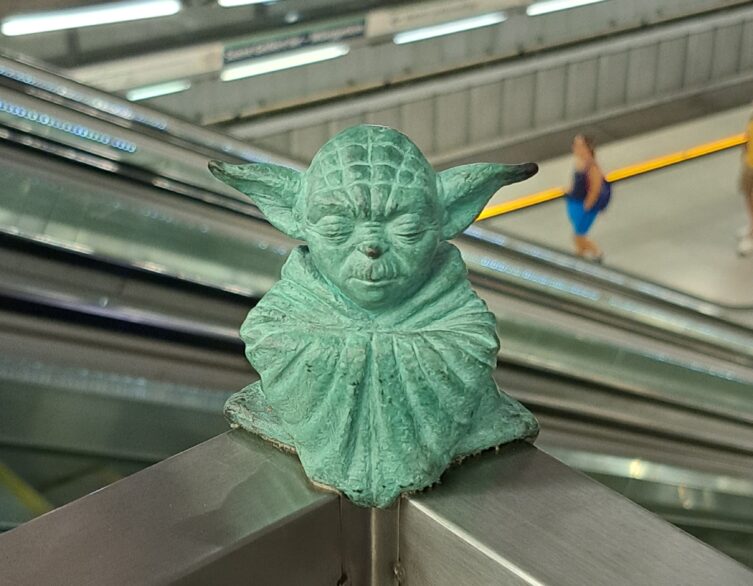
At Gellért Square station on Metro Line 4, a miniature Yoda sits in meditation on a metal railing. The tiny Jedi Master is an unexpected but delightful sight in one of Budapest’s busiest transport hubs, close to Liberty Bridge, Gellért Hill and Gellért Thermal Bath.
The Budapest Transport Centre welcomed the miniature with a fitting joke: Luke Skywalker had to travel all the way to the Dagobah system to meet Yoda, while visitors to Budapest only need to take Metro Line 4 to Gellért Square. It is an easy and entertaining stop to add to a Buda-side sightseeing route.
Zsigmondy at Széchenyi Thermal Bath
Near the main entrance of Széchenyi Thermal Bath in City Park, a new Kolodko mini-statue honours Vilmos Zsigmondy, the mining engineer whose work helped uncover the artesian water source behind Budapest’s most famous thermal bath.
Zsigmondy began drilling in City Park in 1868 and completed a borehole nearly 970 metres deep in 1878. The well produced around 1,200 cubic metres of mineral-rich thermal water a day at 73.8°C, or about 165°F. The discovery became an important chapter in Budapest’s rise as one of Europe’s great spa cities.
The small sculpture is set on a metal bollard close to the bath entrance on Állatkerti Boulevard. It is easy to combine with a visit to Széchenyi Thermal Bath, Heroes’ Square, Vajdahunyad Castle or the Museum of Fine Arts.
Dr. Bubó and the Frightened Rabbit
Near Bethesda Children’s Hospital on Hermina Road, close to City Park, two fresh Kolodko mini-statues stand together on the base of the fence. One is Dr. Bubó, the bespectacled owl doctor from the classic Hungarian animated series Next, Please!. The other is his famously anxious rabbit patient.
Dr. Bubó first appeared in 1975 and became a beloved character for generations of Hungarian children. In the series, he treats the forest’s animal residents from a clinic inside a hollow oak tree. The nervous rabbit comes from an early episode, in which he visits the owl doctor because he is afraid of almost everyone and everything.
Even if you have never seen the cartoon, the small scene is instantly expressive. The owl’s glasses and the rabbit’s worried posture make it a charming sketching subject, and the location is easy to combine with City Park attractions.
A Tiny Statue Hunt in Budapest
Kolodko’s mini-statues show that Budapest is not only a city of imposing buildings and sweeping panoramas. It is also a city of details, surprises and stories waiting close to the ground.
For this Inktober prompt, bring a sketchbook and walk slowly. Search around railings, stone walls, steps and fence bases rather than only looking up at the city’s grand façades. From a meditating rabbit by the Danube to a Jedi Master in a metro station, Budapest’s smallest artworks can lead to some of its most memorable travel moments.
Related news
Kolodko’s Zen Rabbit Is Back on Margaret Island
There is a tiny new reason to explore the southern tip of Margaret Island. Mihály Kolodko’s meditating rabbit has returned after the original...
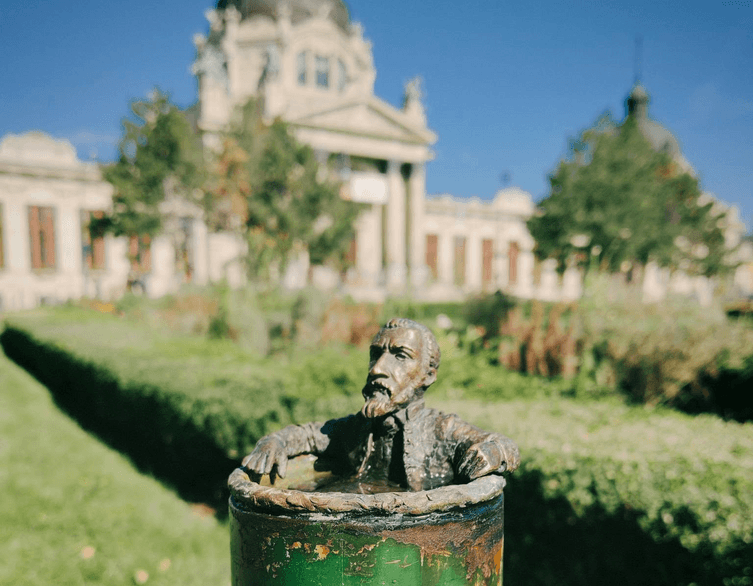
A Tiny New Statue at Széchenyi Bath Honors the Man Who Made It Possible
Budapest has never done anything by halves when it comes to its thermal water, and now the man who literally struck that water has finally gotten...
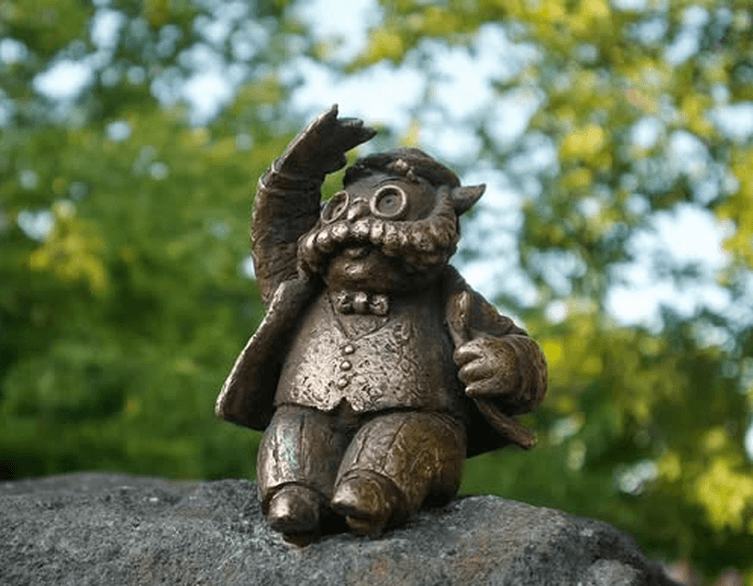
Two New Tiny Bronze Friends Have Landed in Budapest
If you thought Budapest had already shown you every quirky secret it has to offer, think again. The Hungarian capital’s favorite guerrilla...
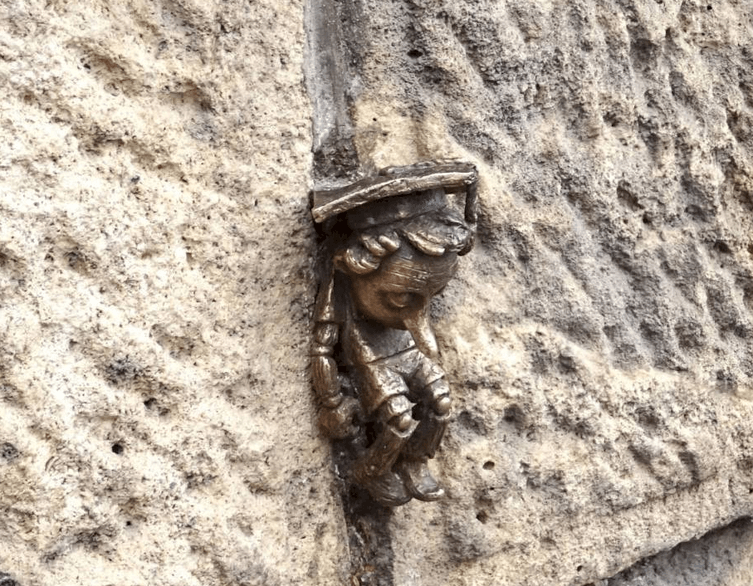
Another Kolodko Statue Appears in Budapest: Meet the Hanging Pinocchio
Budapest’s favorite tiny troublemaker has been on quite a roll lately, and this latest reveal might be his busiest day yet. Guerrilla sculptor...
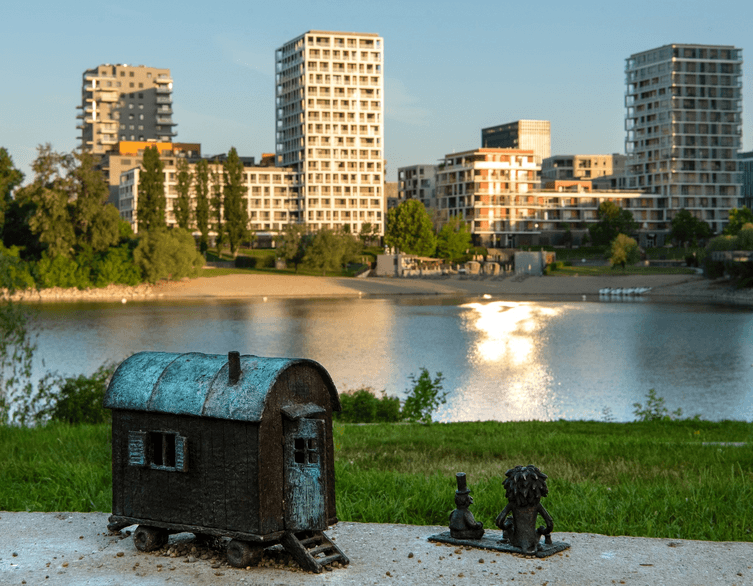
A New Hidden Gem at BudaPart: Kolodko’s Mini Statues
Budapest’s ever-growing collection of charming mini statues has just welcomed a delightful new addition at BudaPart, one of the city’s most modern...
Does Yoda Control Metros in Budapest?
Attention all Star Wars fans and art enthusiasts! There’s a new addition to the vibrant city of Budapest that’s sure to catch your eye....