Budapest’s Spring Cleaning Is Here — And It’s More Organised Than Ever
When the City Shakes Off Winter
There’s something deeply satisfying about a city that takes spring cleaning seriously. As the days get longer and the café terraces start filling up again, Budapest is doing what it does every year — rolling up its sleeves and giving its busiest public spaces a proper refresh. But in 2026, the city’s annual clean-up effort is bigger, better coordinated, and frankly more ambitious than anything it has attempted before. If you happen to be visiting Budapest right now, you’re arriving at a rather good moment.
The Big Joint Clean-Up Is Back
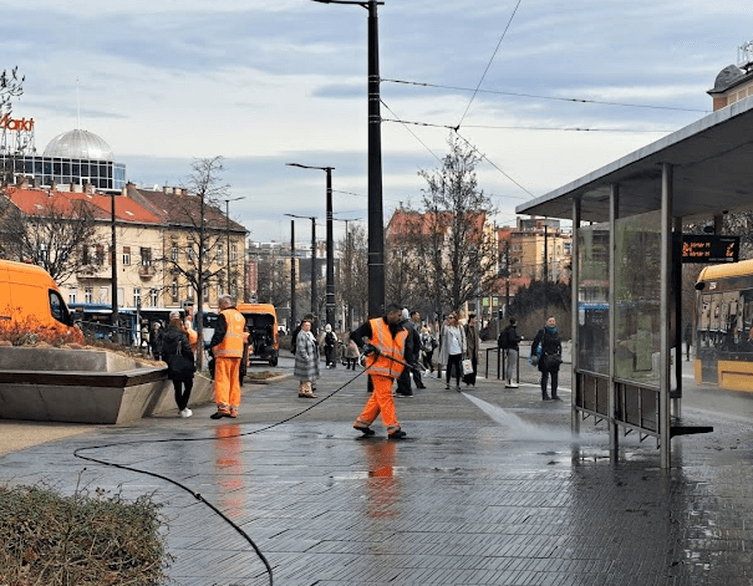
This week, BKK (Budapest Transport Centre) relaunched its coordinated spring cleanliness and public safety initiative at two of the city’s major transport hubs: Boráros Square and Calvin Square. These aren’t quiet neighbourhood corners — they are busy, high-footfall junctions where trams, buses, and pedestrians converge in their thousands every single day. Getting them properly clean and orderly at the start of spring is, quite literally, a city-wide priority.
The operation runs for three days — Thursday through Saturday — and brings together an impressively diverse coalition of organisations. Teams from BKK, BKV (Budapest Transport Company), the Budapest Police, municipal inspectors, and civil society groups are all working side by side on and around the routes serving these squares. Beyond the sweeping and scrubbing, the joint teams are also carrying out ticket inspections on nearby lines and checking the cleanliness and condition of vehicles themselves. It’s a full-spectrum spring refresh, from the pavement to the passenger cabin.
This Is Already a Proven Formula
This spring relaunch isn’t a new idea — it’s a tried and tested one. In 2025 alone, BKK organised this type of coordinated action 20 times across 17 different locations, reaching 12 districts of the city. Crucially, the initiative extended well beyond the tourist-heavy centre, covering major outer hubs where everyday Budapest life plays out in full and unglamorous detail. The results spoke for themselves, which is precisely why 2026 is kicking off with the same energy.
Meet the Square Keepers — Budapest’s Tidiness Task Force
Alongside the seasonal blitz, Budapest has quietly introduced something rather more permanent and rather more charming: a team of dedicated public space wardens, known in Hungarian as térgondnokok, or “square keepers.” Launched in October 2025 by BKM (Budapest Municipal Utilities), the service currently employs 14 people who work two shifts a day, from dawn until late evening, Monday to Friday, across six of the city’s busiest squares.
Best deals of Budapest










They’re easy to spot in their uniform, and their role is genuinely broader than you might expect. Yes, they pick up litter — but they also monitor street furniture and green spaces, deal with some very specific Budapest hazards (the city’s crows have apparently mastered the art of raiding rubbish bins with alarming efficiency), coordinate with nearby businesses, and can immediately call the police or emergency services when needed. Think of them as the city’s eyes, ears, and tidiness conscience rolled into one approachable, uniformed human being.
The Squares They Call Home
The programme started at three locations that any visitor to Budapest will almost certainly pass through: Blaha Lujza Square, Deák Ferenc Square, and the KÖKI Terminal area in Kispest. Blaha Lujza Square sits at the crossroads of the Grand Boulevard and Rákóczi Street and buzzes with activity at all hours, while Deák Ferenc Square holds the unique distinction of being the only place in Budapest where all three metro lines meet — making it the undisputed heart of the city’s public transport network.
In November 2025, three more locations joined the scheme: Etele Square in Kelenföld, Örs Vezér Square on the eastern edge of the city, and Széll Kálmán Square in Buda, one of the main interchange points for trams and buses on the Buda side. These six squares together represent some of the highest foot traffic in the entire capital — and, conveniently for visitors, some of the most strategically important transport hubs you’ll need to navigate during your stay.
Why a Friendly Face Makes All the Difference
The philosophy behind the square keeper programme goes beyond simple tidying. BKM designed the whole initiative around the well-known “broken window” theory from criminology — the idea that visible disorder, even something as minor as a single piece of litter, signals that nobody cares, and quietly invites further mess and misbehaviour. One dropped coffee cup becomes a pile, a pile becomes a problem, and a problem becomes a neighbourhood’s reputation.
By maintaining a constant, visible, and approachable human presence, the city is sending the opposite message. And it’s working. After just a few months of operation, the squares covered by the programme are measurably cleaner, vandalism and graffiti have decreased, people are less likely to trample green areas, and the restaurants and shops operating on these squares are reporting genuinely positive results. Presence, it turns out, is one of the most effective cleaning tools in the box.
Spring in Budapest Just Got a Little Shinier
For visitors arriving in Budapest this spring, the timing couldn’t be better. The city’s most iconic and most visited public squares are receiving more attention, more care, and more human presence than ever before — and the difference is visible. Whether you’re changing metro lines at Deák Ferenc Square, catching a tram at Boráros Square, or simply wandering through the city with a coffee in hand, you’ll be doing so in a Budapest that has very consciously decided to put its best face forward for spring. And that, honestly, is a lovely thing to walk into.
Related news
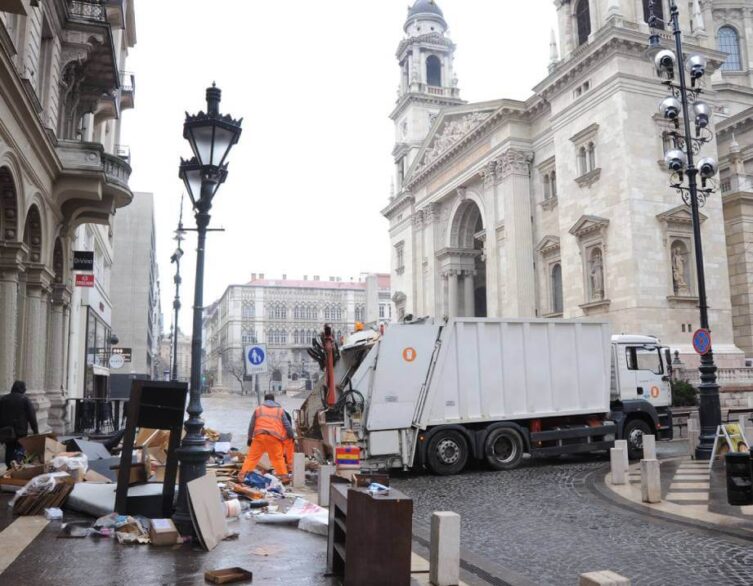
Budapest’s 2026 Bulk Waste Collection Schedule: A Tourist’s Guide to the City’s Annual Cleanup Event
If you’re visiting Budapest in early 2026 and notice streets lined with old furniture, mattresses, and household items, don’t worry—it’s...
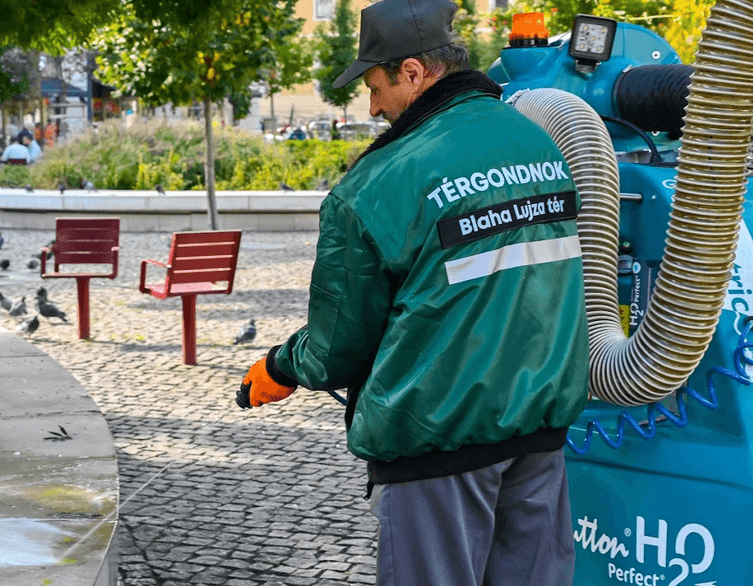
Budapest’s Public Spaces Get a Fresh Spark: The New Square Caretaker Service
Budapest has always been known for its grand squares, vibrant streets, and historic atmosphere — but recently, visitors might notice that the city...