Budapest’s House of Music Hungary Is Breaking Records — and a Freddie Mercury Exhibition Is Coming
If you’re planning a trip to Budapest and you consider yourself even a casual music lover, one venue deserves a prominent spot on your itinerary: the House of Music Hungary in City Park. Since opening in early 2022, this extraordinary institution has grown from an ambitious experiment into one of the city’s most exciting cultural landmarks — and in spring 2026, it’s about to become the epicenter of a global rock pilgrimage with a landmark Freddie Mercury exhibition you can already secure your tickets for.
A Building That Became a Destination
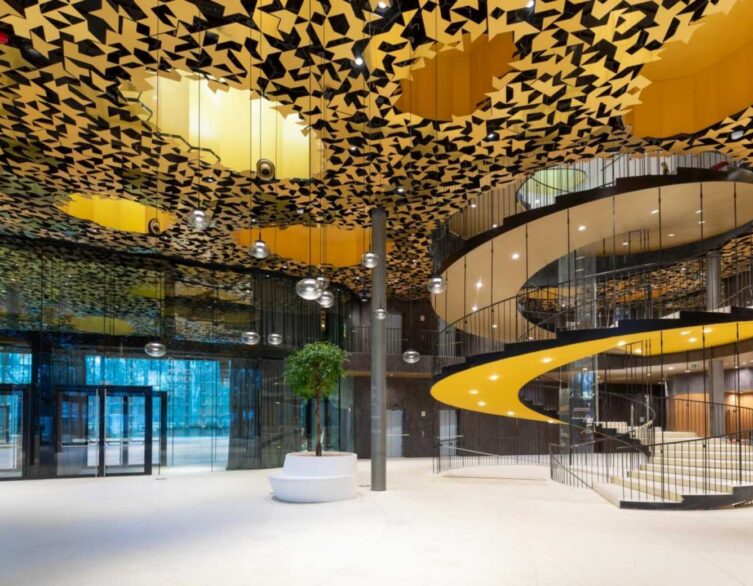
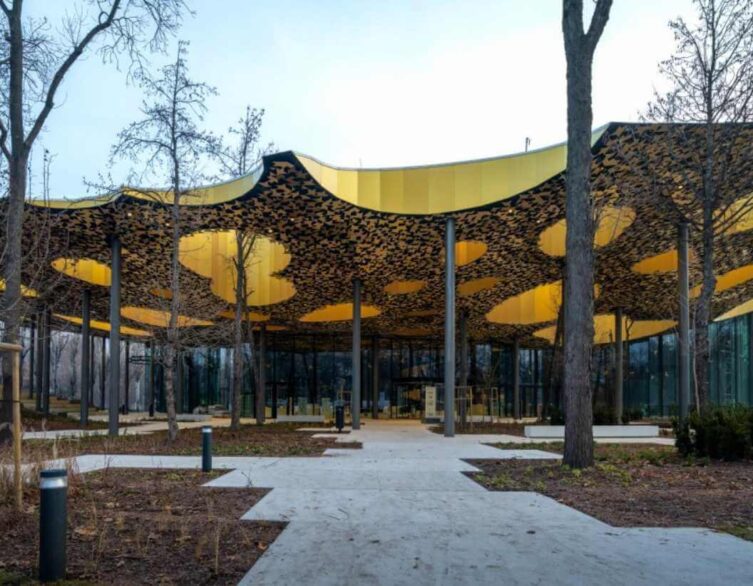
Designed by celebrated Japanese architect Sou Fujimoto, the House of Music is as much an architectural marvel as it is a concert venue and museum. Its glass-walled, pavilion-like structure sits in the leafy surroundings of City Park (Városliget), deliberately blurring the line between indoors and outdoors — people strolling through the park can peer through the transparent walls and catch a glimpse of what’s happening inside, while those inside feel as though they’re still surrounded by trees. That deliberate design choice reflects the institution’s core philosophy: music shouldn’t feel exclusive or intimidating. It should feel like something you stumble into, something that draws you in.
And it’s working. When the venue opened, its managers hoped to attract around 120,000 visitors per year. They blew past that figure spectacularly — in 2025, the House of Music recorded over 1.25 million entries, more than triple what was initially projected. Today, it isn’t just a stop on the tourist trail; it’s become a genuine cultural magnet that people come to Budapest specifically to visit.
More Than a Museum
What makes the House of Music stand out from a typical concert hall or music museum is the way it refuses to separate its three core roles: concerts, exhibitions, and music education. These aren’t siloed departments — they feed into each other constantly. An exhibition opens, and it generates a concert series. That concert series leads to workshops. Those workshops bring in schoolchildren, community groups, and curious tourists who might never have set foot in a traditional concert hall.
Best deals of Budapest









One of the most talked-about features is the Sound Dome, located on the underground level of the building. This hemispherical space wraps visitors in 360-degree sound and immersive light projections, creating one of the most sensory experiences you’ll find anywhere in Central Europe. The venue is also equipped to record in full 360-degree audio and video, and shares these immersive productions with partner institutions around the world.
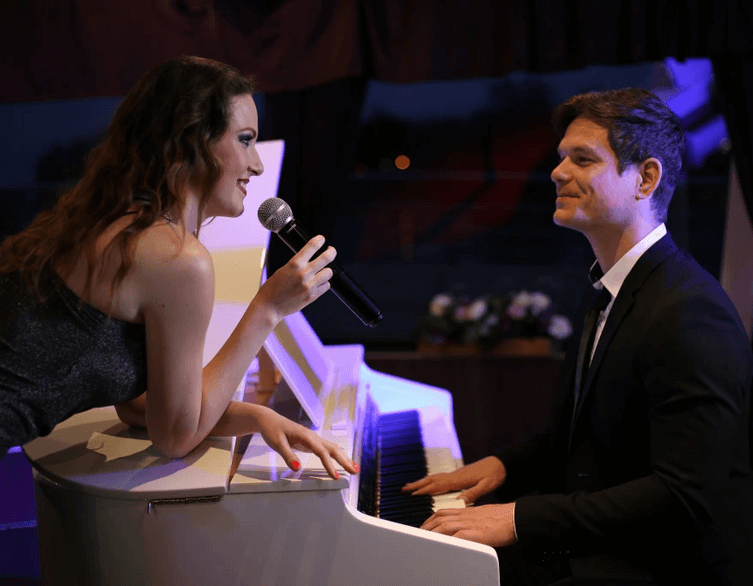
Another crowd-pleaser is the Secret Concert series — a kind of musical lucky dip where you buy a ticket without knowing who’s performing. The only guarantee is that the House of Music has curated it, and by now, audiences trust that guarantee completely. It speaks to the kind of loyal, enthusiastic following the venue has built in just a few short years.
The Freddie Exhibition: A Moment Forty Years in the Making
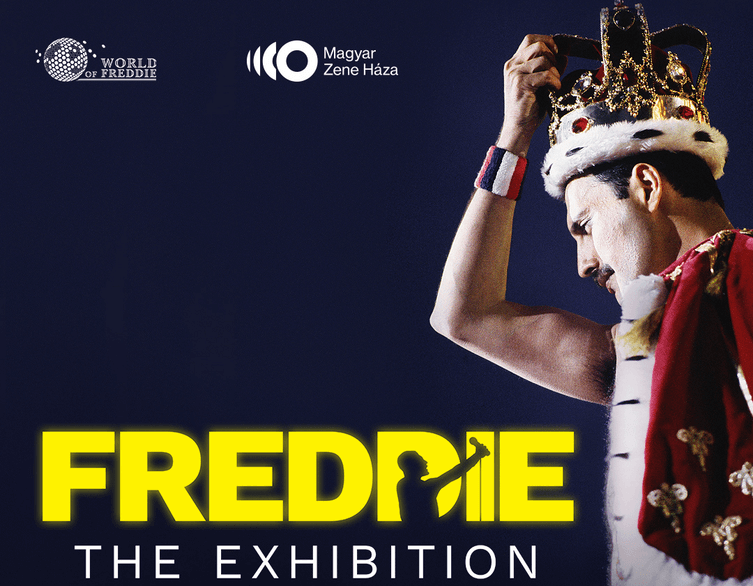
Now comes the event that music fans around the world are already buzzing about. Opening on May 1, 2026 — with advance tickets already on sale — the House of Music is unveiling FREDDIE, a large-scale exhibition dedicated to Freddie Mercury, the legendary frontman of Queen. The timing is deliberate and deeply meaningful: 2026 marks both the 80th anniversary of Mercury’s birth (he was born on September 5, 1946) and the 40th anniversary of Queen’s one and only concert in Budapest, which took place on July 27, 1986.
The exhibition is built around hundreds of original personal items and exclusive recollections from Mercury’s friends and colleagues, including his former personal assistant who worked alongside him for twelve years. The curators’ approach is to start with the public persona — the performances, the iconic outfits, the stage presence — and gradually peel back the layers to reveal a more intimate, rarely seen side of one of rock’s most complex and captivating personalities. Among the treasures on display is the actual stage costume Mercury wore at the Budapest concert itself, sourced from one of Europe’s most dedicated Freddie Mercury collectors in the Czech Republic.
If you’re visiting Budapest around or after May 1, booking your tickets in advance is strongly recommended — this is the kind of exhibition that is almost certain to sell out regularly.
Why Budapest and Queen Are Forever Linked
To understand why this exhibition carries such weight in this particular city, you have to go back to that July night in 1986. Queen was at the absolute peak of their powers, riding high on the success of A Kind of Magic and their record-shattering Magic Tour, which had already drawn close to a million people across Europe. Their Budapest stop was not just another date on the tour — it was a genuinely historic event.
With an estimated 75,000 people packed into the Népstadion (today known as the Puskás Aréna), it was the first major Western rock concert ever staged in a stadium behind the Iron Curtain. The Cold War was still very much a reality; the Berlin Wall wouldn’t fall for another three years. Getting Queen to Budapest required extraordinary behind-the-scenes maneuvering, with multiple Hungarian state organizations brought to the table to scrape together the hard currency needed to pay a band that cost five to six times more than any act that had previously played the Budapest Sports Arena. The show very nearly didn’t happen at all — a senior official from the state concert agency famously stormed out of the planning meeting, declaring that Hungary’s hospitals needed the foreign currency more than rock and roll did. It took intervention at the highest levels of the ruling party to get the green light.
The concert itself was a spectacle that Budapestians have never forgotten. Sixteen Hungarian camera operators captured every moment on 35mm film, under the direction of filmmaker János Zsombolyai, producing the Magic (also known as Hungarian Rhapsody: Queen Live in Budapest) concert film — a full ninety-minute document of the night that premiered in Budapest in December 1986 and was later released on VHS worldwide in 1987, with a fully remastered DVD and Blu-ray edition following in 2012.
The concert’s most beloved moment came when Freddie Mercury — reading the words from his palm — sang a Hungarian folk song, Tavaszi szél vizet áraszt (“Spring Wind Raises the Water”), which he had reportedly practiced on the rooftop terrace of the Marriott Hotel with his guitarist. The 75,000-strong crowd erupted. It remains one of the most charming and human moments in rock history, and it cemented a bond between Mercury and Budapest that fans on both sides still feel today.
The Full Setlist From That Legendary Night
For Queen devotees, the Budapest concert setlist reads like a greatest-hits dream. The band opened with One Vision and ran through 26 songs, including A Kind of Magic, Under Pressure, Another One Bites the Dust, I Want to Break Free, Bohemian Rhapsody, Hammer to Fall, and Crazy Little Thing Called Love. The show ended with a double encore — Radio Ga Ga as the first, followed by We Will Rock You, Friends Will Be Friends, and a rousing We Are the Champions to close. The Budapest show was one of the final stops on the Magic Tour; just weeks later, on August 9, the tour ended at Knebworth Park in England in front of 120,000 people — a show that turned out to be Queen’s last-ever concert with Freddie Mercury as their frontman.
Practical Info: Plan Your Visit
The House of Music Hungary is located at Olof Palme sétány 3, 1146 Budapest, in the heart of City Park — just a short walk from Heroes’ Square and the Széchenyi Thermal Baths, making it easy to combine with other sightseeing. The building is open year-round, and the calendar is relentlessly packed: in 2025 alone, the venue hosted over 1,157 separate events. Beyond the upcoming FREDDIE exhibition, the permanent offerings include interactive music installations (including experimental instruments that anyone can play without any musical training whatsoever), the immersive Sound Dome experience, a club library dedicated to popular music history, and a rooftop garden with panoramic views over the park.
Whether you’re a lifelong Queen devotee making a pilgrimage, a curious traveler who wants something more original than another palace tour, or a family looking for a genuinely fun and stimulating afternoon, the House of Music Hungary delivers on all fronts. The FREDDIE exhibition opens May 1, 2026, and advance tickets are already available — so if you’re visiting Budapest this spring or summer, don’t wait too long to book. This is the kind of exhibition that doesn’t come around often: rooted in a specific place, honoring a specific moment, and telling a story that belongs as much to Budapest as it does to rock history.
Related news

Budapest Celebrates György Kurtág’s 100th Birthday: A Musical Milestone You Can’t Miss
Budapest is alive with the magic of music this February, honoring György Kurtág’s 100th birthday — a composer whose profound works...
Freddie Mercury Exhibition Budapest 2026 – A Must‑See Music Experience
This spring, Budapest’s stunning House of Music Hungary will transform into a shrine of sound, style, and stardust as it hosts one of...
Related events
Related attractions