Twelve Years Underground: How Budapest’s Metro Line 4 Became a World-Class Destination in Its Own Right
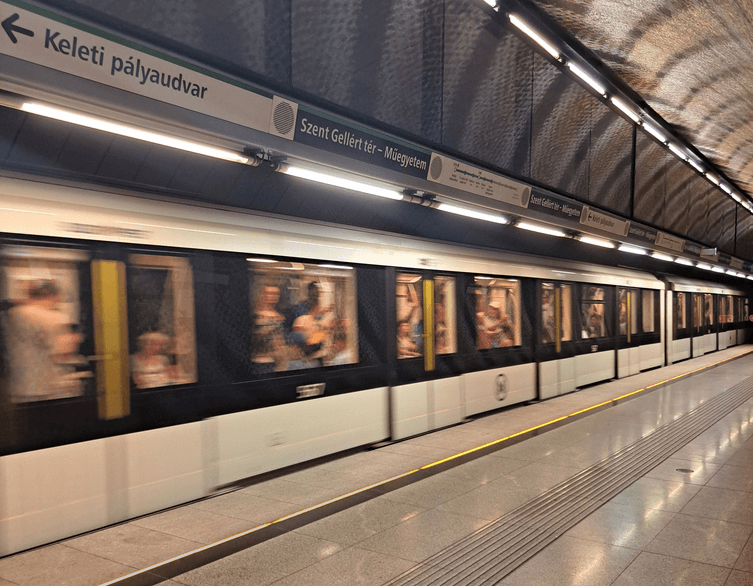
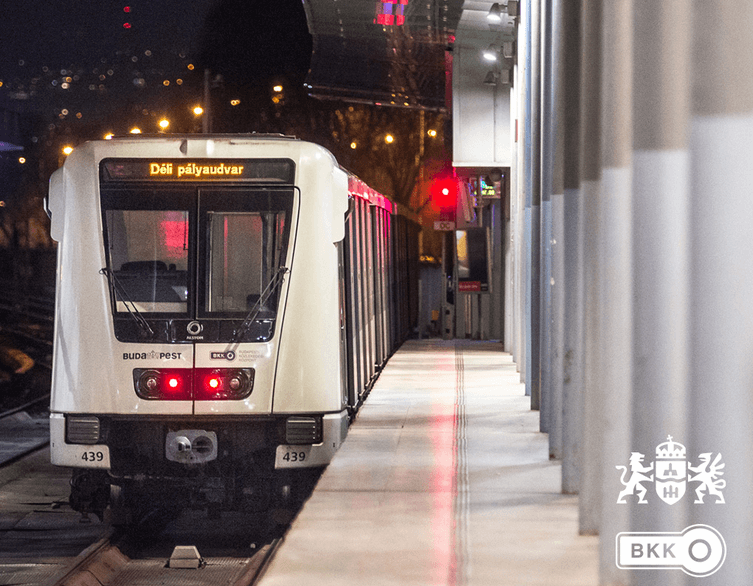
Most people ride the metro to get somewhere. But on Budapest’s Metro Line 4 — the M4 — the journey itself is arguably worth the trip. Twelve years ago, on March 28, 2014, the gates of Kelenföld Railway Station opened at noon and Budapest’s fourth metro line welcomed its very first passengers. What followed was not just a new transit route, but a quiet revolution in how a city can think about underground space.
Decades in the Making
The story of the M4 is, in many ways, a story about the stubbornness of a great idea. Urban planners first identified the need for a north-south metro line as far back as 1972, when Budapest’s long-term transport development plan designated the route connecting South Buda with the city’s northern districts. What nobody anticipated was that it would take more than four decades — through communist bureaucracy, post-socialist financial crises, abandoned international tenders, government disagreements, and court battles — before the first train would finally roll.
Construction plans were drawn up, shelved, redrawn, and shelved again throughout the 1970s and 1980s. International tenders attracted interest from French, Soviet, German, and American consortia, yet each round of negotiations collapsed under the weight of cost overruns, political complications, and financing disputes. It was only in 2003 that the Hungarian government and the City of Budapest finally reached a firm agreement: the first section of the line would run between Kelenföld Railway Station and Keleti Railway Station, with ten stations, financed through a combination of state and municipal funds with European Investment Bank loans. By the time construction truly got underway, the city had been debating the project for thirty years.
Best deals of Budapest









An Architectural Underground Gallery
What makes the M4 genuinely special — and what sets it apart from most metro systems in the world — is its approach to design. Rather than treating the stations as purely functional infrastructure, Budapest’s city planners invited architectural firms to compete for each station’s design individually. The result is a line where no two stations look alike, yet all of them feel unmistakably related — a family of spaces united by a shared design language of exposed concrete, steel, glass, and natural light.
The overarching concept was developed through a collaborative workshop process, with two prototype stations — Bikás Park and Újbuda Centre — used to test and refine the visual vocabulary before it was applied across the entire line. Key materials recur throughout: polished granite floors, visible structural elements, corten steel accents, and glass domes that funnel daylight deep underground. Each station was then handed to a separate architectural team to develop its own personality within that shared framework. The philosophy was essentially one of creative subsidiarity — set the rules, then trust the architects to make something beautiful within them.
The results won international acclaim. Kálvin Square station was covered with an astonishing 2.8 million glass mosaic tiles, creating an effect one reviewer compared to large, sweeping waves. Saint Gellért Square station features a dramatic intermediate level that offers unusual perspectives down onto the platforms below. John Paul II Square station has a striking vaulted headroom that earned it comparisons to science fiction architecture. Bikás Park station is flooded with natural light through a glass dome that opens onto a quiet residential square above. Each stop offers something new to look at — which is a rare quality in any metro system anywhere in the world.
The Secret Score at Kálvin Square
Of all the artistic surprises hidden on the M4, perhaps none is more delightful than the one waiting at Kálvin Square station. In the escalator hall, artist Katalin Fábry created a mosaic that, at first glance, appears to be nothing more than an abstract pattern of coloured dots. Step back, squint slightly, and something extraordinary emerges: the mosaic spells out a fragment of musical notation — a passage from Zoltán Kodály’s Psalmus Hungaricus, one of the most celebrated pieces in the Hungarian classical repertoire.
The choice of work is deeply meaningful. Kodály composed the Psalmus Hungaricus in 1923 to mark the fiftieth anniversary of the unification of Pest, Buda, and Óbuda into a single city — the birth of modern Budapest. The specific line from the score embedded in the mosaic translates roughly as: “You lift up the poor, you cast down the proud.” There could hardly be a more fitting inscription for a public transport station, and one suspects it was chosen with a knowing smile. It is a detail that rewards those who look closely — and a perfect example of why the M4 is so much more than just a way to get from one side of the city to the other.
Yoda, Budapest’s Most Unlikely Metro Guardian
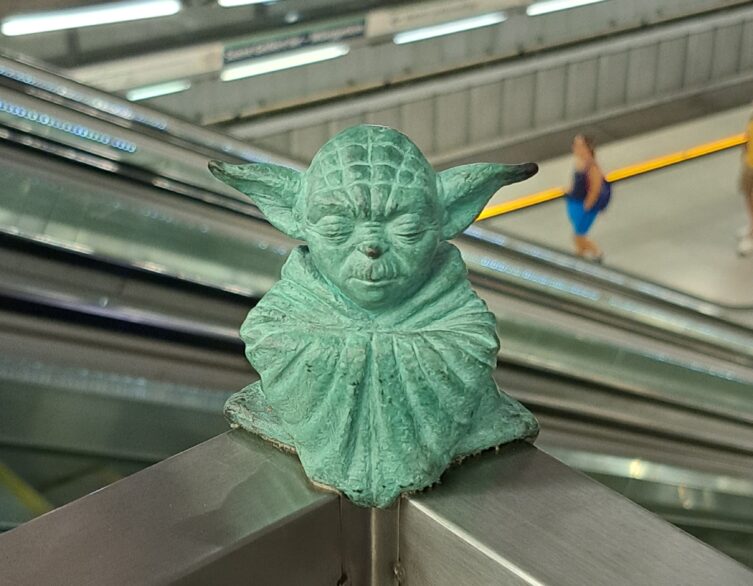
If hidden musical scores weren’t enough, the M4 also has a Jedi protector. At Saint Gellért Square station, a miniature bronze Yoda statue — the work of beloved Hungarian guerrilla sculptor Mihály Kolodko — perches in a meditative pose on a metal railing in the metro underpass, keeping a quiet, watchful eye over commuters and tourists alike. Placed there in August 2024, the tiny green figure depicts the iconic Star Wars Jedi Master exactly as fans know him best: cross-legged, serene, and apparently deep in contemplation about the mysteries of the universe — or perhaps just the next departure time. Budapest’s public transport authority BKK embraced the statue with characteristic good humour, posting on social media: “Luke Skywalker had to travel all the way to the Dagobah system to meet him. You only have to go to Gellért Square.”
Kolodko is famous across Budapest for his tiny, whimsical figurines hidden in plain sight around the city, and the Yoda piece has quickly become one of the most popular stops on informal street art tours of the capital. Spotting it feels like a small reward for paying attention — which, fittingly, is exactly the kind of lesson Master Yoda himself would approve of.
Riding the M4 as a Tourist
The line runs from Kelenföld Railway Station in the southwest to Keleti Railway Station in the northeast, passing through the heart of the city and connecting several of Budapest’s most important landmarks and neighbourhoods. Saint Gellért Square station puts you steps away from the famous Gellért Thermal Bath and the foot of Gellért Hill. Fővám Square station deposits you directly at the Central Market Hall, Budapest’s magnificent nineteenth-century food market and a must-visit for any traveller. Kálvin Square offers a connection to Metro Line 3, while Keleti Railway Station at the eastern end of the line serves as one of Budapest’s main international rail hubs.
The M4 is operated by BKK, Budapest’s public transport authority, and runs as part of the integrated ticketing system — the same single ticket or travel card that covers trams, buses, and the other metro lines works here too. Trains run frequently throughout the day, and the stations are fully accessible, with lifts at every stop. Whether you’re using it to reach a thermal bath, cross the city quickly, or simply explore a genuinely beautiful piece of contemporary architecture, the M4 deserves a place on every Budapest itinerary.
For those who want to go deeper — literally and figuratively — a dedicated Metro 4 Contemporary Art Discovery Walking Tour is available, led by an English-speaking guide and limited to small groups of ten. The 2.5-hour experience takes participants through five stations, combining art appreciation with interactive storytelling and photography challenges. It’s one of the more unusual and memorable ways to spend an afternoon in Budapest, and proof that the city’s underground has stories to tell that go well beyond departure times.
Related news
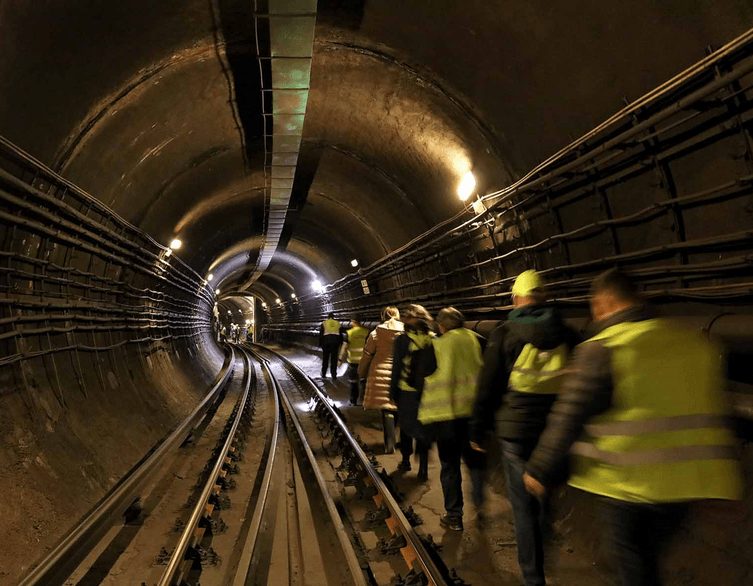
Budapest Metro’s Night Shift: The Hidden World Keeping the City Moving
When you step onto a Budapest metro platform in the morning rush hour and hop aboard a clean, smoothly running train, you’re experiencing the...
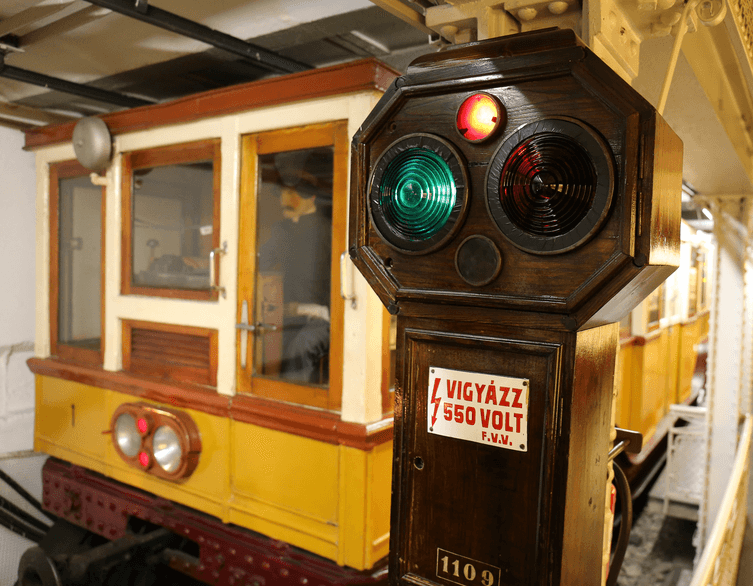
Budapest’s Underground Railway Museum Celebrates 50 Years of Preserving Metro History
Fifty years ago today, on October 28th, 1975, Budapest opened a museum in one of the most unusual locations imaginable—inside an actual abandoned...
Budapest’s Metro Goes Late: The Night Owl’s Guide to the City’s New After-Hours Transport
Budapest is famous for its thermal baths, grand architecture, and ruin pubs-but now it’s about to become a paradise for night owls and late-night...
Budapest Metro Line 4: A Decade of Innovation and Architectural Excellence
Budapest, a city renowned for its rich history, vibrant culture, and architectural marvels, added another jewel to its crown in 2014 with the inauguration...
Does Yoda Control Metros in Budapest?
Attention all Star Wars fans and art enthusiasts! There’s a new addition to the vibrant city of Budapest that’s sure to catch your eye....