Time Capsule Unearthed: Budapest City Hall Reveals Secret Treasures from 1968
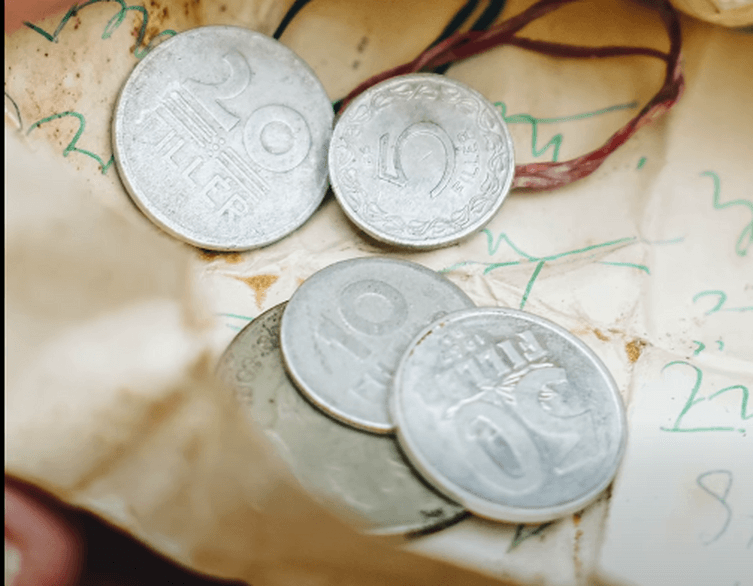
Budapest loves to guard its secrets until the perfect moment, and this winter the city has unveiled one of its most fascinating stories high above the streets. During the ongoing renovation of Budapest City Hall, experts discovered a time capsule hidden deep within the golden sphere of the building’s clock tower. For decades it rested unseen, sealed under the lightning rod, silently watching as years passed and the city below transformed. On a December morning in 2025, historians, engineers, and onlookers held their breath as cranes lifted the upper section of the tower. When the copper orb was carefully opened, they found not dust and empty air, but a slice of history perfectly preserved since 1968, complete with newspapers, coins, and documents that capture the vibrancy and anxieties of the last century.
Messages from Another Budapest
Inside the weathered metal cylinder lay copies of major daily newspapers printed at a moment when the world seemed poised between hope and crisis. One of them, from late August 1968, carried reports on the suppression of the Prague Spring and the escalating tensions of the Cold War, while international pages were filled with news from the Vietnam War and the lingering aftermath of Kennedy’s assassination. Everyday life flickered through the advertisements: men’s jackets offered for a few hundred forints, cultural columns recommending novels by Bulgakov, and small notices hinting at the rhythm of socialist-era Budapest.
Alongside these papers were a selection of coins, from tiny fillér pieces to a five-forint coin bearing the emblem of the time. Perhaps the most touching discovery, though, was a typewritten, neatly checked to-do list itemizing what needed to be placed inside the capsule. Someone, back in 1968, carefully ticked off each item before the metal tube was welded shut and lifted high above the city. It is a wonderfully human detail, reminding visitors that even grand historical acts are carried out by people worrying over small tasks, deadlines, and the hope that they are leaving something meaningful behind.
A Headline That Echoes Across Time
The rediscovered newspapers do more than list events; they carry the emotional tone of an era. One front page headline, “Prokators and provocateurs,” jumped out with a force that feels oddly familiar in today’s world of sharp political language and public debates. Sharing the find on his social media, the mayor of Budapest highlighted this phrase and explained that it comes not from a contemporary paper, but from that very 1968 issue pulled from the clock tower’s time capsule. His comment drew attention to the uncanny way certain words and accusations seem to echo across decades, even though they belong to very different contexts.
For foreign visitors, this adds a fascinating layer to the story of City Hall. It shows Budapest not just as a postcard-perfect capital, but as a place where history is constantly re-examined and discussed in public view. Standing near the building and looking up at the tower, it becomes easy to imagine editors in a smoky newsroom decades ago choosing those charged words for a headline, without any idea that one day their newspaper would resurface as a historical curiosity instead of a fresh piece of political commentary. In this way, the time capsule becomes more than an artifact; it becomes a mirror reflecting how language, conflict, and memory travel through time.
A Tower with Three Centuries of Stories
The site of this discovery, Budapest’s grand City Hall, is itself a kind of architectural time capsule. Construction began in 1716, originally as a home for injured and elderly soldiers who had fought in the wars against the Ottoman Empire. Over the following centuries, the complex evolved into a barracks, then gradually took on its role as the central hub of Budapest’s administration. Its long history means that, within one vast city block, visitors find traces of baroque design, 19th‑century expansions, and 20th‑century modernization layered over one another.
During the 1960s, architect Egon Pfannl oversaw a major restoration that modernized the interior while refreshing the baroque-inspired exterior. The facade’s new color scheme was described at the time as a return to cheerful Viennese baroque traditions, with carefully chosen tones distinguishing the base, middle, and upper sections of the building. It was also during this renovation that the clock tower was repaired and the time capsule was placed beneath the tower’s copper sphere, turning a technical upgrade into a symbolic gesture toward future generations.
Best deals of Budapest







Behind the Facade: A Hidden City Within
Behind the imposing facade lies a monumental labyrinth that most tourists never see. Budapest City Hall stretches over roughly 53,000 square meters, housing around a thousand offices and hundreds of additional rooms connected by long, straight corridors almost two hundred meters in length. At its busiest in the socialist decades, some 1,500 employees walked these halls daily; even today, several hundred people work here to keep the capital running. From above, the building occupies an entire city block between Károly Boulevard and the smaller streets of the inner district, an urban island that has shaped the flow of downtown traffic and pedestrian life for generations.
Beneath the surface, the building holds still more secrets. In the late 1930s, a reinforced air-raid shelter was constructed under part of the complex to protect the city’s leadership during wartime. Its thick walls, heavy doors, and ventilation systems can still be traced, even though it no longer functions as a shelter. Later, in the 1970s, a shooting range was added for the armed security services stationed at City Hall, a facility now long out of use but still remembered by some who once trained there. These underground spaces tell a quieter story about how a city prepares for crises while life continues just a few meters above.
The Moment the Past Reopened
When the clock tower’s decorative dome was lowered to the ground as part of the current renovation, news spread quickly through the building that something might be hidden inside the copper sphere. Once specialists from the Budapest History Museum arrived, the small crowd that gathered in the courtyard watched as the orb was carefully opened. The atmosphere was almost ceremonial: a gray Monday afternoon transformed into a live historical event as the metal tube slid out from its hiding place.
As each document emerged, the courtyard seemed to grow quieter, as if people instinctively understood they were witnessing a rare meeting of past and present. The date on the newspapers, the smell of old paper, the unfamiliar typography, and the now-antique vocabulary all combined to pull everyone briefly back into the late 1960s. Soon the contents will be fully cataloged, preserved, and likely exhibited so that both locals and travelers can stand face to face with this small but powerful fragment of Budapest’s story.
Time Traveling in the Heart of the City
For visitors exploring central Budapest, City Hall often appears as a dignified but somewhat reserved neighbor to the livelier streets around Deák Square and Károly Boulevard. Knowing its hidden history changes the way you see it. Standing at the edge of Városház Street and looking up at the clock tower, it becomes easy to imagine workers in 1968 carefully welding the capsule into place, hoping that one day someone would open it and understand the world they lived in.
Today, the once-closed inner courtyard has been transformed into Városháza Park, a more welcoming public space that occasionally hosts film screenings, cultural programs, and community meetings. What used to function primarily as a logistical and administrative complex is gradually becoming more open to citizens and visitors, reflecting Budapest’s broader effort to make its historic institutions more accessible and engaging. For tourists, it offers a quiet, often overlooked corner to sit, rest, and contemplate how many layers of history lie beneath their feet.
A City That Remembers
The rediscovery of the time capsule is more than an anecdote; it is a reminder of how Budapest relates to its past. Rather than hiding or forgetting, the city chooses to unseal, examine, and share its historical traces, whether they are grand monuments, faded photographs, or a typewritten checklist from a long-finished renovation. The clock tower’s capsule shows that even in an age of upheaval, people believed in leaving messages forward in time, trusting that the city’s future residents and visitors would care enough to look.
For anyone visiting Budapest, this story adds an extra dimension to a walk through the inner city. Beyond the famous bridges and thermal baths, there is a quieter magic in knowing that the buildings themselves sometimes speak, revealing long-forgotten chapters when a renovation crew lifts a dome or opens a wall. Next time you pass City Hall, pause for a moment, tilt your head toward the tower, and imagine that small copper sphere watching the city for decades. Somewhere between its sealed past and your present footsteps, Budapest’s true character comes into focus: a metropolis that is always changing, yet never stops listening to its own heartbeat.
Related events