Self-Driving Cars Are Now Cruising the Streets of Budapest’s Castle District
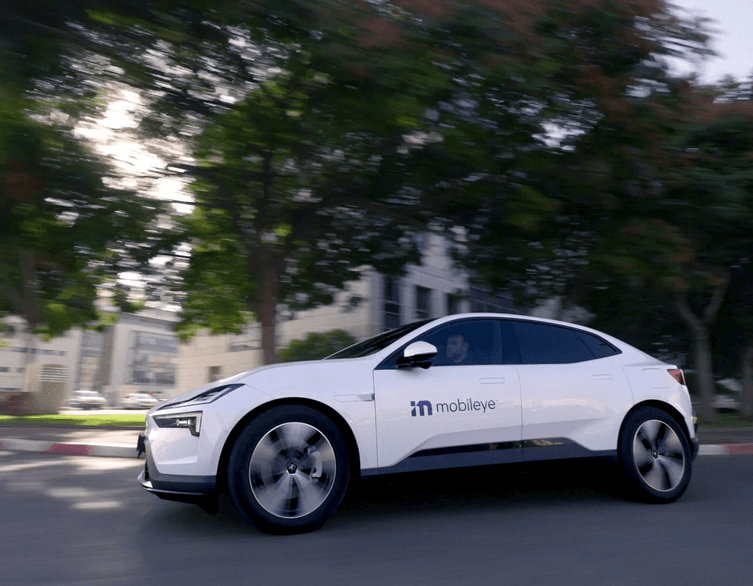
Budapest has always been a city that surprises you. Between its grand thermal baths, dramatic riverfront views, and labyrinthine medieval streets, the Hungarian capital has a way of blending history with the unexpected. But as of this week, visitors wandering the cobblestoned lanes of the Castle District might encounter something they’d never expect to see in such a storied setting: a self-driving car navigating the streets entirely on its own.
A Historic Debut in a Historic Neighbourhood
On Thursday, March 27, 2026, two autonomous electric vehicles officially entered pilot operation in Budapest’s First District — home to the iconic Buda Castle, Fisherman’s Bastion, and some of the most complex, winding streets in the entire city. The launch event took place right in the Castle District itself, where László Palkovics, Hungary’s government commissioner for artificial intelligence, made a point of explaining why this particular neighbourhood was chosen for the test. His logic was straightforward: if self-driving technology can handle this traffic environment — narrow historical streets, unpredictable pedestrian flow, sharp bends, and mixed vehicle types — then “there is no place in the world where they couldn’t operate autonomously.”
It’s a bold claim, but one that speaks to just how seriously Hungary is taking its role in the future of mobility.
Best deals of Budapest










The Cars Themselves: Zeekr 001 Meets Mobileye
The vehicles chosen for this groundbreaking pilot are the Zeekr 001, a premium Chinese electric sedan with genuinely impressive credentials. Under the bonnet — or rather, powering its twin electric motors — the Zeekr 001 produces a combined 400 kW (544 hp), rockets from 0 to 100 km/h in just 3.8 seconds, and carries a 100 kWh battery capable of delivering up to 580 km of range on the WLTC cycle. In short, this is no ordinary test mule; it’s a high-performance machine that happens to also be one of the more capable autonomous platforms on the market today.
The autonomous driving brains behind the Zeekr 001s come courtesy of Israel’s Mobileye, a globally recognised leader in self-driving and driver-assistance technology. Mobileye’s system is built around advanced computer vision, machine learning, and its proprietary REM™ crowdsourced mapping technology, allowing vehicles to make real-time decisions about pedestrians, road signs, unexpected obstacles, and changing traffic conditions. The Budapest deployment represents a new chapter in an ongoing Hungary–Israel technological partnership, with Palkovics highlighting that both countries rank among the top 30 nations globally when it comes to integrating artificial intelligence into culture, technology, and academic life.
What Level of Autonomy Are We Talking About?
Not all self-driving cars are created equal, and it’s worth understanding where these vehicles sit on the international scale. The SAE (Society of Automotive Engineers) defines five levels of vehicle autonomy, ranging from Level 1 (basic driver assistance like cruise control) all the way to Level 5 (fully driverless operation with no steering wheel or pedals needed). The Budapest pilot vehicles operate at Level 4 — meaning they are capable of full autonomy within a defined geographic area and under specific conditions, making real-time decisions based on onboard sensors and cloud data without requiring driver input. Beyond that defined zone, a human can still take over, but within the test area, these cars are genuinely driving themselves.
To put that in perspective: your average new car with lane-keeping assist and adaptive cruise control sits at Level 2. The vehicles now cruising past Buda Castle are two full levels above that.
From the Test Track to the Real World
Before hitting Budapest’s public streets, the vehicles went through intensive testing at ZalaZone — Hungary’s state-of-the-art automotive proving ground in Zalaegerszeg, which includes a purpose-built “smart city” environment specifically designed for trialling autonomous systems. That preparatory phase is expected to span roughly three months, after which on-road testing continues — first in Budapest, then in other Hungarian cities and environments.
Hungary’s commitment to autonomous vehicle development actually goes back further than many people realise. As far back as 1996, Hungarian engineers developed a vehicle capable of recognising lane markings and preventing unintentional lane departure — a milestone that now looks remarkably prescient. Since 2018, manufacturers have been legally permitted to test autonomous systems on Hungarian public roads without geographical or time restrictions, making the country one of Europe’s most innovation-friendly testing environments.
Budapest in a Global Context
Hungary’s capital is joining a growing but still exclusive club. In the United States, fully driverless robotaxi services like Waymo are already commercially available in cities such as Phoenix, Los Angeles, and Atlanta. In Europe, however, the story is still largely one of extended testing — Mobileye-equipped vehicles have been doing trial runs in Munich and Paris for several years. Budapest now steps into that same league, with the added ambition of eventually integrating these autonomous vehicles into the fleets of local taxi services, making self-driving rides potentially available to everyday passengers.
The timing is also aligned with a major European Union policy goal: the EU has set a target of zero road fatalities on European roads by 2050. Given that human error accounts for approximately 90% of all traffic accidents, autonomous technology is seen as one of the most powerful tools available to reach that target — while also reducing the environmental footprint of urban transport.
What This Means for Visitors to Budapest
For tourists exploring Budapest right now, this is genuinely something worth watching for. The Castle District — already one of the most visually spectacular neighbourhoods in Central Europe, with its UNESCO World Heritage status and panoramic views over the Danube — has just become a live stage for one of the most exciting technology demonstrations on the continent. You might spot a Zeekr 001 gliding silently and autonomously past Matthias Church or along the cobblestones near the Royal Palace, with no one at the wheel.
Hungary has made it clear that this is only the beginning. Palkovics indicated that broader public engagement with the vehicles is planned for the near future, and that the country’s ambitions in AI and autonomous systems extend even further — with humanoid robotics flagged as the next frontier. For now, though, Budapest’s ancient streets are quietly writing a new page in the history of transportation.
Related news