Budapest’s Night Transport Is Getting a Major Upgrade — Here’s What Visitors Need to Know
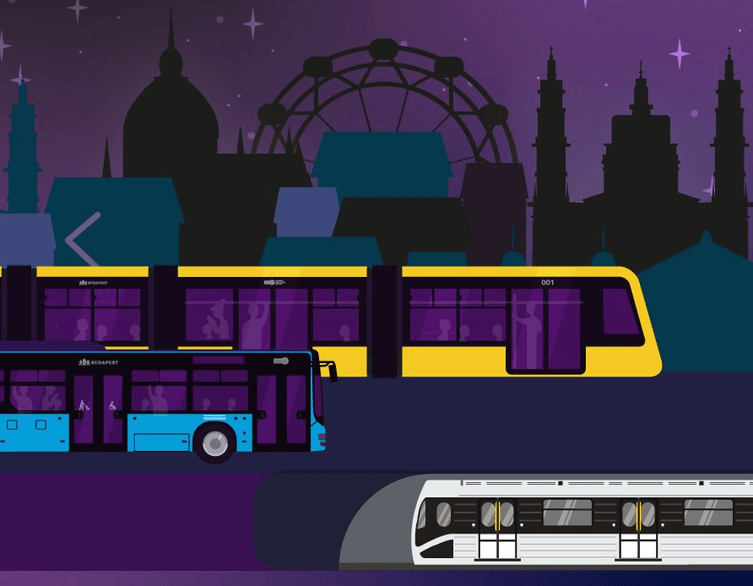
Getting around Budapest after dark has always been surprisingly easy compared to other European capitals, but the city is about to take its nighttime public transport to a whole new level. The Budapest Transport Centre (BKK) has just launched the second round of public consultation on a sweeping redesign of the city’s night transport network, with the changes expected to roll out as early as July 2026.
A Network Overdue for a Rethink
Budapest’s night transport system hasn’t seen a truly comprehensive overhaul in over 20 years, which makes this redesign all the more significant. The backbone of the current network is already solid: trams 4 and 6 run around the clock along the Grand Boulevard, connecting key spots like Margit Bridge, Nyugati Railway Station, and Újbuda without interruption. On top of that, a fleet of 41 night bus lines fans out across the city, recognizable by their triple-digit numbers starting with 9. Your regular BKK ticket or pass covers all of them.
But while the existing network covers much of the city, it was built around a different era’s travel habits. BKK’s new proposal aims to bring the nighttime system much closer in structure to the daytime network — making it simpler, more predictable, and accessible to far more passengers across Budapest’s outer districts.
Best deals of Budapest








How the New Plan Came Together
The redesign is genuinely community-driven. BKK held its first round of public consultation back in August 2025, and received over 36,000 responses from residents and district councils. Taking that enormous volume of feedback on board, the authority revised its proposal and launched a second consultation on March 25, 2026, running until April 8, 2026, asking the public to weigh in on the updated plans.
The core goals have stayed consistent throughout the process: rationalizing the existing routes, increasing service frequency in densely populated areas, and creating more logical connections between lines — so that getting home at 3 a.m. doesn’t feel like navigating a puzzle.
What’s Actually Changing
The revised proposal introduces several new and significantly modified routes that will expand coverage to areas previously left underserved at night. Among the headline changes, bus 9 will run 24 hours a day along its full route. The redesigned bus 941 will create a direct, straight-line connection to the city center from the Rákospalota and Csömöri Road areas, while also opening up night service on Egressy Road and Budafoki Road for the first time. Residents of western Békásmegyer will gain access via bus 917 serving previously unserved streets, while the eastern side gets a direct connection to the Pest city center via bus 934.
Meanwhile, the modified bus 966 will link the city center, Rózsadomb, and Soroksár in a single route, and combined with the new bus 912, will double the number of hourly departures between Deák Ferenc Square and the Víziváros (Watertown) neighborhood. On-demand services — buses that run based on actual passenger demand — are also set to expand, offering flexible late-night options on selected routes.
In terms of geography, the new network would significantly extend its reach into neighborhoods including Budafok, Zugliget, Virányos, Rákospalota, and Megyer, as well as providing faster connections to outer suburbs like Rákoscsaba and Pécel.
Why This Matters for Visitors
If you’re coming to Budapest for its legendary nightlife — the ruin bars, the live music venues, the all-night clubs — knowing that you can reliably get back to your accommodation without hailing a taxi is a genuine quality-of-life upgrade. The 100E Airport Express already runs 24/7 between the airport and the city center, stopping at Kálvin Square, Astoria, and Deák Ferenc Square, which means arriving on a late-night flight is already stress-free. The new network will build on that foundation by making the city even easier to navigate in the small hours.
It’s also worth knowing that since May 2025, Budapest’s metro lines have extended their operating hours, with over 40 daytime bus lines now coordinated with the later metro schedule — meaning getting out to the city’s further-flung neighborhoods in the evening is already more straightforward than it used to be.
The Bigger Picture
BKK’s approach here reflects a broader ambition: a city that’s just as livable at night as it is during the day. As the authority itself put it, “Budapest works well when it’s livable at night — and competitive public transport is the key to making that happen.” The final network will be shaped by combining the results of both consultation rounds, with implementation planned for July 2026.
For tourists, the practical takeaway is simple: Budapest’s public transport is already one of the best-value, most tourist-friendly systems in Central Europe, and it’s only going to get better. Whether you’re heading back from a late show at the opera, wrapping up a long night at a ruin bar on Kazinczy Street, or catching an early morning train, the city’s night buses have you covered — and soon, they’ll cover even more.
Related news
Budapest’s Public Transport Gets a Spring Upgrade: More Buses, More Trams, and Easier Access to the City’s Green Spaces
Spring has arrived in Budapest, and the city is responding in the best way possible. As the temperatures rise and the urge to get outside takes over,...
Budapest Is Upgrading Its Public Transport — And Visitors Will Love It
If you’re planning a trip to Budapest, you’re in for a treat — and not just because of the stunning views, the thermal baths, and the...
Tap and Go: Budapest Is Making Public Transport Easier Than Ever for Visitors
If you’ve ever arrived in Budapest, bleary-eyed after a long flight, and found yourself fumbling with unfamiliar coins at a metro ticket machine,...
BKV Treasures: Perfect Souvenirs for Budapest’s Transport Lovers
Picture this: you’ve just stepped off a rattling yellow tram in Budapest, your kids buzzing with excitement from their metro adventure, and...

Late-Night in Budapest? How the City Keeps You Moving from the Airport
If you’re arriving in Budapest late at night, especially after a long flight or a winter storm that’s shuffled schedules across Europe, here’s...
Budapest Night Transport Revolution: A Game-Changer for After-Hours Travel in 2025
Budapest is transforming its nighttime public transportation landscape with the most comprehensive reform of its night transit network in over two...
Budapest’s Night Travel Transformed — Stay Out Later, Get Home Easily
Budapest has always been magical after dark — from glittering bridges over the Danube to lively ruin bars and riverside walks. Now, thanks to a...