Budapest’s Giant Caterpillar Turns 20: The Remarkable Story of the Combino Tram
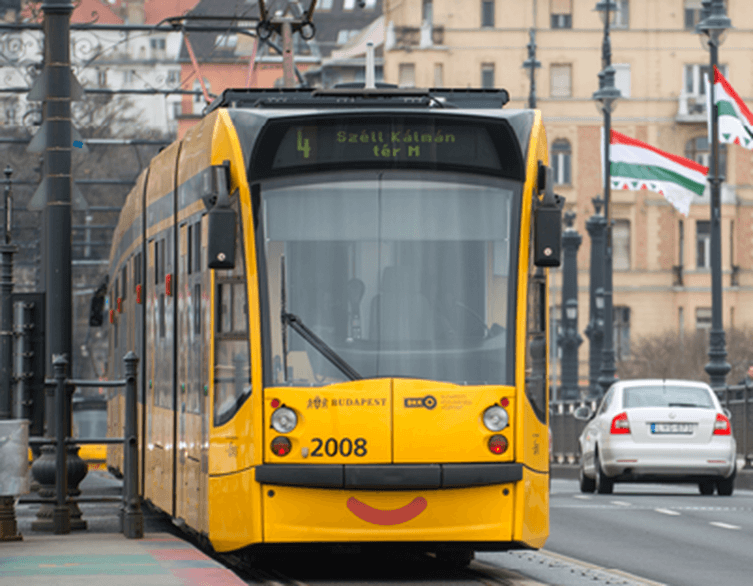
If you’ve ever ridden the iconic tram lines 4 or 6 along Budapest’s Grand Boulevard, you’ve almost certainly found yourself inside one of the city’s most beloved vehicles — the Siemens Combino. Sleek, low-slung, and seemingly endless in length, this gentle giant has been rolling through the heart of Budapest for exactly two decades now. And 2026 is its big birthday year.
A Record-Breaker Rolls into Town
On March 14, 2006, the very first Combino tram arrived in Budapest, earning the immediate nickname Óriáshernyó — the Giant Caterpillar — from locals who marvelled at its extraordinary length. At 54 metres, it was the longest tram in the world at the time, a title that made Budapestians both proud and a little wide-eyed. It officially entered passenger service on July 1, 2006, on the Grand Boulevard, and the remaining 39 trams gradually followed, with the fleet reaching completion on May 4, 2007, when vehicle number 2040 arrived.
What made the Combino truly revolutionary for Budapest was not just its impressive size. It was the city’s first fully low-floor tram, meaning passengers could step on and off at street level without navigating any steps. To make that possible, BKV (Budapest’s public transport company) undertook a major infrastructure overhaul — raising and widening platforms, upgrading the electrical supply, and completely renovating the Hungária depot to house the new fleet.
Twenty Years of Mind-Bending Numbers
Two decades is a long time, and the Combino fleet has kept busy. Since that first vehicle — number 2001 — entered service, the 40-tram fleet has collectively covered a distance equivalent to 125 trips between the Earth and the Moon. Together, they have clocked nearly 7 million operating hours and carried more than 2 billion passengers. If you had boarded tram 2001 on its very first day and never stepped off, you would by now have travelled far enough to make the journey to the International Space Station and back — 1,500 times over.
To mark the anniversary on March 14, 2026, BKV decorated tram number 2001 with special commemorative stickers packed with fascinating facts about the fleet and its history. You can spot it running on the Grand Boulevard all year long, so keep your eyes open — it’s essentially a rolling museum exhibit, and catching it feels like a little treasure hunt in the middle of the city.
The Rocky Road to Budapest
The Combino’s journey to Hungary was not without drama. Back in 2003, BKV signed a contract with Siemens for 40 trams, beating out competitors Alstom and Bombardier — even though Siemens had submitted the most expensive bid. The reason was partly the tram’s aluminium body, which made it significantly lighter than rival models, a key evaluation criterion in the tender.
Then, in 2004, alarming news arrived from Switzerland. Cracks had been discovered in the aluminium frames of Combino trams operating in Basel, and Siemens was forced to recall and temporarily withdraw vehicles from service across multiple European cities. Cities from Augsburg and Düsseldorf to Hiroshima found their fleets suddenly sidelined. For Budapest, this created a genuine dilemma: cancelling the contract would mean starting from scratch, potentially leaving the ageing Ganz trams — already pushed far beyond their limits on one of Europe’s busiest corridors — to struggle on for years more.
Best deals of Budapest









The pragmatic solution was a contract amendment. Siemens agreed to build the Budapest trams with stainless steel bodies instead of aluminium, while still meeting all the original technical requirements. The redesign actually lowered the total project cost from 149 million euros to 136 million euros. The Budapest Combinos are therefore a unique variant — officially called the Combino Supra — distinct from the troubled aluminium models that caused headaches elsewhere.
The Grand Boulevard: Europe’s Busiest Tram Line
The route these trams serve is no ordinary commuter corridor. The Grand Boulevard — Nagykörút in Hungarian — is a sweeping, semi-circular avenue cutting through the heart of Pest, lined with grand 19th-century architecture, bustling markets, theatres, cafés, and some of the city’s best street food. Tram lines 4 and 6 run along this boulevard, crossing the Danube via Margaret Bridge and connecting to Buda on both sides of the river.
The line dates back to 1887 and has since grown to 8.5 kilometres with 21 stops, earning the distinction of being one of the busiest tram lines in all of Europe, carrying over 300,000 passengers daily. Since 2011, tram 6 has run 24 hours a day, seven days a week — meaning you can hop aboard a Giant Caterpillar at 3 a.m. and still get a smooth, comfortable ride across the city.
Why Tourists Love the Combino Experience
For visitors to Budapest, riding the 4 or 6 tram is genuinely one of the best free (or near-free) urban experiences the city has to offer. The route takes you past the Jewish Quarter with its famous ruin bars like Szimpla Kert, the grand Western Railway Station (Nyugati pályaudvar), the lively Oktogon square, and across Margaret Bridge with its sweeping views of the Danube. If you board at Jászai Mari Square and ride all the way to Móricz Zsigmond Square, you’ve essentially taken a moving tour of Pest’s architectural heritage in about 30 minutes.
The fully accessible, step-free design means the Combino is comfortable for everyone — families with pushchairs, travellers with heavy luggage, and anyone who just wants to sit back and watch Budapest slide past the wide tram windows. A Budapest travel card or a single BKK ticket gets you on board, and given the tram runs every few minutes during the day, you’ll rarely wait long.
Don’t Miss the Open Day
If you happen to be in Budapest on June 13, 2026, BKV is hosting a special open day at the Hungária depot — the tram’s home base — where you can explore behind the scenes, discover operational secrets, and join a guided tour of the facility. Siemens, the tram’s manufacturer, is also joining the celebrations, making it a unique event for both casual visitors and dedicated tram enthusiasts.
Whether you’re a transport history buff or simply someone who wants to experience a genuine slice of Budapest’s daily life, the Combino’s 20th anniversary is a wonderful reminder that some of the city’s best stories run on rails — 54 metres at a time.
Related news
The 4/6 Tram: Budapest’s Yellow Heartbeat on Rails
If you’ve spent more than a day in Budapest, you’ve already seen it — the bright yellow trams gliding down the Grand Boulevard, filled with...
Riding the Future: Budapest Celebrates Its 100th Modern CAF Tram
It’s been twenty years since Budapest’s first low-floor trams quietly rolled onto the city’s tracks. What started as a modernisation effort...
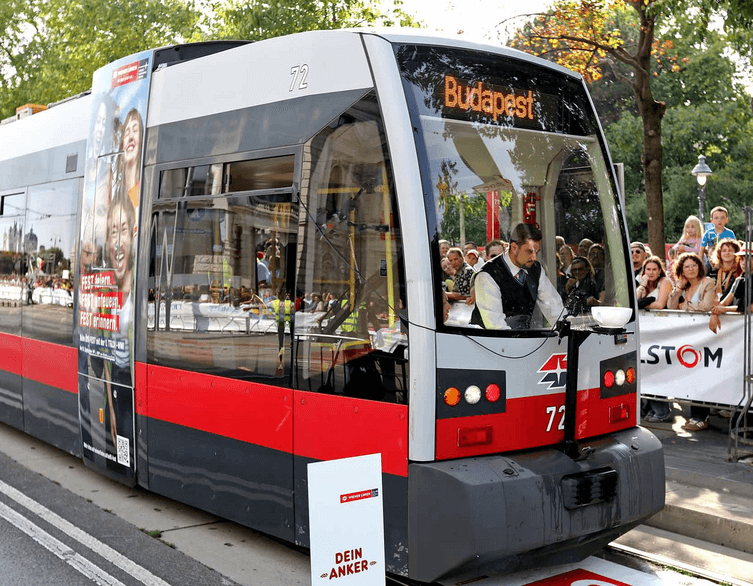
Budapest’s Tram Champions Shine on World Stage
Budapest’s tram drivers have once again proven they’re among the world’s best, securing an impressive fourth place at the inaugural...