Budapest Metro’s Night Shift: The Hidden World Keeping the City Moving
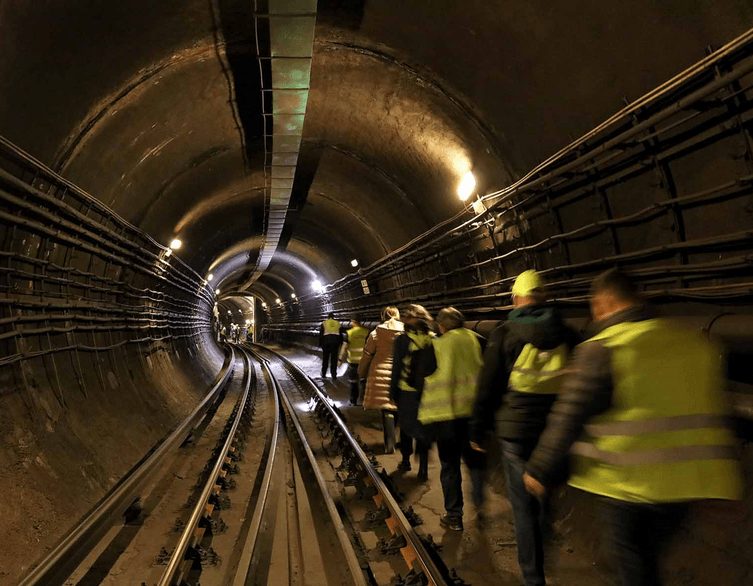
When you step onto a Budapest metro platform in the morning rush hour and hop aboard a clean, smoothly running train, you’re experiencing the result of a small army working through the night while you slept. The Budapest metro doesn’t just stop when the last passengers go home — it shifts gears entirely, entering a parallel world of maintenance, testing, and meticulous care that most visitors never get to see.
The Last Train and What Comes After
On weekdays, the final metro trains depart around midnight on Lines M2, M3, and M4, with weekend service running slightly later, until around 1 AM. These last departures are carefully coordinated with Budapest’s surface tram and bus network, as well as MÁV national rail and the suburban HÉV lines, so that night owls and late travelers aren’t left stranded. Once those last carriages roll into the depot, the real work begins.
The window between that final train and the first service of the morning is remarkably short — just a few hours — and every single minute of it is accounted for. This is the metro’s night shift, and it’s arguably the most important shift of the entire day.
Best deals of Budapest









Why Maintenance Can Only Happen at Night
You might wonder why engineers can’t just fix things on the go, the way a technician might service an office building during working hours. The answer lies in the nature of underground rail infrastructure. During the day, the trains run so frequently and the electrical systems operate at such intensity that the tunnel tracks and station systems simply cannot be safely de-energized or shut down for any meaningful length of time. Critical inspections and repairs require the power to be off and the tunnels to be clear — conditions that only exist in that narrow nighttime window.
So everything from track inspections and switch testing to fire and smoke extraction system trials has to be squeezed into those few hours. Targeted track closures and shortened routes are sometimes planned in advance to allow for deeper maintenance work. Riders who used the M2 line on weekend closures last year experienced exactly this — a temporary inconvenience engineered to ensure long-term safety and reliability on one of Europe’s busiest metro networks.
Nearly 500 People Working While Budapest Sleeps
The scale of the operation is striking. Cleaning alone across all 52 metro stations is handled by around 100 workers, moving through platforms and corridors on a tight schedule that leaves no room for delays. That’s before you factor in the roughly 400 BKV specialists — the public transport company behind Budapest’s metro — who fan out across the network each night.
This broader crew includes trackside workers walking kilometers of tunnel for visual inspections, signaling engineers running switch tests, and specialists overseeing electrical supply, ventilation, water mist fire suppression systems, and lighting infrastructure. Some teams are permanent nightly fixtures; others are called in on a task-by-task basis depending on what the evening’s work list demands. Engineering and regulatory teams conducting fire and smoke evacuation trials add another layer to the operation, making the Budapest metro night shift one of the most complex coordinated maintenance efforts in Central Europe.
Meet Robin: The Robot Cleaning the M3
On the platform level of Deák Ferenc Square station — one of the most important interchange hubs in the city, where Lines M1, M2, and M3 all converge — a curious sight rolls quietly back and forth on its own: a self-propelled cleaning robot named Robin. At first glance it looks like a modest wheeled tank, but Robin is a key part of the M3 line’s nightly cleaning operation.
The machine handles the large, flat tiled surfaces with impressive efficiency, covering ground that would take a human worker considerably longer to clean manually. But even Robin has its limits. The detail work — scrubbing away graffiti, washing down handrails, cleaning the glass partition walls — still falls to the human crew. “We only have three to three and a half hours for all of this,” as the team puts it, “so every minute counts.” Robin isn’t replacing the workers; it’s giving them the breathing room to focus on what machines can’t yet do.
The Escalators: The Metro’s Hardest-Working Components
Of all the mechanical systems in Budapest’s metro, the escalators take perhaps the most punishment. Day after day they carry hundreds of thousands of passengers up and down between street level and the deep platforms, running almost continuously for up to 20 hours at a stretch. By the time the last train has departed, they’ve earned their own dedicated maintenance crew.
At Deák Ferenc Square, engineers descend into the machine rooms and lower shafts of the M2 and M3 escalators each night to inspect and service everything from the safety mechanisms to the control systems. The goal is simple: by the time the first commuter arrives the next morning, every escalator must be running safely and reliably. Given how quickly a malfunctioning escalator can disrupt thousands of passengers — especially at a station as busy as Deák — this nightly ritual is anything but routine.
What This Means for Your Visit
For tourists exploring Budapest, this behind-the-scenes dedication translates into a metro system that’s genuinely pleasant to use. The network covers all four of the city’s main tourist districts — the Castle District and Buda side are connected via the M2, the historic city center and Great Market Hall via the M3 and M4, and the iconic Andrássy Avenue via the historic M1 (Yellow Line), which is itself a UNESCO World Heritage site as the first underground railway on the European continent.
Knowing that a silent, skilled crew works through the night to keep it all running might just add an extra layer of appreciation the next time you glide up a clean escalator at Keleti Railway Station or ride the M4 from Kelenföld to Keleti in under 15 minutes. Budapest’s metro isn’t just transportation — it’s a finely maintained piece of living city infrastructure, cared for one night at a time.
Related news
Twelve Years Underground: How Budapest’s Metro Line 4 Became a World-Class Destination in Its Own Right
Most people ride the metro to get somewhere. But on Budapest’s Metro Line 4 — the M4 — the journey itself is arguably worth the trip. Twelve...

BudapestGO Just Got Better: What Tourists Need to Know About the Latest App Update
If you’re planning a trip to Budapest — or you’re already here exploring the city — there’s one app you absolutely need on...
Budapest’s Historic M1 Metro: Major Renovation and Extension on the Horizon
Budapest’s historic M1 metro line, the Millennium Underground, is on the cusp of a transformative upgrade that promises to blend its rich legacy...
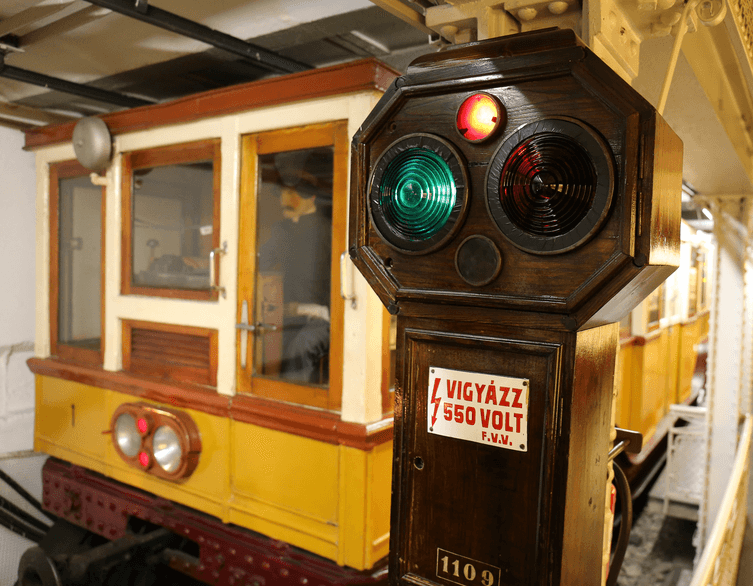
Budapest’s Underground Railway Museum Celebrates 50 Years of Preserving Metro History
Fifty years ago today, on October 28th, 1975, Budapest opened a museum in one of the most unusual locations imaginable—inside an actual abandoned...
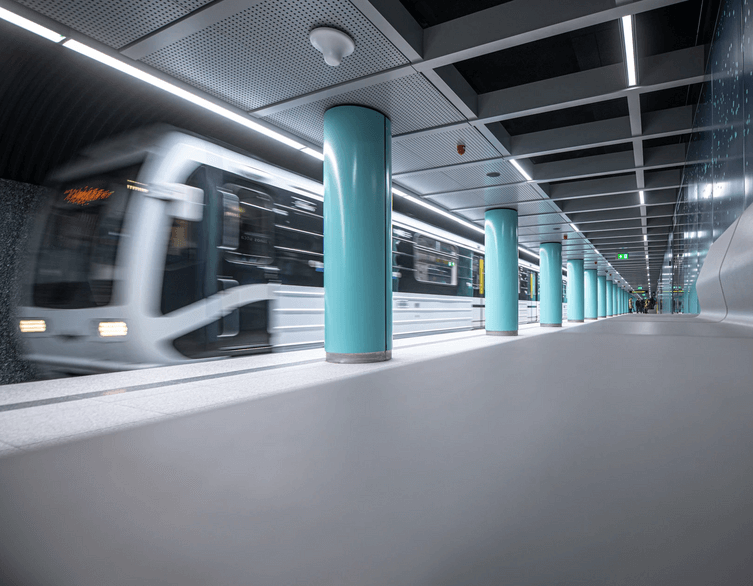
Budapest’s Revitalized M3 Metro: A New Era Underground
If you’re planning a trip to Budapest, there’s an essential part of city life you’ll want to experience firsthand: the M3 metro line. As of...
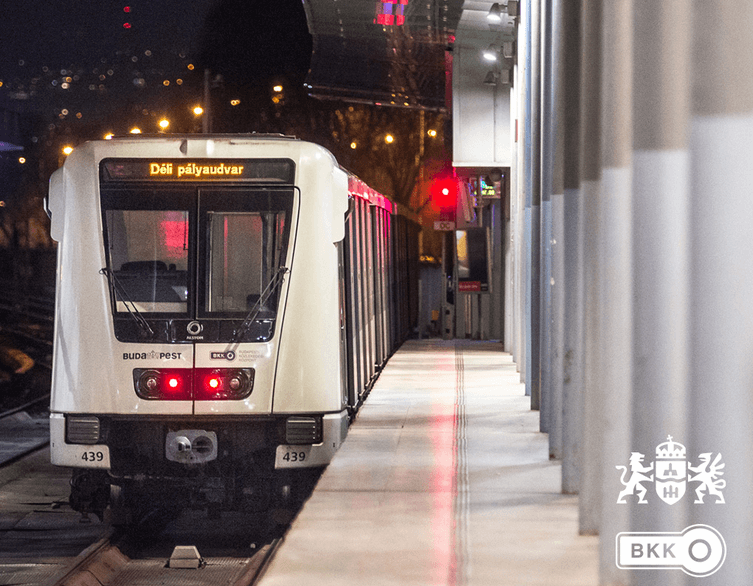
Budapest’s Metro Goes Late: The Night Owl’s Guide to the City’s New After-Hours Transport
Budapest is famous for its thermal baths, grand architecture, and ruin pubs-but now it’s about to become a paradise for night owls and late-night...
Budapest Metro Line 4: A Decade of Innovation and Architectural Excellence
Budapest, a city renowned for its rich history, vibrant culture, and architectural marvels, added another jewel to its crown in 2014 with the inauguration...
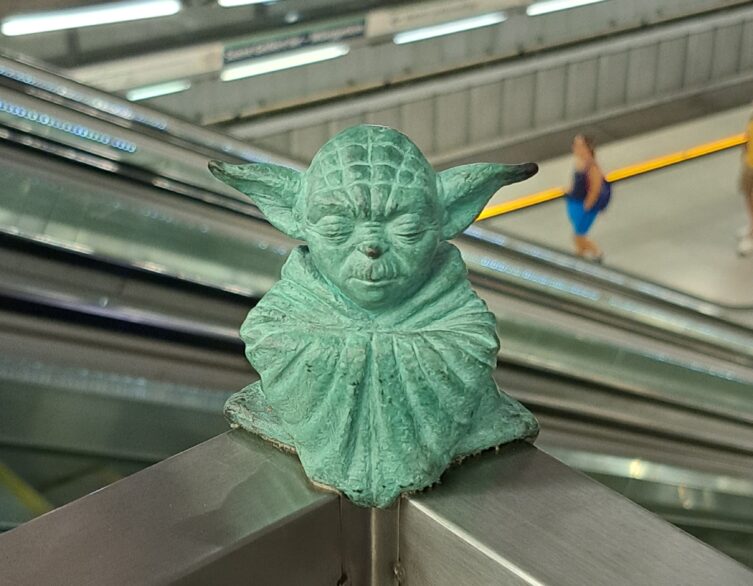
Does Yoda Control Metros in Budapest?
Attention all Star Wars fans and art enthusiasts! There’s a new addition to the vibrant city of Budapest that’s sure to catch your eye....
Deák Ferencz Metro Station Wins Award
The Deák Ferencz Metro Station in Budapest, Hungary, has been awarded a special prize by the Hungarian Chamber of Engineers (MMK) for its exceptional...