Budapest’s Citadella Reopens on March 28, 2026 — A Landmark Reborn
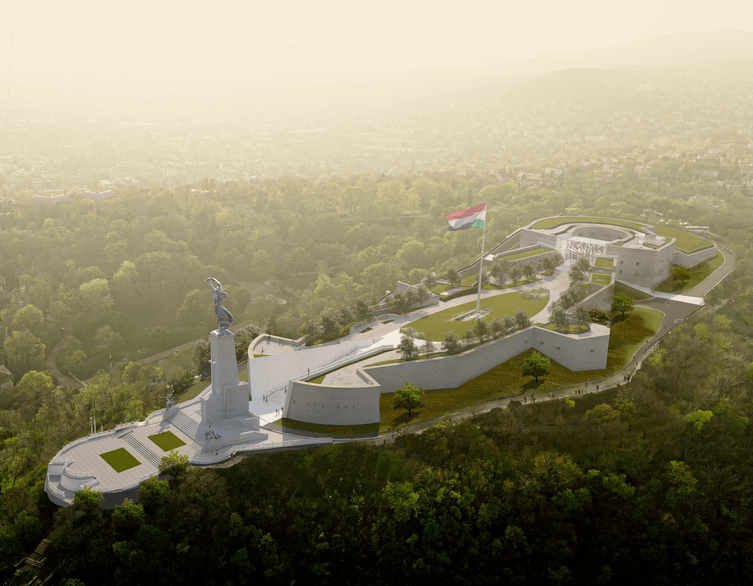
After years of major reconstruction, the iconic Citadella on top of Gellért Hill is finally opening its gates again on March 28, 2026. What was once a closed, single-entrance military fortress has been completely transformed into an open cultural and tourism hub — and it’s one of the most exciting things happening in Budapest right now. Whether you’re a history buff, a photography lover, or simply someone who wants to soak in one of Europe’s most stunning city panoramas, this is an unmissable stop on your Budapest itinerary.
What Is the Citadella?
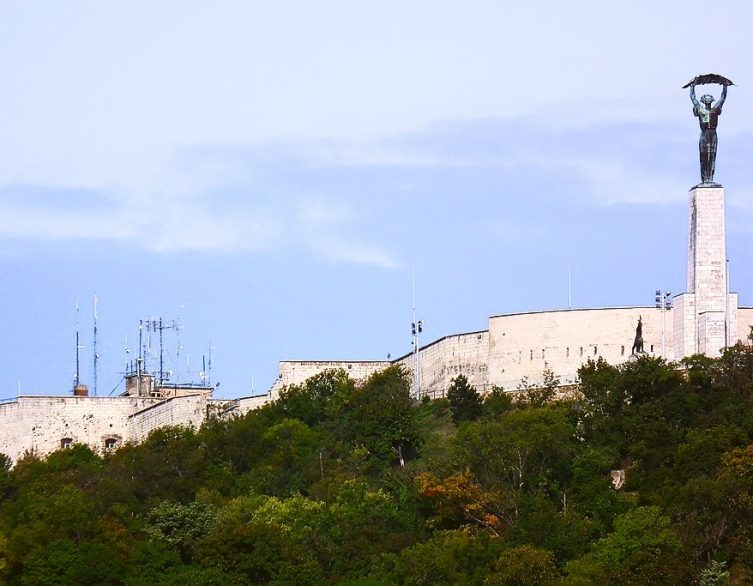
The Citadella is a 19th-century military fortress sitting atop Gellért Hill, one of Budapest’s most recognizable landmarks. Construction began in 1850, following the suppression of the 1848–49 Hungarian Revolution, and the imperial military occupied it until the late 19th century. For much of the 20th century, the fortress sat underused and partially closed to the public. The current large-scale renovation — part of the National Hauszmann Program — kicked off with archaeological excavations in 2020, with construction following in 2021. The site is now operated by Várkapitányság Zrt.
What’s New Inside
The transformation is dramatic. The old single-entrance, closed fortification has been opened up at three points by cutting through the fortress walls, including a long, wide, snow-white staircase leading up from the Liberty Statue. Once inside, here’s what you’ll find:
Best deals of Budapest







- A 6,000 sqm public park, free to enter during opening hours, planted with flower lawns, roses, lavender, climbing plants, and grapevines — designed to look beautiful in every season
- Hungary’s largest national flag, flying from a 36-meter mast right in the heart of the park
- A café, ice cream shop, and gift shop in the former courtyard
- A reflective water feature in the former roundel courtyard, with an eternal flame at its center as a symbol of remembrance and freedom
- Lifts for fully accessible entry
The Bastion of Freedom — The Main Exhibition
The star attraction is a permanent exhibition called A Szabadság Bástyája (The Bastion of Freedom), housed in the former cannon tower (the rondella) spanning over 1,700 square meters. It takes you through 13 centuries of Hungarian history — from the Magyar conquest of the Carpathian Basin all the way to the 1989 democratic transition.
How the story is told
What makes this exhibition genuinely unique is its narrator: Emese, the mother of Álmos, legendary ancestor of the Hungarian chieftains, who guides visitors through the entire sweep of history as if recounting her own vision. It’s a creative and immersive storytelling device that sets this exhibition apart from a typical history museum.
Highlights of the exhibition rooms
The exhibition is both visually spectacular and thought-provoking. Some standout moments include:
- A dramatic installation mapping the contours of historical Hungary during the medieval battles
- A monumental painting of King Matthias Corvinus on a white horse, with decor evoking the beginnings of Renaissance architecture in Hungary
- Figures of the 1848–49 Revolution and War of Independence, including the remarkable Mária Lebstück (Lieutenant Maria), a woman who fought dressed as a man in some of the bloodiest battles
- A reconstruction of the 1956 uprising, evoking the famous Corvin Passage, complete with the Russian-language inscription “Go home!” on the wall
The exhibition’s central concept is powerful: whoever controlled this hill, controlled the country. Through the centuries — a cross, a mosque, a Habsburg fortress, a Soviet monument — the hill has always signaled who held power over Hungary.
Rooftop Views
After the exhibition, you can head up to the Tetőkert 360 rooftop garden terrace, a full 360-degree viewing platform over Budapest. There’s also the Rondella terrace, which faces the Royal Palace (Buda Castle). And across the fortress, multiple vantage points offer directional views: the northern bastion looks toward Elizabeth Bridge and Margaret Island, the eastern bastion toward Liberty Bridge, and the southern bastion toward the Kelenföld district.
Free Opening Weekend
The official opening is March 28, 2026. Then, from March 29 to 31, the Bastion of Freedom exhibition — including the Tetőkert 360 rooftop — is free to visit with pre-registration on citadella.hu. Spots have been filling up fast, but a limited number of free walk-in tickets will also be available on-site during those three days. The park and several viewpoints remain free year-round during opening hours.
From April 1, paid tickets can be purchased both online and on-site.
The Liberty Statue — A New Context
You can’t miss the Liberty Statue, the iconic figure designed by sculptor Zsigmond Kisfaludi Strobl, which stands on the eastern wall of the fortress. Originally unveiled in 1947 as a monument to the Soviet liberation of Hungary, it was stripped of its Soviet symbols after the 1989 transition. Now, with the fortress walls opened and the freedom-themed concept wrapped around the entire site, this beloved Budapest landmark takes on fresh meaning — directly connected to the exhibition’s narrative of Hungary’s centuries-long struggle for independence.
Getting There
The Citadella sits at the top of Gellért Hill in Buda, easily reachable on foot from the Danube embankment, by bus, or via the new accessible lifts. The surrounding green area has also been fully renovated — in total, around 20,000 square meters of green space have been created or refreshed around the site.
If you’re planning a trip to Budapest in spring 2026, make sure March 28 onward is in your calendar. The Citadella’s reopening is shaping up to be one of the most significant cultural events the city has seen in years.
Related attractions
Related news
Citadella Reopens Soon: Electric Buses Transform Buda Tours in Budapest
Budapest’s Buda side is gearing up for smoother adventures with the Citadella reopening soon and eco-friendly buses replacing big tour coaches....
Budapest’s Citadella Returns: The Untold Story Behind 11 Years of Closure
One of Budapest’s most iconic yet mysterious landmarks is finally returning to the public after more than a decade in seclusion. The Citadella,...