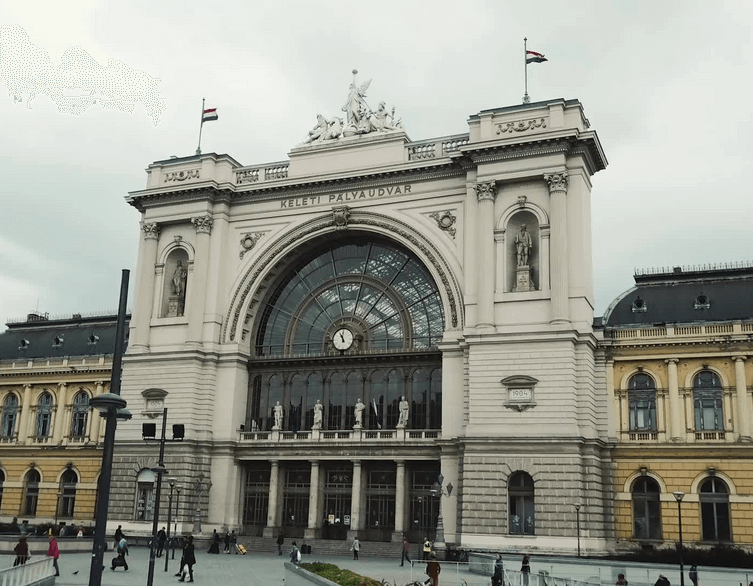
When the Selfie Game Gets Way Too Real: Climbing the West Station Roof in Budapest
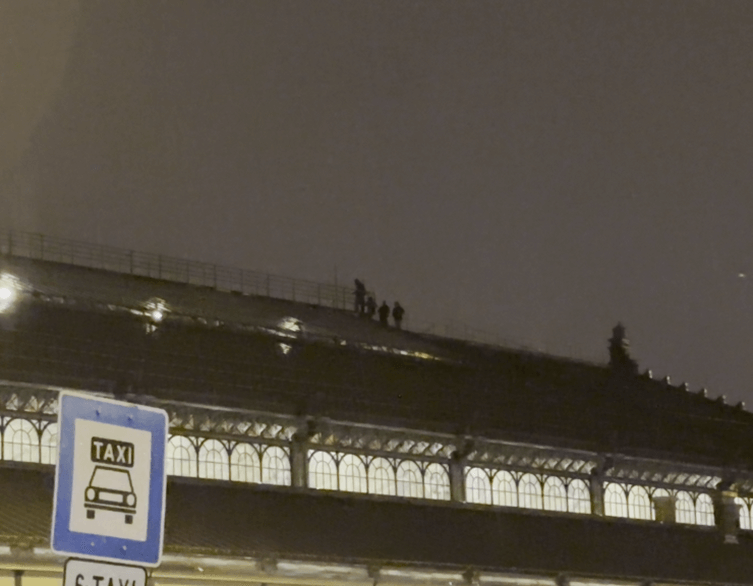
On the evening of December 23rd, four people made their way onto the roof of Budapest’s Nyugati pályaudvar (West Railway Station), climbing up a side ladder and walking across the station’s upper level to take photos and videos with a selfie stick. One of them even waved down at the camera filming from the parking lot, turning what should have been a quiet winter evening into a very public act of urban trespassing. The footage, shared by a local observer, quickly made the rounds – not as a cool urbex adventure, but as a serious safety and legal issue.
The MÁV (Hungarian State Railways), which operates the station, responded with a clear message: entering restricted railway areas and climbing onto station roofs is not just forbidden, it’s life-threatening. They’ve launched an internal investigation and filed a police report against unknown individuals, stressing that the only reason this didn’t end in tragedy was pure luck.
The Nyugati Pályaudvar: A Working Station, Not a Playground
Nyugati is one of Budapest’s three main railway stations, a beautiful 19th-century building with a grand glass roof and a central role in the city’s transport network. It’s not a ruin, not a closed-off industrial site – it’s a fully functioning railway hub with trains, trams, high-voltage lines, and constant movement. The roof and technical areas are strictly off-limits for good reason: a misstep, a slip on a wet surface, or contact with live equipment can have fatal consequences.
Best deals of Budapest











The MÁV’s warning is worth taking seriously. Railway infrastructure is designed for trains and maintenance crews, not for tourists or thrill-seekers. What might look like an easy climb from the outside can quickly become a deadly situation once you’re up there, especially at night, in the cold, and without proper gear or permission.
Urbex in Budapest: The Growing Appeal of Hidden Spaces
Urban exploration – or “urbex” – has been gaining popularity in Budapest over the past few years, and it’s easy to see why. The city is full of layered history: grand 19th-century buildings, old factories, forgotten tunnels, and hidden passageways that feel like stepping into another era. For many, it’s not just about the photos, but about the atmosphere, the silence, and the sense of discovering something most people never see.
There are already well-known examples of this kind of exploration in the city. A few years ago, a group documented their way through the hidden passages and technical areas of Keleti pályaudvar (East Railway Station), eventually reaching parts of the roof and upper levels. Their photos showed a different side of the station: rusting metal, old signage, and views of the city from angles most travelers never experience. That kind of exploration, when done carefully and with respect for the structures, can be fascinating – but it also walks a fine line between adventure and trespassing.
The Fine Line Between Exploration and Recklessness
What happened at Nyugati blurs that line in a dangerous way. Urbex at its best is about patience, preparation, and awareness: researching access points, understanding risks, and avoiding areas where people could be harmed or where the structure itself is unstable. Climbing onto the roof of an active railway station with a selfie stick, waving at the camera, and treating it like a casual photoshoot is something else entirely.
It’s one thing to quietly explore an abandoned building or a disused tunnel with proper precautions. It’s another to enter a live railway area where trains are running, electricity is flowing, and safety systems are in place for a reason. The MÁV’s reaction isn’t just about rules – it’s about preventing accidents that could affect not just the climbers, but also passengers, staff, and the entire rail network.
What Tourists Should Know About Urbex in Budapest
If you’re drawn to urban exploration while visiting Budapest, there are ways to satisfy that curiosity without breaking the law or risking your life. The city has plenty of legal and semi-legal options: guided tours of underground tunnels and bunkers, visits to repurposed industrial spaces like the former gasometers or old factories turned into cultural centers, and even some abandoned buildings that are well-known among the local urbex community (though access is still often restricted).
For a safer, more tourist-friendly alternative, focus on the city’s many rooftop bars and viewpoints. Places like 360 Bar, High Note SkyBar, or the observation deck at the Museum of Applied Arts offer incredible views of Budapest’s skyline without the danger. If you’re interested in the history and architecture of the railway stations, take a proper look inside Nyugati, Keleti, or Déli – they’re all worth exploring from the ground up, with their grand halls, vintage details, and constant buzz of travel.
A Reality Check for the Urbex Crowd
Urban exploration is becoming more popular, and Budapest is a natural playground for it. But popularity doesn’t make risky behavior acceptable, especially in places where the stakes are so high. The Nyugati incident is a reminder that not every interesting-looking roof or hidden passage is meant to be climbed – some structures are off-limits for very good reasons.
For those who love exploring hidden corners of the city, the challenge isn’t just about getting to the most dramatic spot. It’s about doing it responsibly: respecting private property, understanding the risks, and knowing when to walk away. Budapest has enough fascinating, photogenic places that don’t require trespassing on active railway infrastructure. The real adventure is in discovering them the right way.
Related news