Safe Streets, Happy Schools: How Budapest is Redesigning Its Neighborhoods for Kids
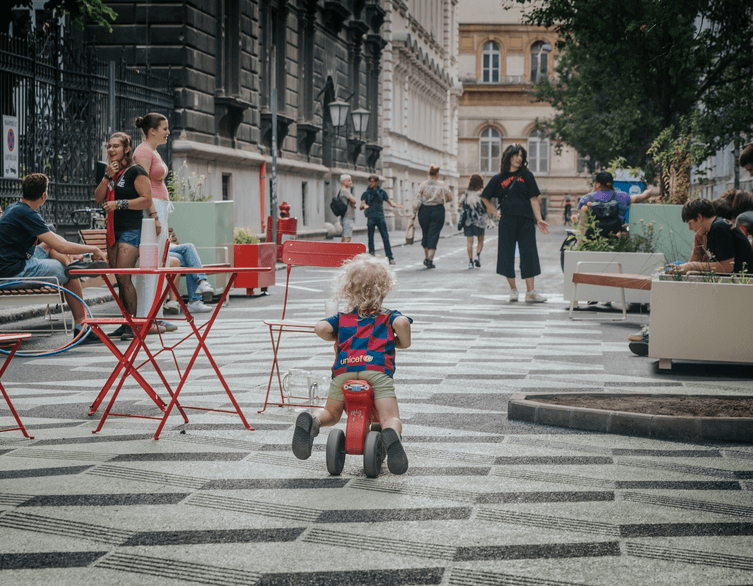
If you stroll through certain Budapest neighborhoods on a weekday morning, you might notice something refreshing: colorful signs, children walking freely to school, and a surprising calm where traffic once dominated. These are Budapest’s growing Sulizóna and Iskolautca programs, two initiatives transforming how the Hungarian capital approaches urban safety, mobility, and community life around schools.
This concept has deep European roots, first gaining momentum in the Netherlands and Paris, where temporary street closures around schools evolved into citywide movements. Rather than experimental projects, school streets have become a European standard for creating safer, calmer zones where children can thrive. Now Budapest has embraced this model with remarkable success since launching in 2023, and the results have exceeded expectations at participating schools.
A Proven Success Story
The transformation has been significant and measurable. When the pilot program launched at the Gregor József Primary School in Rákosliget in the 17th district, what began as a two-week trial extended to four weeks due to overwhelmingly positive feedback from parents and teachers. The school zone has since become permanent, with additional improvements including covered drainage ditches for smoother pedestrian paths and expanded drop-off areas for families who must arrive by car.
Parent surveys and observations at participating schools reveal consistent improvements: heightened feelings of safety, fewer dangerous near-miss incidents, and notably more children choosing to walk, cycle, or scooter to school instead of being driven. The atmosphere around these schools has fundamentally changed, with morning drop-offs transforming from stressful, congested affairs into relaxed community moments.
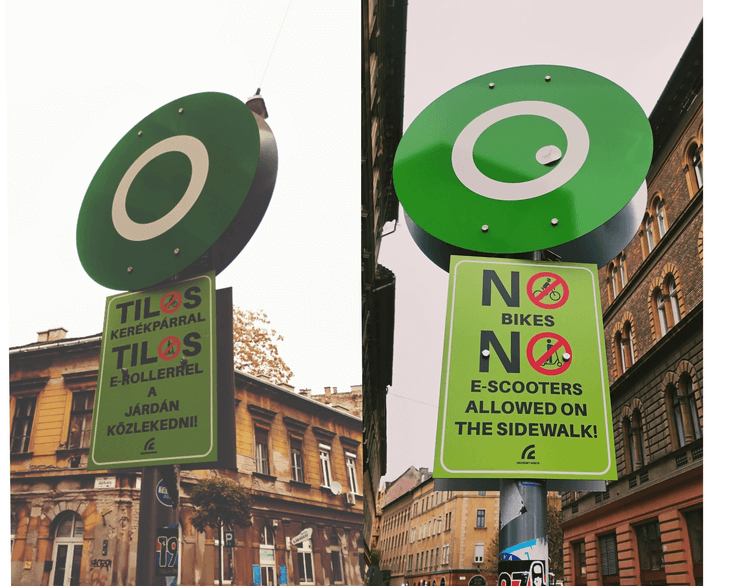
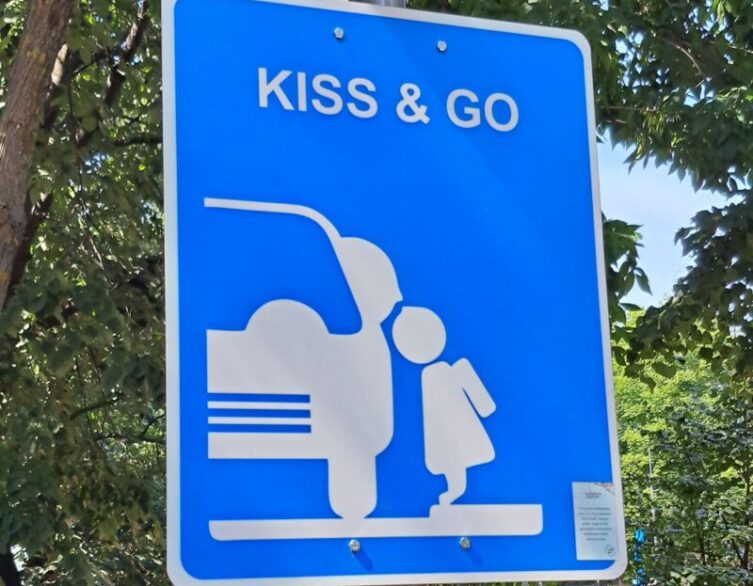
Budapest’s transport authority, the Budapesti Közlekedési Központ, collaborated with district councils, Budapest Közút road management company, and the MOME Innovation Center to develop eye-catching, playful signage that immediately signals to drivers that they’ve entered a child-priority zone. These visual elements work alongside physical changes like narrowed roads, raised crosswalks, and dedicated short-term parking spots for quick drop-offs.
How the Program Actually Works
The implementation varies by location, responding to each neighborhood’s unique needs and infrastructure. Some zones feature temporary restrictions during school arrival and departure times, typically from 7:00 to 9:00 in the morning and again in the afternoon. During these windows, through traffic is blocked or heavily restricted, though residents can still access their homes at reduced speeds of 10 kilometers per hour maximum, with heightened awareness for children.
Other locations have become full school streets, completely car-free throughout the school day or even permanently. Trefort Street in the 8th district, home to the ELTE Trefort Ágoston Practicing Gymnasium, became one of Budapest’s first complete school streets. The transformation is striking: where cars once jockeyed for parking spots and created dangerous blind spots, there’s now open space with benches, planters, and room for the school community to gather safely.
The program currently operates at multiple schools across Budapest, including the Karinthy Frigyes Hungarian-English Bilingual Primary School and Megyeri Road Primary School in the 4th district of Újpest, the Harmat Primary School in the 10th district of Kőbánya, and the Újlak Street Primary School in the 17th district. Each location has shown improvements in air quality, noise reduction, and overall neighborhood livability.
Learning from European Success
Dutch mobility expert Marco Mulder, who leads active mobility and traffic safety initiatives for Arcadis, has worked closely with Budapest planners to share insights from cities already years into their school street journeys. He points to Paris as a particularly impressive model, with over 300 school streets now operational, about one-third of which have become fully pedestrianized and greened with trees and play elements.
The Dutch approach emphasizes bicycle culture, where cycling infrastructure has systematically replaced car dependency over decades of intentional planning. Paris focused heavily on environmental arguments about air quality and climate impact to win public support. Budapest has found that different neighborhoods respond to different motivations, with some residents most concerned about safety while others prioritize environmental health or simply want quieter, less congested streets.
What works universally is community engagement. Before implementing any school zone, the transport authority holds workshops with parents, teachers, students, local residents, and business owners. This ensures everyone understands the goals, addresses concerns about access and parking, and allows for a trial period where adjustments can be made based on real-world feedback. This collaborative approach has been essential to the program’s acceptance and success.
Best deals of Budapest









What Visitors Will Notice
For foreign tourists exploring Budapest, these transformed school zones offer fascinating glimpses into how the city is evolving. The changes align with Budapest’s broader push toward more livable, sustainable urban spaces, visible in expanding bike lane networks, pedestrianized areas, and increased green spaces throughout the city.
Walking through these neighborhoods, you’ll notice the visual transformation immediately. Vibrant pavement art, colorful signs designed by the MOME Innovation Center, and physical elements like planters and seating create welcoming environments that feel fundamentally different from typical urban streets. The air feels fresher because it is, with reduced vehicle emissions during peak school hours. The soundscape shifts from engine noise and horns to conversations and the pleasant chaos of children’s voices.
These zones are particularly concentrated in residential neighborhoods slightly away from the main tourist corridors, offering travelers interested in authentic local life a chance to see Budapest families in their daily routines. Areas like Újpest in the north, Kőbánya to the east, and Rákosmente in the southeast provide different perspectives on the city’s diverse neighborhoods, all increasingly accessible and pleasant to explore on foot or by bike.
The Bigger Picture
Budapest’s school zone program connects to ambitious long-term goals. The city aims to ensure that by 2030, every kindergarten and primary school not located on a major thoroughfare will have pedestrian priority and traffic-calmed surroundings. This aligns with European Union targets for reducing urban traffic fatalities and improving public health through active transportation.
The benefits extend far beyond safety statistics. International research consistently shows that children who walk or cycle to school arrive more alert and perform better academically. Even children who continue arriving by car benefit from the calmer, less polluted environment. Neighborhoods see improved social cohesion as streets become spaces for community interaction rather than just traffic corridors.
Recent workshops in November 2025 with Mayor Gergely Karácsony and representatives from the Dutch Embassy signal continued expansion, with discussions underway for additional schools in the 11th and 12th districts. The program has moved beyond the pilot phase into permanent implementation, with lessons learned from early locations informing improvements at new sites.
Why This Matters for Your Visit
Even if you’re visiting Budapest primarily for its famous thermal baths, grand architecture, and vibrant cultural scene, these school zones reveal something important about where the city is heading. Budapest is actively working to become more family-friendly, more sustainable, and more human-scaled, qualities that enhance the experience for residents and visitors alike.
When planning your Budapest itinerary, consider exploring some of these transformed neighborhoods. The Trefort Street school zone sits near the bustling Astoria metro hub and the historic former Stühmer chocolate factory, making it easy to incorporate into a day exploring the 8th district. The broader József district has embraced walkability initiatives that make it increasingly pleasant for pedestrian exploration.
The school zones also connect to Budapest’s expanding cycling infrastructure. The city has been steadily adding protected bike lanes and developing routes along the Danube and through major parks. For tourists interested in experiencing Budapest beyond the central tourist zones, renting a bike and exploring these family-friendly neighborhoods offers a different, equally rewarding perspective on the city.
A City Transformed, One Street at a Time
Budapest’s school zone program represents more than traffic management. It’s a statement about urban priorities and quality of life. By reclaiming streets from car dominance, even temporarily or in small areas, the city demonstrates that alternatives are possible and popular when implemented thoughtfully.
The success at participating schools has created momentum for expansion. Parents who initially worried about access or convenience have become advocates after experiencing the benefits firsthand. Children have gained independence, able to walk or bike to school safely without constant adult supervision. Neighborhoods have discovered that streets can serve multiple purposes beyond moving and storing vehicles.
As Budapest continues developing these initiatives, the city joins a growing network of European capitals reimagining urban mobility. The transformation is gradual but steady, with each new school zone contributing to a larger vision of livable, sustainable city neighborhoods where children can move freely and families can thrive. For visitors, these zones offer windows into Budapest’s evolving character and its commitment to building a better urban future.
Related news
Hungary’s New Traffic Rules Arrive in 2026: What Drivers, Cyclists, and E-Scooter Riders Need to Know
From September 2026, Hungary will roll out its most significant road safety reform in over fifty years — a brand-new Highway Code (KRESZ) that...
How Budapest Changed in 2025: A Year That Shaped the City
If you’ve been to Budapest before, you might notice that the city feels a bit different this time around. It’s not just the usual mix of thermal...
Budapest’s New Downtown: Where Pedestrians Rule the Streets
Budapest’s historic downtown is embracing a walkable future, transforming bustling avenues and hidden streets into pedestrian-only zones. For foreign...
Budapest’s First “School Street”: Trefort Street Leads a City-Wide Movement
If you’re strolling through Budapest’s historic eighth district this fall, you might be surprised by the transformation on Trefort Street....
Budapest Is Making Sure that School Starts Smoothly and Safely
As summer is coming to and end it will surely bring a relief to many parents but some worries as well: how will the kids get to school safely? Budapest...