Check Your Change: A Special 50-Forint Coin Just Entered Circulation in Budapest
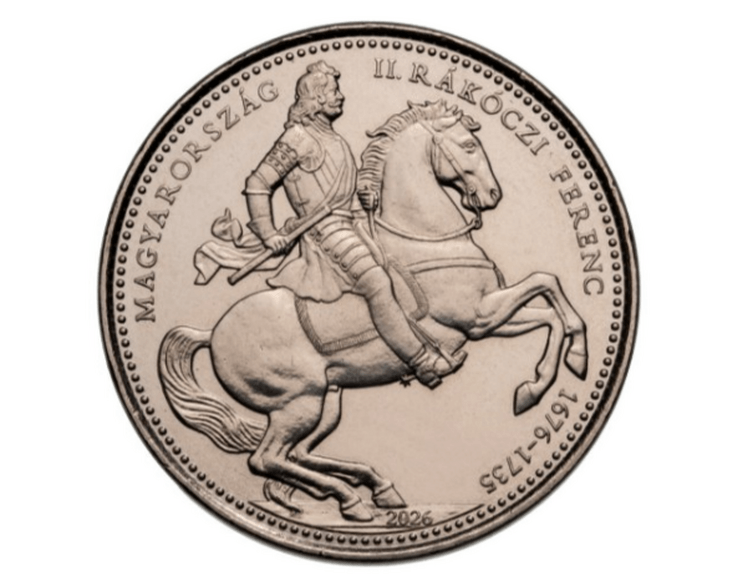
There’s a small but delightful surprise waiting for visitors to Budapest right now, and it might arrive in the most unexpected way — as loose change after buying a coffee, a pastry, or a tram ticket. Hungary’s central bank, the Magyar Nemzeti Bank (MNB), has just released a special commemorative 50-forint coin into everyday circulation, and if you happen to receive one, you’ll be holding a tiny piece of Hungarian history in your hand.
The Man on the Coin: Francis II Rákóczi
The coin honours Francis II Rákóczi, one of Hungary’s most celebrated national heroes, on the 350th anniversary of his birth on March 27, 1676. Born into one of the most powerful aristocratic families in the Kingdom of Hungary, Rákóczi grew up in a world already shaped by resistance — both his father and his stepfather had led uprisings against Habsburg rule before him. He became the leader of the Rákóczi’s War of Independence (1703–1711), a sweeping revolt against Habsburg domination that united Hungarian noblemen, peasants, and soldiers in a common cause.
The war ultimately ended with the Treaty of Szatmár, and Rákóczi spent the rest of his life in exile, dying in 1735 in what is now Turkey. But his legacy never faded. He remains a symbol of Hungarian freedom and national identity, and his portrait already graces the 500-forint banknote — the bill most people handle several times a day in Budapest. Now, for the first time in decades, his image is appearing on a coin in everyday circulation.
Best deals of Budapest







A Remarkably Rare Honour
What makes this release especially notable is just how rare it is. In the past hundred years, only a single Hungarian coin bearing Rákóczi’s portrait had ever entered circulation — a silver 2-pengő piece minted back in 1935. That’s nearly a century between appearances, which makes this new 50-forint coin a genuinely historic release, not just a routine commemorative issue.
The design on the thematic side of the coin depicts Rákóczi on horseback — an equestrian portrait based on the work of sculptor and medallist Lajos Berán, faithfully adapted for this new edition. The commemorative silver coins, meanwhile, feature an impression of Rákóczi’s princely seal on one side and a profile portrait based on Ádám Mányoki’s celebrated 1712 painting on the other, with both the coins and the circulation piece designed with clear artistic intent.
What’s Been Released and How to Get One
The MNB has issued one million of the special 50-forint coins, which are now entering the cash payment system — meaning they can and will appear as change in shops, markets, cafés, and anywhere else that deals in Hungarian forints. For visitors paying in cash around Budapest, there’s a genuine chance of stumbling across one, and if you do, it would make a wonderfully unique and cost-free souvenir to bring home. A tiny coin carrying 350 years of Hungarian history, received as change for a lángos at the market hall — it doesn’t get much more authentic than that.
For those who’d rather not leave it to chance, the Hungarian Mint (Magyar Pénzverő Zrt.) is also selling a collector’s edition: 12,000 of the coins have been packaged as “first-day strikes,” individually numbered and presented in sealed packaging, available for 3,400 forints each. Rolls of 50 coins are also available at 7,500 forints per roll, with a limit of three rolls per person — a sign of just how seriously Hungarian collectors take these releases.
The Commemorative Coins for Serious Collectors
Beyond the circulating 50-forint piece, the MNB has also released two higher-denomination commemorative coins for dedicated numismatists. A silver coin with a face value of 40,000 forints is available at market-based pricing of 61,000 forints, while a non-ferrous metal version with a face value of 6,000 forints can be purchased at face value for the first year after release. Both were designed by sculptor Borbála Szanyi and carry the same Rákóczi imagery — the princely seal and the Mányoki portrait. While these are technically legal tender, the MNB sensibly recommends against using them for everyday purchases, since their collector value far exceeds what you’d get in exchange for a cup of coffee.
Why Cash Is Still Worth Using in Budapest
Hungary remains a predominantly cash-friendly society, and Budapest is no exception. While card payments are widely accepted in hotels, restaurants, and larger shops, smaller vendors, market stalls, street food spots, and local transport often prefer — or even require — cash. That makes it entirely practical to carry forints during your visit, and right now there’s an added incentive: every cash transaction is a small lottery ticket for one of these special 50-forint coins.
The MNB last issued a commemorative circulation coin in 2025, when a special 200-forint piece was released to mark the 200th anniversary of the Hungarian Academy of Sciences. These releases have a pattern of generating intense public interest — the Mint’s online shop regularly implements a virtual queuing system to manage demand on release days. The Rákóczi coin was no different, with high traffic expected from collectors across the country from the moment sales opened on March 27.
Dig Deeper at the Money Museum
If this special coin sparks your curiosity about Hungarian monetary history, Budapest has just the place to satisfy it. The Money Museum (Pénzmúzeum), run by the Magyar Nemzeti Bank, offers a fascinating deep dive into the history of Hungarian currency, from medieval coins to modern banknotes, and is well worth a visit for anyone who finds themselves intrigued by what their change is trying to tell them. It’s one of those hidden-gem attractions that most tourists walk past without realising it exists — but for anyone captivated by the story behind a small silver coin in their pocket, it’s an ideal next stop.
A Souvenir That Costs Almost Nothing
Budapest is full of beautiful, memorable souvenirs — hand-painted porcelain from Herend, embroidered tablecloths from the Great Market Hall, a bottle of Tokaji wine from a cellar in the Jewish Quarter. But there’s something particularly charming about the idea of a souvenir that finds you, rather than the other way around. Keep an eye on your change during your time in Budapest, and you might just pocket a little piece of Hungarian history for free. And if the horseback portrait of Francis II Rákóczi turns up in your coin tray at the end of the day, it’s worth holding onto — that 50-forint coin tells a story that goes back three and a half centuries.
Related news
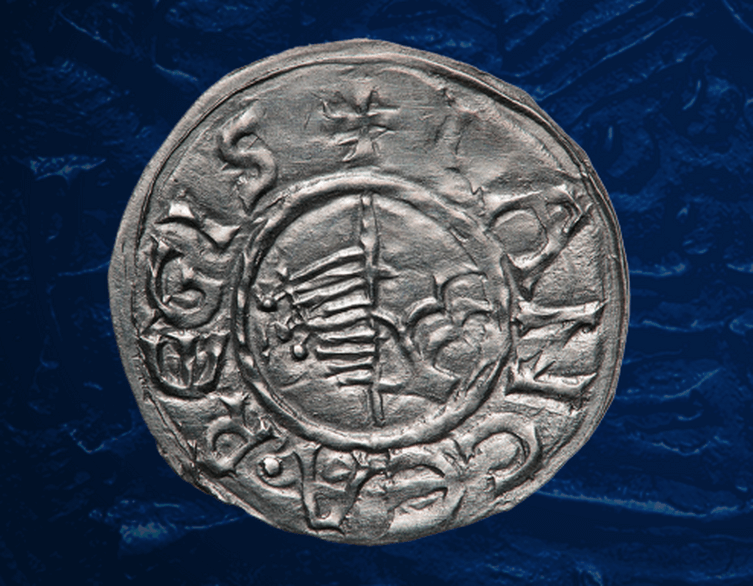
The Sacred Coins of St. Stephen: Hungary’s First Royal Currency
When you visit Budapest today and explore its rich numismatic heritage, you’re uncovering one of medieval Europe’s most fascinating monetary...
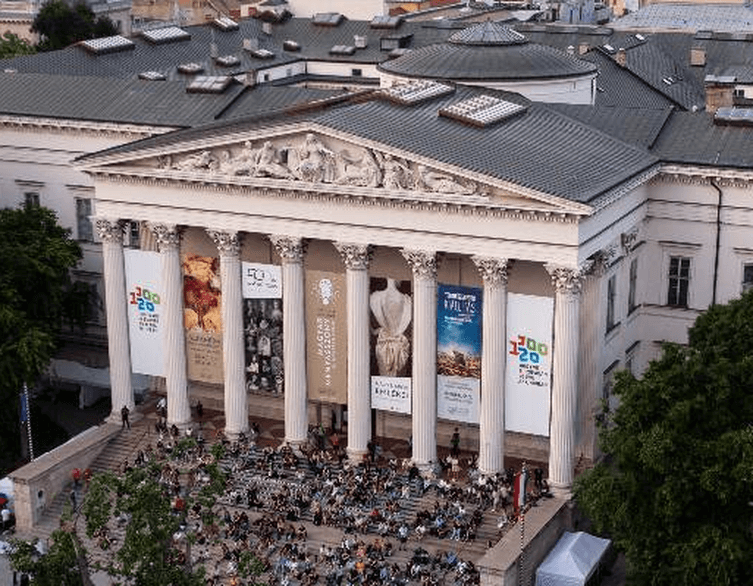
Enjoy Budapest’s Museums for Free: Insider Tips for Culture-Loving Tourists
If Budapest’s rich art and history aren’t yet on your itinerary, it’s time to reconsider. One of the city’s best-kept secrets is the abundance...

Cool Down and Enjoy the View at the Money Museum’s Rooftop Terrace
Hey there, coffee lovers and adventure seekers! If you’re looking for a unique spot to chill out and enjoy some fantastic views, I’ve...
Related attractions