Budapest Is Getting Cleaner: Meet the Square Wardens Keeping the City Tidy for You
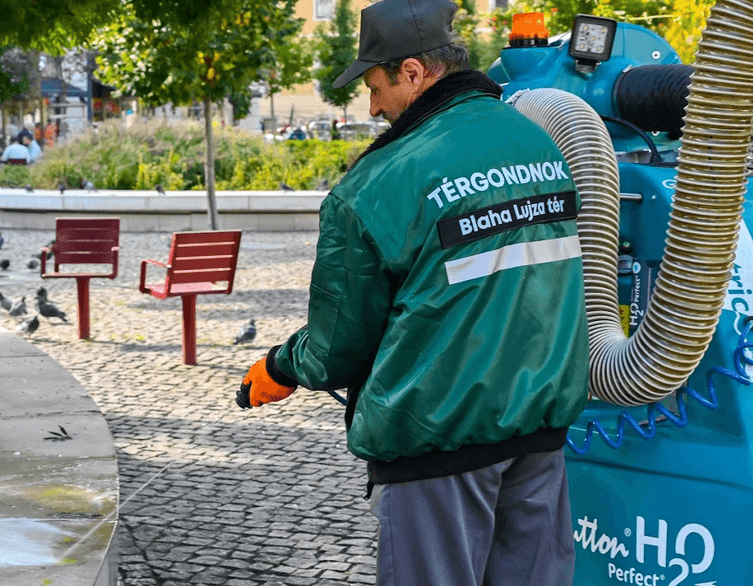
If you’ve strolled through Budapest recently and spotted someone in a dark green uniform quietly picking up litter, checking on a park bench, or keeping a watchful eye over a busy square, you’ve already encountered one of the city’s square wardens — and their numbers are growing. Budapest is expanding its innovative public space program just in time for the spring tourist season, with two new locations joining the initiative from April 1.
A Program That’s Already Making a Difference
The square warden service was launched in October 2025 by Budapest Public Utilities (Budapesti Közművek), and it has quickly become a visible and valued part of daily city life. The idea is straightforward but effective: dedicated wardens are assigned to the city’s busiest squares and transport hubs, working in two shifts from dawn until late evening to keep those spaces clean, orderly, and welcoming. In a city that welcomes millions of tourists every year, first impressions matter — and cleaner, more pleasant public spaces make a real difference to how visitors experience Budapest.
The program drew on both local experience and best practices from major Western European cities when designing the role. Rather than simply hiring more cleaning staff, the square warden concept creates a more proactive, visible presence: someone who monitors the space continuously, responds to issues as they arise, coordinates with cleaning services, shops, and authorities, and keeps a close eye on the condition of street furniture, trees, and green areas. Early feedback has been strongly positive, with noticeable improvements reported in the general cleanliness of every square under the wardens’ care.
Where You Can Find Them Now
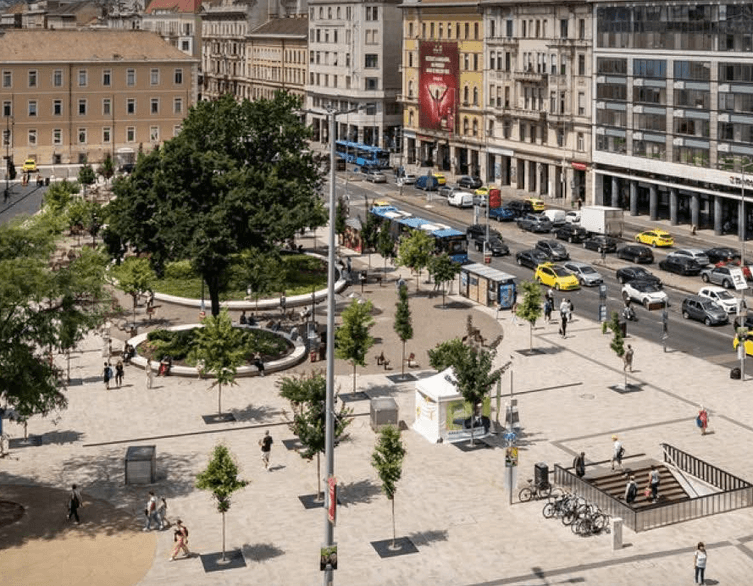
The program currently operates across six of Budapest’s most trafficked locations, all of which are places you’re very likely to pass through during your visit. The first three sites launched in October 2025 were Blaha Lujza Square, Deák Ferenc Square, and the Kőbánya-Kispest metro terminal. Blaha Lujza Square, named after the beloved Hungarian actress Lujza Blaha, sits at the intersection of Rákóczi Street and the Grand Boulevard and serves as one of the city’s most important transport interchanges — metro, trams, and buses all converge here, making it one of Budapest’s true urban crossroads. Deák Ferenc Square, meanwhile, is the only point in the city where all three metro lines meet, making it arguably the single busiest public space in Budapest.
In November 2025, the program expanded to three more locations: Etele Square, Örs Vezér Square, and Széll Kálmán Square — all major transit hubs on the outskirts and western side of the city. Each of these squares sees enormous daily footfall, and the arrival of the wardens there has continued the pattern of measurable improvement seen at the original sites.
Best deals of Budapest









Two New Squares Join Before Easter
From April 1, Boráros Square and Baross Square will become the seventh and eighth locations in the program, with wardens in place well before the Easter holiday rush. The selection of these two squares was based on careful data analysis — Budapest Public Utilities looked at waste bin capacity and usage patterns, the daily and weekly wear on pavements and street furniture, pedestrian traffic data from BKK’s transport model, and even public reports submitted through the city’s civic reporting platform, jarokelo.hu.
Baross Square is particularly significant for tourists, as it sits directly in front of Keleti Railway Station — one of Budapest’s main international train terminals and the arrival point for many visitors coming from Vienna, Bratislava, or further afield. A cleaner, more organised square greeting travellers as they step off the train sets a welcoming tone from the very first moment. Boráros Square, located at the Pest end of the Petőfi Bridge, is a busy transport node connecting several tram and bus lines and serving as a gateway to the southern part of the city.
What the Wardens Actually Do
The square wardens’ role goes well beyond picking up litter, though that’s certainly part of it. They conduct ongoing cleanliness inspections of their assigned area, address specific recurring issues — such as problems caused by bottle collectors or birds — and can call on municipal cleaning services or nearby businesses to empty overflowing waste bins outside of the regular schedule. They also monitor the condition of benches, signs, trees, and green spaces, flagging anything that needs attention before it becomes a bigger problem.
The entire initiative is funded through savings generated by the more efficient operation of Budapest Public Utilities as a unified municipal company. The current annual cost of running the service is approximately 250 million Hungarian forints, with the expansion adding a further 90 million forints per year — covering staff, equipment, and logistics.
Why It Matters for Your Visit
For tourists, a cleaner city isn’t just about aesthetics — it’s about feeling comfortable and safe as you explore. Budapest is already one of Europe’s most strikingly beautiful capitals, with its grand boulevards, thermal baths, and UNESCO-listed riverfront. The square warden program is part of a broader effort to make sure the everyday experience of moving through the city matches the grandeur of its landmarks. Whether you’re arriving by train at Keleti Station, changing metro lines at Deák Ferenc Square, or simply passing through Blaha Lujza Square on your way to the Great Market Hall, you’ll find these spaces increasingly well-kept and looked after.
It’s a quiet but meaningful sign that Budapest is investing in the kind of city it wants to be — not just for residents, but for every visitor who walks its streets.
Related news
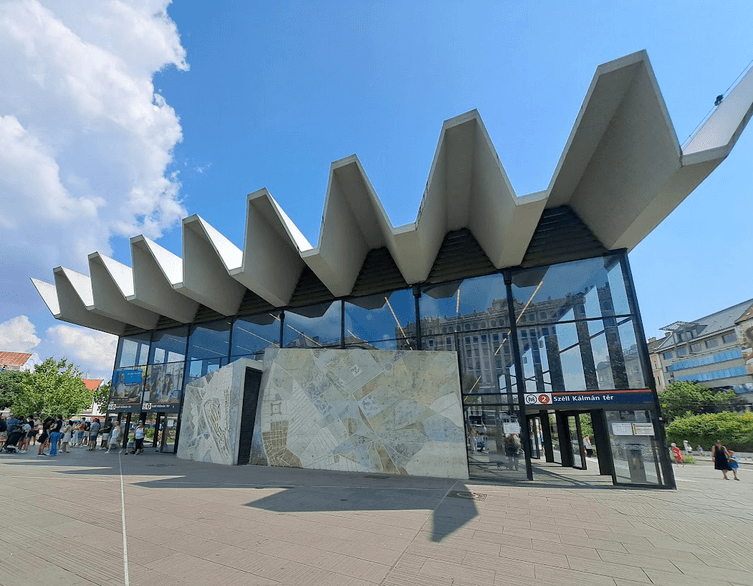
Shady Széll Kálmán Square? Budapest’s Big Plan to Chill Out Your Favorite Square
Hey, Budapest newbie, picture this: you’re schlepping across Széll Kálmán Square in scorching summer heat, dodging trams and tourists while...
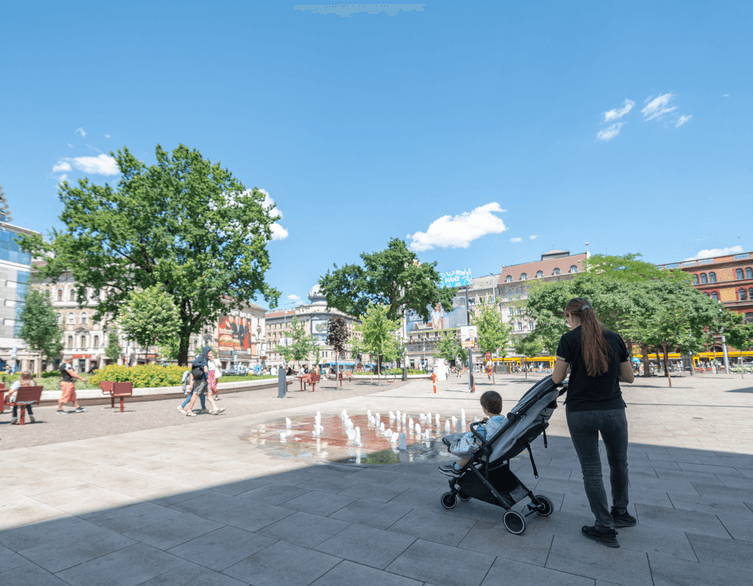
Blaha Lujza Square Wins Prestigious Landscape Architecture Award
From Controversial Redesign to Award‑Winning Urban Space Budapest’s Blaha Lujza Square, once the subject of heated public debate, has now...
Budapest Introduces Square Guardians: A New Era of Public Space Care for Visitors and Residents
Budapest is taking a revolutionary step toward maintaining its public spaces with the launch of a comprehensive square guardian service across the...