When Aragorn Walked Into Budapest: Viggo Mortensen’s Quiet Visit to the Hungarian National Museum
A Sunday Afternoon Like No Other
It was an ordinary Sunday afternoon at the Hungarian National Museum — or so it seemed. Visitors wandered through the galleries, museum staff went about their routines, and the queue for the blockbuster Attila exhibition moved along at its usual pace. Then, at around half past two, a tall man walked up to the information desk and politely asked where he could buy a ticket, where the cloakroom was, and how to find the exhibitions. A perfectly normal question from a perfectly normal visitor — except this was no ordinary visitor. It was Viggo Mortensen, one of Hollywood’s most respected actors and, to millions of film fans around the world, the man who brought Aragorn to life in The Lord of the Rings.
The King in the Queue
What makes the story so genuinely charming is how completely low-key the whole thing was. Mortensen arrived alone, with no entourage, no security detail, and no fanfare whatsoever. He simply showed up, bought a ticket, and quietly made his way through the museum’s galleries like any other curious visitor. The vast majority of people standing next to him as they gazed at centuries-old artefacts had no idea who he was. Mortensen spent a long time in the exhibition rooms, taking it all in at his own pace — which, given the scale of what was on display, is exactly the right approach.
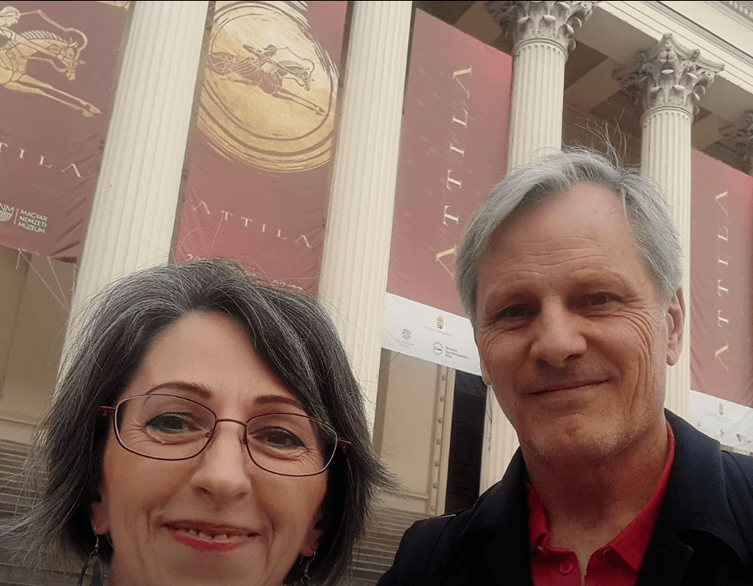
It was museum employee Zsuzsanna Kaszab who recognised him at the information desk. After helping him find his way around and chatting for a few minutes, she asked if they could take a photo together — and Mortensen graciously agreed. But the story gets even better. Zsuzsanna happens to be a founding member of the Hungarian Tolkien Society and, as any dedicated Tolkien enthusiast would, she carries her membership card with her at all times. She asked Mortensen if he would sign it. He did — and his dedication read simply: “Viggo Aragorn II.” A membership card instantly transformed into a priceless artefact.
What Drew Aragorn to Attila?
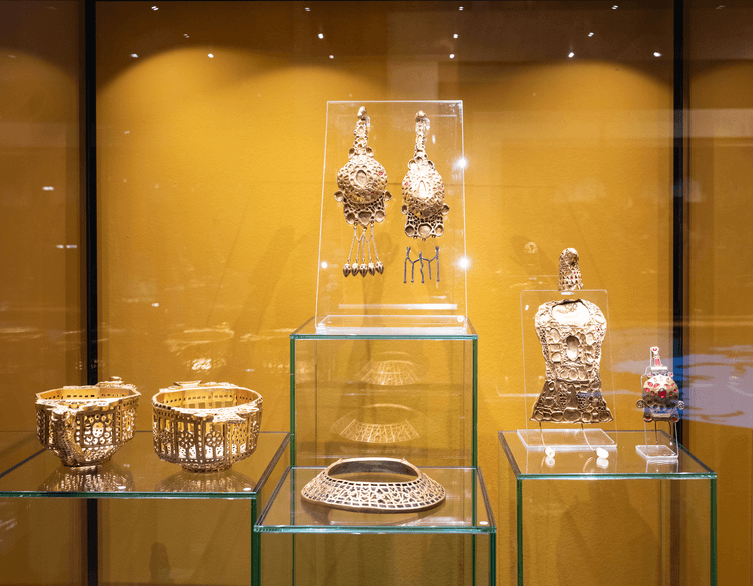
The exhibition that brought Mortensen to the Hungarian National Museum is, to put it plainly, extraordinary. The Attila exhibition opened on January 23, 2026, and runs until July 12, 2026, making it one of the most significant cultural events in Budapest this year. It is the largest Huns-themed exhibition staged in Europe in recent decades, bringing together over 400 artefacts from 64 museums across 13 countries — including prestigious lenders such as the British Museum and the Louvre Abu Dhabi.
Best deals of Budapest







The exhibition explores the enduring and often contradictory legacy of Attila, King of the Huns, through the lenses of archaeology, history, anthropology, archaeogenetics, and art. It spans 1,600 years of myth-making, asking how a fifth-century warlord became one of the most powerful and contested figures in both Eastern and Western cultural memory. For someone like Mortensen, who has spent much of his career gravitating towards complex historical and mythological narratives, the subject matter is a natural fit.
About the Man Behind the King
For those who know Viggo Mortensen only as Aragorn, his Budapest visit is a good reminder of just how wide-ranging his work actually is. The Danish-American actor has built one of the most consistently interesting filmographies in Hollywood, with a particular fondness for collaborating with visionary directors. His long-standing creative partnership with Canadian director David Cronenberg has produced some of his most acclaimed work, including A History of Violence, Eastern Promises, and A Dangerous Method. His performance in Eastern Promises earned him his first Academy Award nomination for Best Actor, and he has received further Oscar nominations for Captain Fantastic and Green Book — with the notes from the Hungarian National Museum confirming he is currently Oscar-nominated once again.
Beyond acting, Mortensen is a published poet, painter, and photographer — a genuine polymath with a reputation for immersing himself in cultures, languages, and history wherever his travels take him. His quiet, unhurried visit to one of Budapest’s most intellectually ambitious exhibitions feels entirely in character.
Why You Should Follow in His Footsteps
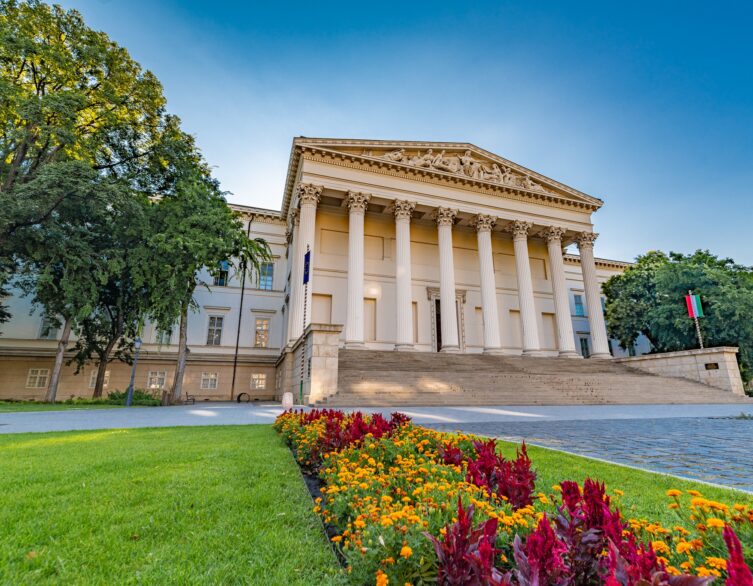
If the Attila exhibition is good enough to pull one of Hollywood’s most discerning actors off the beaten tourist track and into a Budapest museum on a Sunday afternoon, it is probably good enough for you too. The Hungarian National Museum itself is a stunning neoclassical building in the heart of the city, just a short walk from the Great Market Hall and the Danube embankment. The permanent archaeological collection is a fascinating introduction to the sweep of Hungarian history, and the Attila exhibition running alongside it until July 12, 2026 is a genuinely unmissable experience — ambitious in scope, beautifully presented, and available with information in both English and Hungarian.
Whether you’re a Lord of the Rings fan who wants to stand in the same room where Aragorn once quietly contemplated history, a lover of ancient civilisations, or simply someone looking for a cultural highlight to anchor a day in Budapest, the Hungarian National Museum right now is exactly the place to be.
Related news
Related events
Related attractions