Sweet Masks and Sugary Ribbons: A Food Lover’s Guide to Hungarian Carnival Treats
The carnival season in Hungary is not just about costumes and noisy parades; it is also one of the most indulgent, comforting and nostalgic times of the year when kitchens and bakeries turn into small temples of fried dough, fragrant stews and rich, old‑fashioned sweets. If you visit Budapest between early January and early March, you will find that the city quietly slips into “farsang mode”, and tasting these foods is one of the best ways to understand the Hungarian soul in winter.
Farsang: A Sweet and Savoury Farewell to Winter
Farsang is the Hungarian carnival season that stretches from Epiphany on 6 January to Ash Wednesday, marking the start of Lent. Traditionally, these weeks were the last chance to feast, drink and enjoy heavier, fattier dishes before a period of religious fasting, so it is no coincidence that many farsang foods are fried in oil or lard, filled with cream or jam, and meant to be shared around a busy family table.
This is the time when Hungarian households and pastry shops reach for their most nostalgic recipes. Grandmothers take out their dog‑eared cookbooks, and even people who rarely bake suddenly start frying doughnuts on cold Sunday afternoons. In Budapest, cafés and bakeries lean into the season with dedicated “fánk” counters, special doughnut festivals and limited‑edition carnival sweets, so you will see and smell the difference as soon as you start exploring the city.
Farsangi Fánk: The Star of the Carnival Table
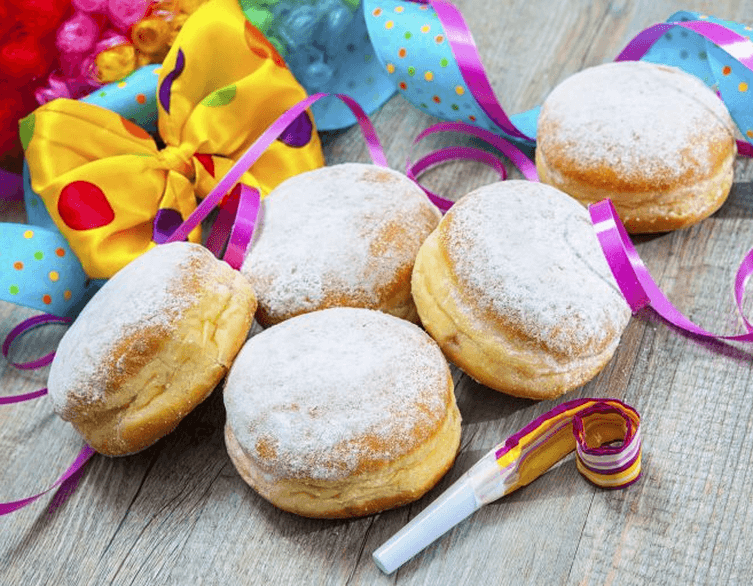
If farsang had a single edible symbol, it would be the farsangi fánk, often called szalagos fánk, the ring‑doughnut with a pale “ribbon” around its middle. This is a soft, yeast‑raised doughnut, usually round and slightly flattened, deep‑fried so that a lighter band forms where the dough sits above the oil, then finished with a spoonful of thick apricot jam and a snowfall of powdered sugar.
Farsangi fánk has everything a winter dessert needs: a crisp outside that gives way to a pillowy, almost cloud‑like interior, the gentle tang of yeast, and the bright, sunny sweetness of apricot jam in the centre. There are tricks to getting it right—room‑temperature ingredients, a well‑rested dough, oil at just the right temperature—and many Hungarian home cooks pride themselves on their own version. For visitors, the easiest way to taste it is to walk into almost any traditional cukrászda (pastry shop) or bakery in Budapest from mid‑January onwards, or to look for smaller doughnut‑focused events and pop‑ups where stall after stall showcases classic and creative fánk variations.
Modern Budapest has also embraced more playful interpretations. Alongside the classic jam‑filled fánk, you are likely to see cream‑filled versions, chocolate‑glazed ones, and even doughnut “burgers” and hybrids that layer pastry cream, fruit and whipped cream into something closer to a dessert sandwich. Yet, for many locals, that first bite of a simple, warm, jam‑topped farsangi fánk is still the taste that instantly announces: carnival has truly begun.
Csöröge and Other Carnival Pastries
Hungarian carnival baking does not stop at round doughnuts. Another beloved treat is csöröge fánk, also known as forgácsfánk, a crisp, twisted pastry that crackles when you bite into it. Unlike the rich yeast dough of szalagos fánk, csöröge is usually made from a firmer dough enriched with egg yolks, sometimes brightened with a splash of rum or citrus, then rolled very thin, cut into diamond shapes and slit in the middle so one end can be pulled through the slit before frying.
The result is a light, lacy pastry with plenty of edges and bubbles that fry to a deep golden colour and hold a generous dusting of powdered sugar. Csöröge is less filling than a big doughnut, which makes it perfect to serve in large baskets at parties, where people can keep nibbling between dances or during card games late into the night. In Budapest, you may find it in traditional pastry shops and at some carnival‑themed markets or busó‑related events, where its rustic look and satisfying crunch make it an instant hit with curious visitors.
Alongside these two main stars, you will sometimes encounter túrófánk, small cottage‑cheese doughnuts that are usually spoon‑dropped into the oil without yeast, making them quicker to prepare and pleasantly tangy inside. Choux‑based creations like képviselőfánk (cream puffs filled with vanilla pastry cream and whipped cream) also become more prominent in recipes and pastry counters around carnival time, tapping into the same desire for airy, indulgent, cream‑laden desserts.
Best deals of Budapest








Savoury Feasts: Pork, Sausages and the Spirit of Disznóvágás
Carnival in Hungary is not only about sweets; it is also closely linked to rich, meat‑focused feasts rooted in the tradition of disznóvágás, the winter pig‑butchering day that historically supplied families with meat, sausages and preserved products for the coming months. While disznóvágás itself is more of a village and small‑town custom than a Budapest event, its flavours are deeply woven into the farsang season.
On a traditional disznótoros (pig‑slaughter feast) table, you would find hurka (rice‑ or barley‑based sausages made with liver or blood), grilled kolbász (paprika‑spiced sausages), roasted meats, pork crackling called töpörtyű and hearty cabbage dishes like töltött káposzta (stuffed cabbage rolls). These dishes match the symbolic meaning of farsang perfectly: they are fatty, filling and celebratory, meant to be enjoyed before the leaner days of Lent.
In Budapest, you can tap into this side of carnival cuisine by seeking out traditional Hungarian restaurants, wine bars and street‑food stalls that offer disznótoros plates during the winter and early spring. Many places put together special seasonal menus or themed weekends where you can try combinations of hurka, kolbász, roasted potatoes and pickles, often accompanied by local wine or pálinka. Pairing a savoury disznótoros lunch with a sweet fánk or csöröge dessert later in the day is perhaps the most authentically Hungarian way to eat your way through farsang in the capital.
Torkos Csütörtök: Gluttonous Thursday
An intriguing part of the carnival food calendar is torkos csütörtök, literally “Gluttonous Thursday”, which falls on the first Thursday after Ash Wednesday. Historically, this day allowed people to finish the leftovers from their carnival feasts and briefly suspend strict fasting rules, turning it into a kind of bonus day of indulgence after the official start of Lent.
In modern Hungary, torkos csütörtök inspired nationwide restaurant campaigns where participating venues offered significant discounts on food and sometimes drinks, encouraging people to go out and treat themselves. The formal campaign has changed over the years, but the idea remains familiar: if you are in Budapest around this time, it is worth checking whether restaurants or pastry shops are running special torkos csütörtök offers or menus. It can be a great opportunity to sample more dishes, including classic carnival sweets, while spending less and sharing in a very local tradition.
Finding Carnival Flavours in Budapest Today
As a foreign visitor in Budapest, you do not need a home kitchen to experience the best of Hungarian farsang foods. The city has embraced the carnival season with events, festivals and plenty of creative pastry‑making. Around mid‑February, doughnut‑focused festivals and pop‑up stalls appear in different parts of the city, where you can try everything from traditional szalagos fánk to wild reinterpretations.
Throughout the season, keep an eye on pastry counters in classic cafés and cukrászdas: when you see rows of jam‑topped doughnuts and trays of twisted csöröge, you know you have found the heart of the carnival offering. Some venues even advertise “Farsangi Fánk” by name, signalling that they are following the seasonal tradition rather than serving doughnuts all year round. If you enjoy markets, you may also find carnival sweets at selected winter food fairs, at events connected to the famous busó festivities or at larger shopping centres hosting doughnut weekends.
Linking your tastings to your sightseeing can make the experience even richer. You might, for example, spend a cold morning exploring Buda Castle or the Parliament area, then warm up in a nearby café with coffee and farsangi fánk. Or you could visit a ruin pub or wine bar in the evening for hearty disznótoros flavours and then stop by a late‑opening bakery on your way home for a box of doughnuts to share. In doing so, you are not just sampling Hungarian food; you are stepping into the rhythm of a season in which indulgence, community and the promise of spring all meet on the plate.
In the end, the carnival season in Hungary is a story of contrasts: cold streets and warm kitchens, dark evenings and powdered‑sugar clouds, strict fasts ahead and one last, joyful feast of meat and sweets. If you are in Budapest during farsang, letting these dishes guide you—from savoury pork feasts to airy doughnuts and crispy csöröge—will give you a delicious, deeply local way to experience the city’s winter heart.
Related news

A Taste of Sweden in Budapest: Poppy, the New Swedish Candy Store Bringing Saturday Candy Culture to the City
Budapest is full of photogenic dessert places, but every now and then a shop opens that feels like a little cultural portal, not just a quick sugar...

Carnival in Budapest: How to Experience Farsang as a Tourist
Carnival season in Budapest, known as Farsang, is one of the most colourful and atmospheric times to visit the Hungarian capital. If you are planning...