Easter in Hungary: Traditions, Customs & What to Expect as a Visitor in Budapest
If you’re planning a trip to Budapest in spring, timing your visit around Easter is one of the best decisions you can make. Easter — known as Húsvét in Hungarian — is the greatest feast in the Christian calendar, sometimes called the “feast of feasts” (sollemnitas sollemnitatum). While many people think of Christmas as the most important holiday of the year, Easter holds the highest place in Christian tradition, celebrating the resurrection of Jesus Christ and, with it, the promise of renewal. In Hungary, ancient folk customs, vibrant spring rituals, and deep religious observance come together to create a holiday experience unlike anything else in Europe.
What Does Húsvét Mean?
The Hungarian word for Easter is deeply revealing. Húsvét literally means “taking the meat” — a direct reference to the end of the 40-day Lenten fast, when Hungarians are finally permitted to eat meat again after weeks of abstinence. It is one of the most honest names for a holiday in any language: after 40 days of fasting, the feast can begin.
The roots of Easter reach back to the Jewish Passover feast, whose Hebrew name is pészah — meaning “to pass over,” referring to the angel of death passing over the homes of the Israelites marked with lamb’s blood. Christian teaching sees Easter as the fulfilment of this ancient story: the passage of Jesus Christ from death into resurrected life. It is this layering of ancient tradition upon ancient tradition that gives Hungarian Easter its remarkable depth.
When Is Easter? A Moving Feast
Easter does not fall on a fixed date. According to the decision of the First Council of Nicaea in 325 AD, it is celebrated on the first Sunday after the first full moon following the spring equinox (March 21). This means it can fall anywhere between March 22 and April 25. All other moveable feasts in the Christian calendar — from Ash Wednesday to Pentecost — are calculated around this date. For visitors planning travel to Budapest for Easter, always check the date for the specific year of your visit.
Lent and Holy Week: The Lead-Up to Easter
Easter is preceded by a 40-day Lenten period (nagyböjt), beginning on Ash Wednesday and running to Holy Saturday. The whole of this period is a time of spiritual preparation, fasting, and reflection. The Holy Week (Nagyhét — literally “Big Week”) begins with Palm Sunday (Virágvasárnap — “Flower Sunday”), commemorating Jesus’s entry into Jerusalem, and includes Maundy Thursday, Good Friday, and Holy Saturday before culminating in the joy of Easter Sunday.
The spiritual centrepiece of Holy Week is the Easter Vigil (vigilia paschalis) on Holy Saturday evening — one of the most ancient and beautiful ceremonies in the Christian tradition, celebrating the victory of light over darkness and life over death. The Easter candle blessed on Holy Saturday symbolises the risen Christ as the light of the world. From Holy Saturday until Pentecost Sunday, the Catholic Church replaces the Angelus prayer at the morning, midday, and evening bells with the ancient Marian hymn Regina Coeli (“Queen of Heaven”).
Palm Sunday: Kiszehajtás and Villőzés
Palm Sunday carries some of the most fascinating Hungarian folk traditions of the entire Easter season. One of the oldest is kiszehajtás — the ritual driving-away of winter. A straw doll called the kisze, dressed in bridal clothes, was carried through the village as a symbol of winter, illness, and the hardship of fasting, then thrown into water or burned. This symbolic farewell to winter is one of Hungary’s oldest surviving pre-Christian seasonal rituals, absorbed into the Easter calendar over the centuries.
A related Palm Sunday custom is villőzés: girls walk from house to house carrying decorated green branches (villő), singing traditional songs to welcome the spring. In some Transdanubian communities, girls carrying a flower crown decorated with ribbons would form a procession from the church, with the first two girls holding up a “gate” for the others to pass through — a beautiful image of the season opening up.
Good Friday: Nagypéntek — “The Great Friday”
Good Friday (Nagypéntek — literally “Big Friday”) is one of the most solemn and significant days in the Hungarian religious calendar. Since 2017 it has also been a public holiday in Hungary, a recognition of its deep cultural and spiritual importance. Visitors to Budapest on Good Friday will notice the quieter, more reflective atmosphere that settles over the city.
Good Friday marks the crucifixion of Jesus Christ. In churches across Hungary, bells fall silent, altars are stripped bare of flowers and decorations, statues are covered, and candles remain unlit. Devout Hungarians attend solemn Passion liturgies, and in some regions, religious processions and special choral performances are held, adding a profound cultural dimension to the day.
Best deals of Budapest



Hungarian folk tradition surrounded Good Friday with strict prohibitions: no cooking, no cleaning, no sewing, no ploughing, and no animals were to be taken out of their stalls. It is still traditional to abstain from meat on Good Friday — making it one of the busiest days of the year for fish restaurants across Hungary, where white fish is the customary dish.
Water held special symbolic power on Good Friday. It was widely believed that bathing before sunrise on this day would protect against illness for the entire year. In the Szeged region, young women would go to the river to comb their hair under the willow trees on Good Friday morning, hoping their hair would grow as long as the willow branches. Good Friday was also the traditional day for painting Easter eggs: in Hungarian folk belief, if an egg was broken open on Good Friday night and dropped into a glass of water, the shape formed by the white would reveal what the coming year’s harvest would hold.
Holy Saturday: Nagyszombat — Blessing of the Food
Holy Saturday (Nagyszombat) is when domestic preparations reach their peak. Hungarian households were traditionally deep-cleaned and whitewashed, bread was baked, and Easter baskets were carefully assembled. Many families still bring a basket of food — covered with an embroidered cloth — to church to be blessed by the priest in a ceremony called szentelés (food consecration). This tradition is believed to endow the food with protective, even magical properties.
Old folk belief held that those who lingered after the blessing and were last to return home would not survive the year, while those who hurried home first would be first in the harvest. The remains of consecrated food were considered far too powerful to throw away: blessed egg shells were scattered over vegetable gardens to protect against frost and blight, blessed ham bones were hung in fruit trees to encourage a bountiful yield, and in some villages the bones were thrown onto the fire during a thunderstorm to protect the house from lightning.
One particularly poetic folk belief holds that if a crumb of consecrated pászka bread is buried in the earth, a flower will grow from it after seven years — the so-called pászkamorzsavirág, the “pászka-crumb flower.”
Easter Sunday: Resurrection and Renewal
Easter Sunday is the most important day of the Hungarian Easter celebrations, marked by solemn high masses and joyful church services across the country. The bells that fell silent on Good Friday ring out again in full voice to announce the resurrection. Churches fill with candles, flowers return to the altars, and families gather for the great Easter feast.
In Hungarian folk tradition, water played a central role on Easter Sunday morning. It was customary in many regions to wash one’s face from a bowl containing a red egg, believed to keep the entire family healthy and beautiful throughout the coming year. In Moldavia and Bukovina, water poured at a crossroads before sunrise was thought to guard against hail and disaster.
A particularly moving Hungarian folk tradition holds that the whole family must eat the Easter eggs together, so that if any family member should ever lose their way in life, the memory of sharing that Easter meal will always guide them home.
Easter Sunday was also the occasion for the ancient custom of boundary-walking (határjárás) — a ceremonial procession around the edges of the village’s farmland, accompanied by gunshots, drumbeats, and pipes. The ceremony served both to magically protect the spring crops and to teach the community’s younger members where the village boundaries lay. Participants returned adorned with fresh green branches, particularly boxwood, symbolising the “bringing in” of spring.
Easter Monday: Locsolkodás — The Famous Sprinkling Tradition
Of all Hungary’s Easter customs, locsolkodás is the one most likely to surprise and delight foreign visitors — and it is the tradition that makes Hungarian Easter Monday truly unique in the world.
Easter Monday (Húsvéthétfő) was traditionally called Vízbevető hétfő — “Water-throwing Monday” — and the name tells you everything. The tradition is rooted in an ancient belief in the purifying and fertility-bestowing power of water. Historically, young men would chase girls through the village and drench them with full buckets of water at the well. Today, in cities like Budapest, the custom has evolved into something rather more fragrant: men and boys visit female relatives and friends, recite a short, playful rhyming poem (locsolóvers), and sprinkle them with a little perfume or cologne.
In return, the women traditionally offer their sprinklers decorated Easter eggs (hímes tojás), along with food, drink, and often a shot of pálinka — Hungary’s celebrated fruit brandy. If you are visiting Budapest on Easter Monday and someone offers to sprinkle you with perfume, take it as the warm compliment it is meant to be.
In some rural communities in northern Transdanubia, a related tradition called sibázás (willow-switch tapping) also survives: boys lightly tap girls with a whip (siba) made from four to nine willow branches, symbolising fertility and spring renewal. Easter Monday was also, by old tradition, strictly observed as a day of rest. No cooking, no sweeping, no cleaning. One folk explanation for the no-sweeping rule, recorded along the Tápió river, is entertainingly practical: sweeping would brush away the men who had come to sprinkle!
The Art of Easter Egg Decoration: Hímes Tojás
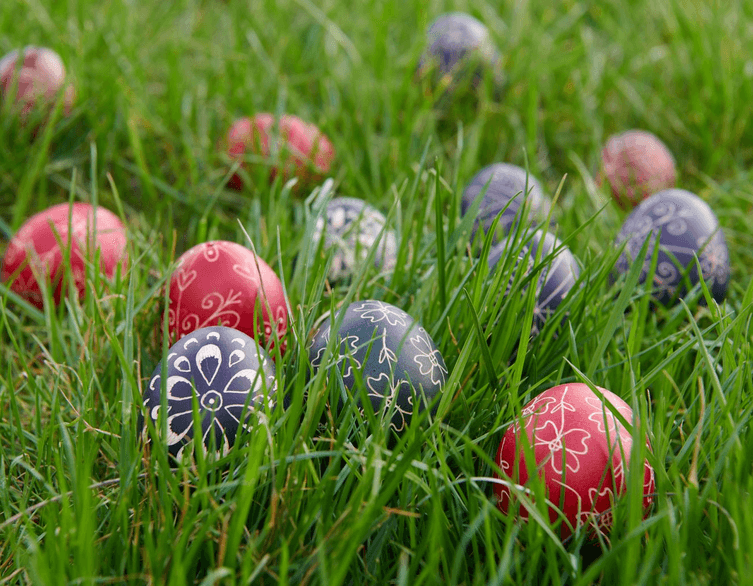
Hungarian Easter egg decoration is a fine folk art with centuries of history behind it. The egg is one of the oldest symbols of fertility and new life in human culture, and in Christian tradition it is also a symbol of the resurrection — recognised as a sacred object since the 12th century.
Before chemical dyes became available, natural materials were used to colour the eggs: onion skin for warm red-brown tones, wild apple bark for yellow, hemlock for green, and lentil water for blue. The two principal decorating techniques are:
- Viaszolás (wax-drawing): A special tool — a small vessel fitted with a quill — is used to apply warm liquid wax in intricate patterns onto the egg. When dipped in dye, the wax-covered areas resist the colour, creating the design. The wax is wiped away at the end and the egg polished with a fatty cloth or piece of bacon rind until it gleams.
- Karcolás (scratching): A dyed egg is engraved with intricate patterns using a sharp instrument. Motifs range from geometric designs and folk embroidery patterns to life scenes and inscriptions.
A simpler but charming technique involves pressing fresh leaves or herbs flat against the egg before dyeing it, leaving a delicate imprint of the leaf’s veins and outline on the finished egg. Along Hungary’s western borders, a technique using acid to etch patterns into the shell is also known, considered a development of the baroque period. At Budapest’s Easter markets and folk art shops, you can find hand-decorated eggs made using traditional techniques — one of the most uniquely Hungarian souvenirs you can take home, and a genuine piece of living folk art.
Easter Games: Kókányozás
No Hungarian Easter gathering is complete without a round of kókányozás — the traditional Easter egg-tapping game. Known by different names in different regions (ticselés, türkölés, csokkantás, or cucázás in Hajdúdorog), the game is simple: two players tap their hard-boiled eggs together, and whoever’s egg survives intact wins the other player’s cracked egg. In a livelier variation, players try to crack an egg by hitting it with a coin — succeed, and you win the egg; fail, and you lose both your coin and your egg. Keep an eye out for this game at folk events and family-friendly Easter programmes in Budapest over the holiday weekend.
Easter Balls and the Start of the Wedding Season
In traditional Hungarian life, dancing and celebrations were forbidden during the 40-day Lenten period, making Easter Sunday and Monday all the more joyful when festivities could finally resume. Easter was the occasion for the first Easter balls (húsvéti bálok) of the year, and the holiday also traditionally marked the beginning of the wedding season, since marriages were not held during Lent.
In some villages, the young men would formally collect their dance partners for the Easter ball: the girl would dress up in her finest clothes, pack a basket with cakes and wine covered with an embroidered cloth, and walk to the celebration with the young men — her mother following behind carrying the basket. In the Kalotaszeg region of Transylvania, Easter was historically a three-day celebration, with dancing beginning on Sunday afternoon and continuing into the week.
The Easter Bunny: A Latecomer to Hungarian Tradition
The gift-bringing Easter Bunny is a relatively recent arrival in Hungarian Easter customs. It is believed to have spread from German-speaking areas, first adopted by urban middle-class families in the 19th century and later embraced by rural communities. Like the egg, the rabbit — famously prolific — is a natural symbol of spring fertility and abundance.
The older, more traditionally Hungarian Easter gift was something altogether more practical: new boots. According to 19th-century accounts, a husband who failed to buy his wife or sweetheart a new pair of red or yellow boots for Easter was considered to have ruined her enthusiasm for the entire year’s work. Women would carry their pristine new boots to church to keep them clean, pulling them on only for the service itself before going home barefoot — a charming detail that speaks volumes about what the holiday meant to people.
How Hungarian Families Celebrate Easter Today
Modern Hungarian Easter is a wonderful blend of the old and the new. While the deep religious observances and folk customs described above remain very much alive, the way families actually spend the holiday weekend has naturally evolved with the times.
For most Hungarian families today, Easter begins in earnest on Holy Saturday, when households fill with the smell of freshly baked kalács — the soft, braided sweet bread that no Easter table is without. Many families, especially outside Budapest, still take their Easter basket to church for the blessing on Saturday, continuing a tradition their grandparents kept before them.
Easter Sunday is the great family gathering of the year, comparable in importance to Christmas. Extended families come together around a laden table for the Easter lunch — the most important meal of the holiday — after attending morning mass or church service. The generations mix freely: grandparents, parents, children, and cousins all seated together. After lunch, children hunt for Easter eggs and chocolate treats hidden by the “Easter Bunny” around the house and garden, a tradition that has become firmly established in Hungarian family life over the past few decades.
Easter Monday brings the highlight of the holiday for children and young people alike: locsolkodás. Boys and young men make their rounds through the neighbourhood and among relatives, cologne spray in hand and poem at the ready. For many Hungarian children, collecting as many decorated eggs as possible over the course of Easter Monday is a matter of great personal pride. In the evening, families often gather again for a lighter meal, finishing the leftovers from Sunday’s feast, playing kókányozás with the remaining hard-boiled eggs, and simply enjoying the last hours of the long holiday weekend together.
In Budapest specifically, the Easter weekend has also become a time to enjoy the city’s spring awakening. Families stroll along the Danube promenade, visit Easter markets, browse folk craft stalls, and watch open-air performances. Thermal baths are popular throughout the weekend, and many Budapestians take advantage of the long break for a short domestic trip to the Hungarian countryside or Lake Balaton. For visitors, this means the city has a relaxed, festive energy that is quite different from its busy weekday pace — warm, unhurried, and welcoming.
Experiencing Easter in Budapest
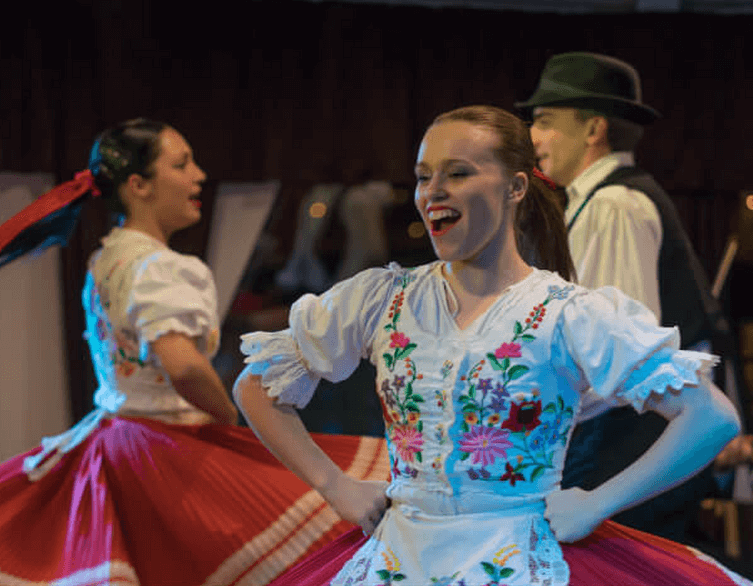
Budapest comes alive during the Easter weekend, and there is no shortage of ways to immerse yourself in Hungarian traditions as a visitor. Easter markets spring up across the city in the weeks leading up to the holiday, offering hand-crafted folk items, hand-painted Easter eggs, embroidered textiles, and live demonstrations of traditional crafts including egg painting. Folk music and dance performances are a regular feature, and the festive atmosphere in the city centre is genuinely special.
If you want to go deeper, Hungary’s open-air ethnographic museums offer hands-on programmes during Easter weekend, where you can try egg-painting techniques yourself, watch folk craftspeople at work, and experience traditional customs in a living village setting.
Practical Tips for Visiting Budapest at Easter
- Three public holidays in a row: Good Friday (April 3), Easter Sunday (April 5), and Easter Monday (April 6) are all public holidays in Hungary in 2026. Banks, post offices, and many shops will be closed, but restaurants, thermal baths, museums, and most tourist attractions remain open.
- Easter Saturday is a normal working day — the best day to go shopping, visit supermarkets, or pick up souvenirs before the holiday closures begin.
- Dress respectfully when visiting churches during Holy Week, particularly on Good Friday and Easter Sunday, when services are attended by large congregations.
- Don’t be alarmed if someone sprinkles you with perfume on Easter Monday — it is a cherished tradition and a genuine gesture of goodwill.
- Book restaurants in advance for Easter Sunday lunch, as this is the most important family meal of the Hungarian calendar and popular spots fill up quickly.
- Look out for Easter markets in Budapest’s main squares from late March onwards — these are the best places to experience the holiday’s folk traditions, pick up authentic handicrafts, and watch live egg-painting demonstrations.
Budapest at Easter: A Once-in-a-Lifetime Spring Experience
Few cities in Europe offer the kind of Easter experience that Budapest does. Here, the holiday is not a single day but an entire season — a weeks-long unfolding of ritual, craft, music, colour, and community. Whether you are drawn by the solemn beauty of Good Friday liturgies echoing through centuries-old basilicas, the laughter of Easter Monday sprinkling in a Budapest courtyard, the intricate artistry of a hand-painted hímes tojás, or simply the joy of spring arriving in one of the continent’s most beautiful capitals, Easter in Hungary will leave a lasting impression.
Come with curiosity, an open heart, and perhaps a good coat — spring in Budapest can surprise you — and you will leave with memories, and very possibly a beautifully decorated egg or two, that will stay with you long after you return home.