Budapest’s Secret Garden: How the City Is Buzzing Back to Life for Its Pollinators
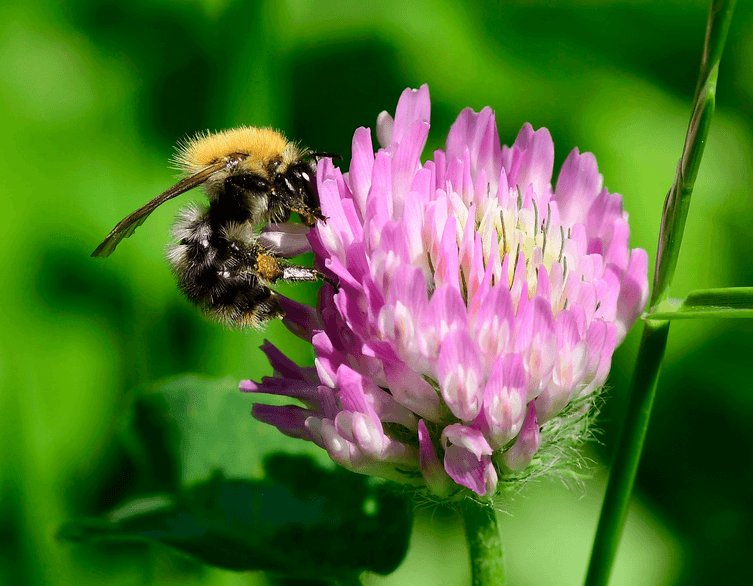
There’s something quietly magical happening in Budapest’s parks, squares, and green strips. While visitors might be busy marvelling at the grandeur of the Parliament building or soaking in the thermal baths, a much smaller — but equally important — drama is unfolding at ground level. Budapest is on a mission to save its pollinators, and the city’s parks have become the front line of that effort.
Every year on March 10th, Hungary celebrates Pollinators’ Day (Beporzók Napja), a national awareness event that began as a civil initiative back in 2018 and has since grown into a beloved annual occasion embraced by museums, schools, and environmental organisations across the country. The date is no coincidence — it falls right at the start of spring, when the first flowering plants are waking up and their earliest insect visitors are beginning to stir. It’s a celebration, yes, but also a timely reminder of just how much we depend on these tiny creatures.
Why Pollinators Matter More Than You Think
The relationship between flowering plants and pollinating insects is one of the oldest partnerships on Earth, stretching back to the Cretaceous period — tens of millions of years before humans ever walked the planet. Today, roughly 87% of all plant species and nearly 70% of cultivated food crops depend on pollinators to reproduce. That means the fruits, vegetables, and seeds that make up a huge portion of the global food supply owe their existence to bees, butterflies, hoverflies, and countless other insects going about their daily business.
Yet across Europe and around the world, wild pollinator populations have been declining at an alarming rate. Habitat loss, intensive agriculture, and pesticide use have pushed many species to the edge of extinction. Without pollinators, food security would be in serious jeopardy, and many plant species would simply vanish — a chain reaction that would reshape ecosystems in ways that are difficult to fully predict.
The Urban Challenge: Cities vs. Biodiversity
It’s no secret that big cities are tough environments for wildlife. Green spaces tend to be few, fragmented, and intensively managed — small islands of manicured lawn separated by vast stretches of concrete and glass. Urban heat islands, light pollution, and the sheer density of buildings all create conditions that only a handful of highly adaptable species can tolerate. And the further you move from the outskirts toward the city centre, the more dramatically the number of species drops.
Budapest is no exception to this pattern. But the city has decided to do something about it — and the approach it has taken is both innovative and surprisingly simple.
From Neat Lawns to Wildflower Meadows
The Wildflower Budapest Programme (Vadvirágos Budapest), launched in 2021 as a joint initiative between the Budapest Municipality and FŐKERT, the city’s public parks company, is built on a remarkably straightforward idea. Instead of mowing park lawns and green verges the standard five to seven times a year, designated areas are now mown just one to three times. That’s it. The rest is up to nature.
With less frequent cutting, wildflowers finally have the time they need to bloom, set seed, and spread on their own. The taller, less disturbed vegetation retains more moisture, stays greener during dry spells, and contributes positively to the local water table. These so-called “bee pastures” (méhlegelők) provide food and shelter not only for pollinators like wild bees, butterflies, and hoverflies, but also for songbirds that feed on the insects living in them. In 2026, the programme covers nearly one million square metres of the city — a remarkable expansion from its experimental beginnings.
It’s worth being honest, though: in the early years, an extensively managed meadow doesn’t look conventionally tidy. During the first couple of seasons, a rarely mown patch of grass can look a little wild — even neglected — to the untrained eye. But patience pays off. Monitoring studies have confirmed what the programme’s designers hoped: species counts have increased significantly in extensively managed areas, and several protected or strictly protected species have reappeared in locations where mowing frequency was reduced. A truly beautiful, species-rich wildflower meadow is a slow process, but the result is worth the wait.
Best deals of Budapest











Where to Find Budapest’s Wildflower Meadows
The programme’s team is thoughtful about where it places these meadows. Locations are chosen in areas of the parks that see lighter foot traffic, so the wilder-looking vegetation doesn’t disrupt people’s enjoyment of the space — and so the pollinators themselves aren’t disturbed by constant human activity nearby. Each meadow is clearly marked with an information board explaining that what you’re looking at is a deliberate ecological choice, not a maintenance lapse.
If you’re visiting Budapest and want to experience this greener, wilder side of the city, keep your eyes open for swaying patches of sage, buttercups, violets, and vetches where you might once have expected only closely cropped grass. The locations are reviewed and updated every year, with some sites expanded, some swapped out, and new areas brought into the programme based on what the team learns each season.
One practical note for dog owners visiting the parks: the programme asks that dogs be kept away from the wildflower meadows, as trampling, digging, and urination can damage the delicate vegetation. It’s also worth knowing that some of the grasses that appear in these meadows can have barbed seed heads that may catch in a dog’s fur or paws, so it’s sensible to steer clear in any case.
Insect Hotels and Natural Habitats Around the City
Beyond the meadows themselves, Budapest has also invested in a growing network of insect hotels — charming structures designed to mimic the natural nesting environments of solitary bee and wasp species. These insects don’t live in hives; instead, they burrow into soil, rotting wood, or riverbanks to lay their eggs. An insect hotel replicates these spaces using materials like hollow reeds, bamboo canes, drilled logs, and perforated bricks, giving urban insects somewhere safe to shelter and reproduce.
You can find purpose-built insect hotels at Nagyvárad Square and Boráros Square, and the city’s parks feature a range of natural insect habitats too — dead wood left standing or lying in place, and branch hedgerows constructed from dead wood, such as those found in Népliget, Budapest’s largest public park. Far from being signs of neglect, these features are carefully placed contributions to the city’s urban biodiversity strategy.
What About Allergy Sufferers?
It’s a fair question, and the programme’s designers have thought about it. Wildflower meadow sites are selected from healthy, well-established grassland areas where invasive, allergenic weeds have little opportunity to take hold. While more flowers inevitably means more pollen during the blooming season, the key point is that these are native plant species — the kind that have coexisted with human immune systems for centuries. Over time, as the meadow matures into a proper hay meadow plant community, the pollen load is actually far lower than that of an intensive annual or perennial flower bed, where blooming is concentrated and prolonged.
This Year’s Star Pollinators: The Hoverfly
Each year, a special “Pollinator of the Year” title is awarded to shine a spotlight on a lesser-known species doing vital work. This year’s honoree is the hoverfly (zengőlégy) — those deceptively bee-like insects that are actually far more closely related to ordinary flies, yet rank among the most important pollinators in urban ecosystems. It’s a charming tradition that expands the conversation beyond the familiar honeybee and reminds us that pollination is a team effort involving hundreds of different species.
How You Can Help — Even From Your Hotel Balcony
The spirit of Pollinators’ Day is not just observational — it’s participatory. If you find yourself inspired by what Budapest is doing, there are ways to support pollinators wherever you are. Planting wildflowers or nectar-rich plants in a garden, window box, or balcony planter creates what the programme whimsically calls a “bee bistro” — a miniature urban meadow that even a city-centre apartment dweller can manage. Wildflower seed mixes are widely available, and even a single balcony box in full bloom makes a difference.
For the more practically minded, building or buying an insect hotel is another excellent option. These structures can be crafted by hand from natural materials like bamboo, hollow reeds, and drilled logs, or purchased ready-made. Either way, they offer solitary bee and wasp species a place to nest in environments where natural nesting sites are scarce.
Budapest’s example shows that even a dense, bustling European capital can make meaningful space for nature — one uncut meadow, one insect hotel, and one thoughtful policy decision at a time. The bees, butterflies, and hoverflies are already responding. All we have to do is let them.
Related news
Budapest’s Budai Arboretum Receives Protected Historic Garden Status
Tucked away at the southern foot of Gellért Hill, one of Budapest’s most extraordinary green spaces has just earned a new level of recognition....
Budapest’s Neighborhood Gardens Are Transforming the City
From Concrete Courtyards to Urban Oases Budapest is quietly undergoing a green transformation, and it’s happening right in the heart of residential...
Károlyi Garden: Budapest’s Secret Oasis Among Europe’s Most Beautiful Parks
Hidden behind imposing iron gates in Budapest’s Fifth District lies a green sanctuary that recently earned recognition from The Guardian as...
Budapest’s First Native Wildflower Seeds Debut This Weekend
Budapest is making history this Saturday, September 27th, as the city launches its very first locally-adapted wildflower seed mix at an exciting...
Budapest’s Hidden Floral Paradise: A Secret Garden Guide for Savvy Travelers
Budapest’s wildflower meadows are blooming with life, and the city’s rose gardens are putting on their most spectacular show of the year!...