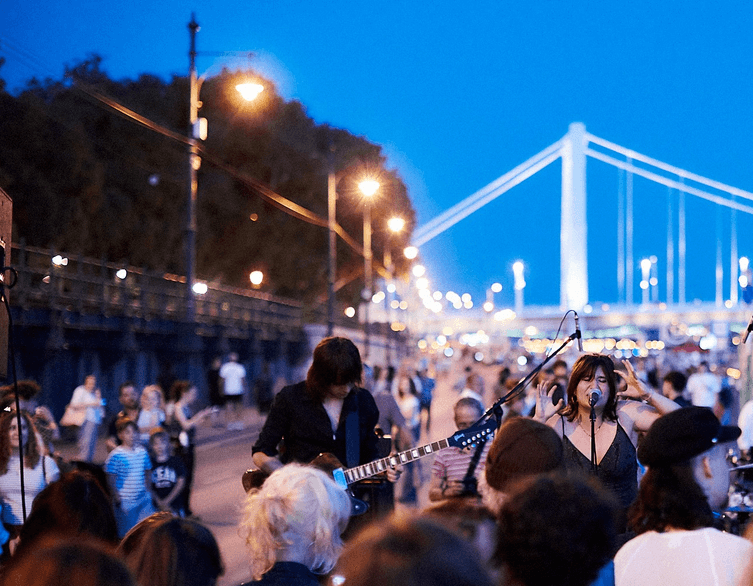
Budapest’s Most Beloved Riverbank Is Back — And Bigger Than Ever
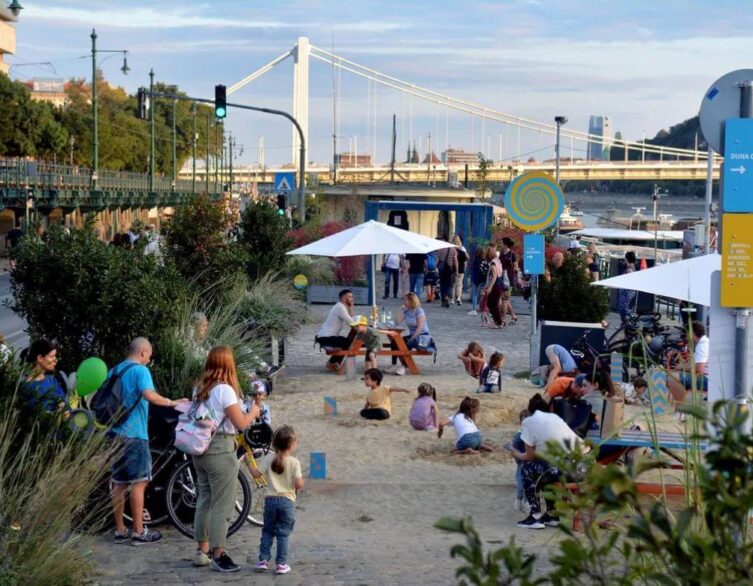
If there’s one thing that truly captures the spirit of Budapest in the warmer months, it’s the city’s lower Pest embankment coming alive with people, bikes, music, and the golden glow of a Danube sunset. After a winter of anticipation, the embankment — known to locals simply as the Rakpart — officially reopens on May 1, 2026, and this year it’s returning with more ambition, more space, and more reasons to linger than ever before.
The Rakpart Is Back — With a Brand New Season
The Pest lower embankment has been one of Budapest’s most cherished urban spaces since the city began reclaiming it from traffic, and 2026 marks its most expansive season to date. While 2025 offered 107 car-free days along the waterfront, this year already guarantees a minimum of 115 — and that number could grow further as the season progresses. More importantly, a brand-new flexible traffic system is being introduced from mid-May, meaning the embankment won’t just be car-free on weekends and public holidays. On warm spring and summer evenings, pedestrians and cyclists will be able to take over the riverside on weekdays too, making spontaneous after-work sunsets by the Danube a very real possibility.
The shift is made possible by newly installed “embankment gates” — a smart infrastructure solution that allows the city to switch the space between vehicle use during the day and car-free recreational use in the evenings and on weekends. It’s a clever compromise that keeps traffic moving while giving residents and visitors far more quality time by the water.
Two Moods, One Riverbank
One of the most exciting developments this year is the expansion of the Rakpart beyond its existing stretch. The Jane Haining Embankment — the section between Elizabeth Bridge and Chain Bridge — has long been the lively heart of the programme, hosting concerts, community events, pop-up food stalls, and the occasional open-air dance floor. In 2026, this remains the place to be if you’re after energy and atmosphere.
Best deals of Budapest



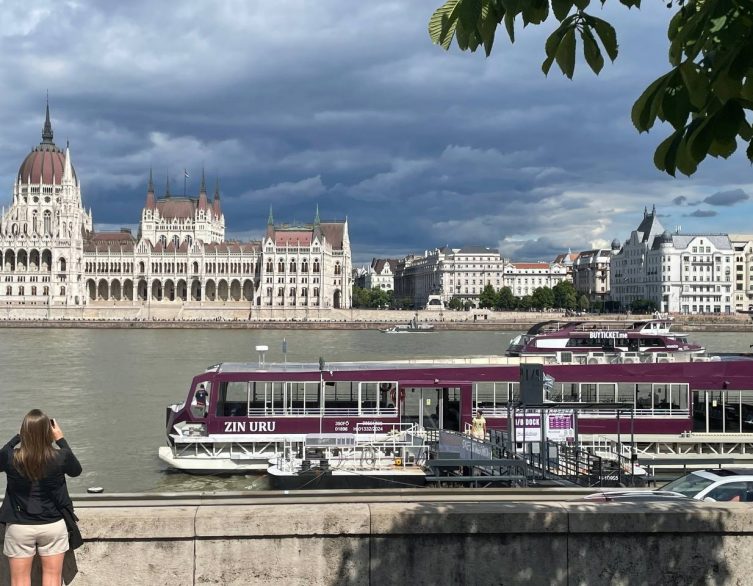
From May, however, the programme extends northward beyond the Chain Bridge toward Parliament, incorporating the József Antall Embankment into the mix. This newly added stretch is being designed with a quieter, more restorative character in mind. New street furniture and barbecue areas will be installed along the promenade, while the stretch alongside the embankment wall — previously a pavement and parking lane — will be transformed into a fully equipped public square featuring sports courts, table tennis tables, and generous plantings of greenery. The idea is simple and appealing: two distinct riverside moods, side by side, so you can choose your pace depending on the day and your mood.
The Story Behind the Name: Jane Haining
It’s worth pausing for a moment on the name of the embankment’s most vibrant central stretch, because the story behind it is one of remarkable courage. Jane Haining was a Scottish missionary from the village of Dunscore who arrived in Budapest in 1932 to work as matron of the Scottish Mission school on Vörösmarty Street, a boarding school that served both Jewish and Christian girls. When war came and her pupils faced increasing danger, Haining refused to leave. She was recognised by Yad Vashem in 1997 as Righteous Among the Nations for risking her life to protect her students.
In 1944, following Germany’s invasion of Hungary, she was arrested by the Gestapo on a series of trivial charges — allegedly following a dispute with the school’s cook — and deported to Auschwitz-Birkenau. She died there in July 1944, aged just 47. The embankment that now bears her name has become one of Budapest’s most beloved outdoor gathering spots, lined with benches, tables, and plants, cooled by mist gates in summer, and offering an uninterrupted view of the Buda hills across the Danube. Past and present, woven together in one of the city’s most beautiful corners.
Who Was József Antall?
The newly added northern stretch carries an equally significant name. József Antall was Hungary’s first freely elected Prime Minister following the fall of communism, taking office in May 1990 after decades of Soviet-era rule. A trained historian and museologist, he was barred from teaching after his participation in the 1956 Hungarian uprising, and later worked for years at the Semmelweis Medical Historical Museum before entering politics. Antall’s government steered Hungary through the complex and turbulent transition to democracy, and he remained in office until his death in December 1993. His legacy is remembered as one of principled leadership during a pivotal moment in Central European history. Naming a stretch of the city’s most visible and democratic public space after him feels entirely fitting.
What to Expect When You Visit
The Rakpart season kicks off on May 1 with a festive opening weekend. Ahead of the launch, the organising team Valyo has been busy repainting and repairing picnic tables, and a community barbecue is planned for the holiday weekend to set the right tone for the season ahead.
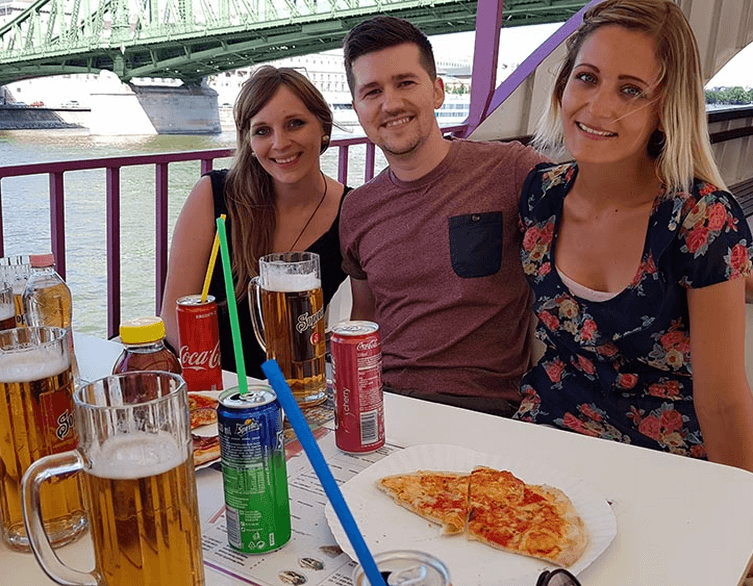
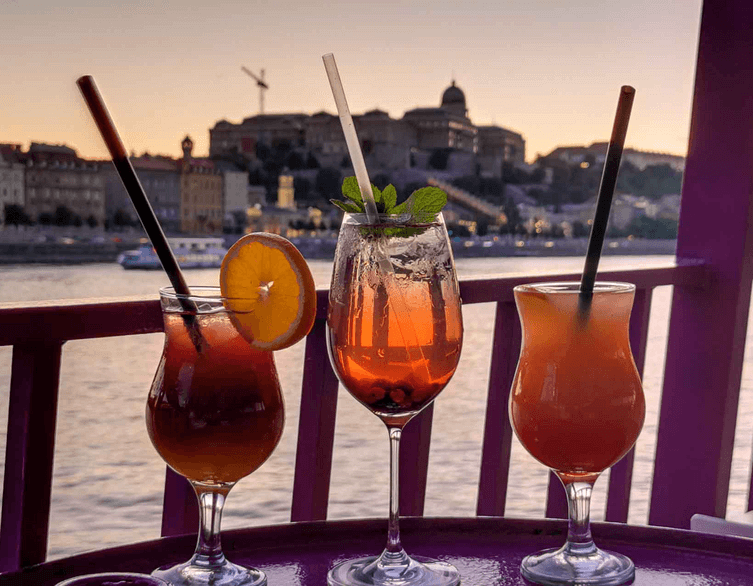
Once open, the section between Margaret Bridge and Irányi Street will offer an ever-changing mix of food and drink vendors, cultural events, and community programming throughout spring and summer. This year will see more and larger hospitality venues opening from the very start of May, so whether you’re after a casual riverside beer, a street food snack, or an evening concert with the Buda Castle lit up behind you, there will be something on offer. Updates on events and the daily car-free schedule will be posted on the Rakpart’s dedicated Facebook page at the handle bprakpart.
A Walk You Simply Cannot Miss
Even outside of programmed events, a stroll along Budapest’s lower embankment is one of the finest things you can do in the city. The Danube here is wide and unhurried, the view across to Castle Hill and the Gellért Hill is postcard-perfect, and the evening light in May and June turns the whole riverfront golden. Walkers and cyclists share the space generously, café tables spill out close to the water’s edge, and the city feels, for a few hours, like it belongs entirely to the people who are enjoying it.
For any visitor who wants to experience Budapest not as a series of monuments to be photographed and ticked off, but as a living, breathing European capital with soul and community at its heart, the Rakpart is where you need to be this spring.
Follow Budappest.com on Facebook
Related news