Budapest’s Citadella Is Back — and It’s Better Than Ever
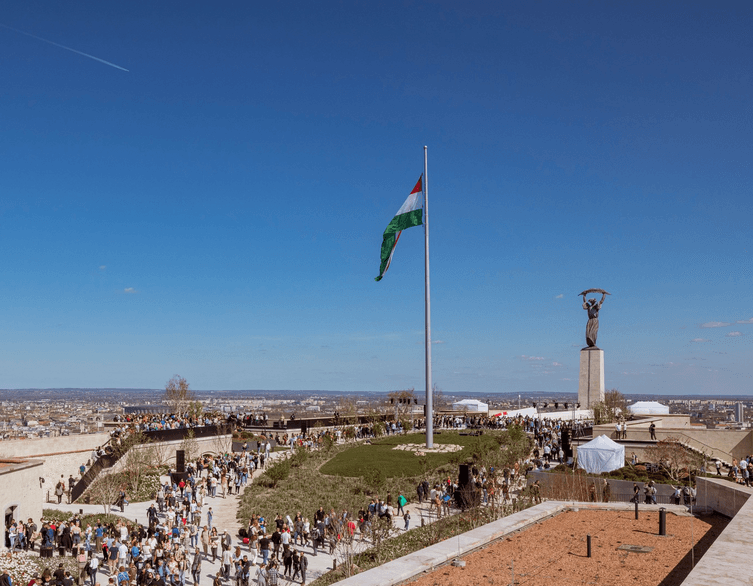
If you’ve ever looked up at Gellért Hill while crossing one of Budapest’s famous bridges and wondered about that striking fortress crowning the skyline, now is finally your chance to find out. After more than five years of painstaking renovation work, the Citadella reopened its gates to the public on April 5–6, 2026, welcoming visitors with free family programmes, live concerts, and what can only be described as a genuine community celebration. The crowds that gathered on opening weekend rivalled those seen only on Hungary’s biggest national holidays — and for good reason. Budapest’s most iconic hilltop monument has been completely reborn.
A Fortress With a Complicated Past
To truly appreciate what the Citadella has become, it helps to understand where it came from — and the story is far more dramatic than most visitors expect. Construction began in 1850 on the initiative of Austrian General Julius Jacob von Haynau, following the brutal suppression of Hungary’s 1848–49 War of Independence. The fortress was designed by Austrian military engineer Emmanuel Zitta and built to a formidable scale: 220 metres long, 60 metres wide, with walls up to 16 metres high and 4 metres thick, capable of housing 60 cannons and a garrison of several hundred soldiers. The message to the Hungarian population below was unmistakable — this was a symbol of occupation, watching over a city that had dared to rebel.
Yet even before the fortress was finished, Gellért Hill had a long and layered history. The Celtic Eravisci tribe had fortified its summit as far back as the 4th century BC, Roman administrators later settled its slopes, and medieval legend holds that in 1046, the Christian missionary Bishop Gerard (Gellért) was thrown from the hill’s rocky cliffs during a pagan uprising — giving the hill its name. By the time the Ottoman Turks arrived in the 16th century, a small fortress already stood where the Citadella would eventually rise. The hill has always embodied what the new exhibition itself captures so well: whoever controlled the hilltop controlled the country below it.
From Military Stronghold to Neglected Landmark
The Austro-Hungarian Compromise of 1867 changed everything. With political tensions eased, the fortress lost its military purpose almost overnight, and by 1899, Budapest’s citizens were actually dismantling parts of the building in a burst of patriotic enthusiasm — a memory preserved today in the distinctive V-shaped notch above what is now called the Great Gate, which has been turned into a unique viewpoint. Full demolition never happened, largely due to cost, and the Citadella spent the following decades drifting between identities: police barracks, a makeshift shelter for the city’s poorest residents, and eventually, as the surrounding hillside was landscaped into a popular city park, a quirky tourist attraction.
The 20th century was no kinder. During World War II the fortress served military purposes again, and the scars of that conflict are still visible today — bullet holes and shrapnel marks remain embedded in the ancient stone walls as a deliberate reminder of what the building witnessed. After the war, the Soviets used the site as a barracks before partial restoration in the 1960s led to its designation as a listed monument, and the Citadella was included in the Budapest World Heritage Site in 1987. Yet despite all of this, the site slowly fell into disrepair after the fall of communism, leaving one of Europe’s most dramatic viewpoints underused and, frankly, a little sad.
The Renovation That Changed Everything
The transformation began in autumn 2020, when archaeological excavations kicked off and immediately began turning up surprises. Workers uncovered the foundations of a remarkable domed university observatory built in 1815 — once considered one of the most advanced in Europe — which had been destroyed during the 1849 siege. A rare World War I-era anti-aircraft gun mount from the Austro-Hungarian Empire emerged from the soil. Celtic coins, Roman ceramics, and Ottoman-era artefacts were all unearthed, adding extraordinary depth to the site’s already rich history. Even unexploded WWII bombs were found and safely removed by the Hungarian Armed Forces.
Best deals of Budapest







The renovation, overseen by the Várkapitányság (Castle Captaincy) and led by architect Dániel Taraczky of the art1st design studio, was guided by a bold conceptual idea: the fortress that was once a tool of oppression should be physically and symbolically opened up. Where there was once a single, heavily controlled entrance, three new access points now connect the two sides of the hill, allowing free movement across a site that had been largely closed for decades. On the eastern side, a grand staircase now leads visitors directly up from the Liberty Statue into the courtyard and park. Structurally compromised walls were carefully dismantled and rebuilt using the original stone blocks and traditional construction techniques, preserving the authenticity of the fortress while making it fully safe and accessible for modern visitors.
The Park: A Green Oasis on the Hilltop
Walking into the renovated Citadella feels genuinely different from any other Budapest attraction. The first thing that strikes you is the greenery — a lush 6,000-square-metre public park now fills the interior of the fortress, planted with flower meadows, roses, lavender, climbing plants, and even grapevines. A rare pomegranate tree that took root on the hillside over the years has been carefully preserved and remains a charming curiosity among the new plantings. The total green space surrounding the Citadella has expanded to 20,000 square metres — roughly one and a half times its previous size — dotted with viewpoint terraces and shaded seating areas, all maintained by a modern irrigation system that keeps it lush year-round.
At the heart of the park, a circular bronze inlay set into the ground marks a piece of history that most visitors would never guess: Gellért Hill was for centuries a cornerstone of Hungarian surveying and cartography. The observatory established here in the 19th century underpinned the country’s entire geodetic network, and a stone column with bronze pins set on the eastern bastion in 1933 preserved those precise coordinates. The new bronze strip in the park symbolically marks both this surveying legacy and the geographic boundary between Eastern and Western Hungary — a quiet but fascinating detail hidden in plain sight. Rising above it all, Hungary’s largest national flag flies from a 36-metre mast, its 72-square-metre tricolour catching the wind as a permanent symbol of national unity and a tribute to those who sacrificed their lives for Hungary’s freedom.
The Bastion of Freedom Exhibition
The cultural centrepiece of the new Citadella is undoubtedly The Bastion of Freedom — a permanent, 1,700-square-metre interactive exhibition housed in the restored western gun tower. The conceptual foundation of the exhibition is built on a simple but powerful idea: throughout history, whoever controlled this hill controlled Hungary. At various points in time, a cross, a mosque, a Habsburg fortress, and a Soviet monument have each stood at the summit, each signalling a different occupying power’s grip on the country below. The exhibition uses this physical and symbolic legacy as its backbone, guiding visitors through more than 1,300 years of Hungarian history from the hill’s own perspective.
Your guide through this journey is an unexpected one — Emese, the mother of Álmos, the legendary ancestor of the Hungarian ruling dynasty, narrates the entire sweep of history as if recounting a long, vivid dream. It is a storytelling device that immediately sets the exhibition apart from conventional museum experiences. Visitors move through a succession of immersive rooms — almost like passing through a series of gates into different ages — encountering the Magyar conquest and the founding of the Hungarian state, the Ottoman occupation, Habsburg rule, the Kuruc independence movement, the 1848–49 Revolution, the devastation of two World Wars and the Treaty of Trianon, the Soviet occupation, the 1956 uprising, and finally the democratic transition of 1989. Cinematic visuals, powerful sculptures, dramatic lighting, and a deeply personal narrative tone ensure that this is history you feel, not just history you read.
One of the exhibition’s most thoughtful touches is its dedicated focus on the role of women in Hungary’s freedom struggles. Across every era, women are brought out of the footnotes and into the foreground — those who nursed the wounded, sheltered fugitives, carried messages across enemy lines, and in some cases took up arms themselves. The message is clear: the cause of freedom was never just the work of generals and statesmen. It was sustained by the everyday courage of families, and women were at the centre of that story.
Viewpoints: Budapest From Every Angle
One of the most enjoyable aspects of a visit to the Citadella is that the panoramic experience is genuinely multi-layered. The outdoor terraces along the ramparts and bastions are freely accessible without a ticket, each offering a different perspective on the city. From the northern bastion, you can gaze towards the Elizabeth Bridge and Margaret Island; the eastern bastion faces the Liberty Bridge; and the southern bastion opens up views towards the Kelenföld district. These free viewpoints alone make the hill worth visiting, even for those who choose not to enter the paid exhibition.
For those who do visit The Bastion of Freedom, the experience includes access to the Roof Garden 360 and the Rondella Terrace — arguably the finest vantage points in all of Budapest. From the top of the western gun tower, a full 360-degree panorama unfolds, taking in the sweep of the Danube, the Buda Hills, the rooftops of Pest, and every one of the city’s famous bridges. The Rondella Terrace, created after the removal of an ugly Soviet-era concrete addition to the tower, now frames a particularly iconic view of the Royal Palace on Castle Hill. And for those who look carefully at the old stone walls of the terrace, a haunting detail awaits: a section of wall more than six square metres in area, bearing the deep scar of a World War II shell, has been carefully relocated here and displayed as a war memorial — a fragment of violence preserved in stone.
The Liberty Statue and Its Layered Meaning
Standing 40 metres tall at the very top of Gellért Hill, the Liberty Statue is impossible to miss and impossible to forget. Created by sculptor Zsigmond Kisfaludi Strobl and unveiled in 1947, the central figure — a 14-metre bronze Genius holding a palm leaf aloft — was originally erected to commemorate the Soviet liberation of Hungary from Nazi occupation. The original composition included Soviet-themed statues at the base, but after the fall of communism in 1989, these were removed and relocated to Statue Park on the outskirts of the city, and the inscription was changed to honour all those who sacrificed their lives for Hungary’s independence, freedom, and prosperity.
As part of the latest renovation, the entire Liberty Statue group has been restored and the surrounding terrace redesigned to harmonise with the new park. A cross has been added to the base of the main statue, symbolising Hungary’s 1,100 years of statehood, its belonging to Western Christianity, and its place within European civilisation. Modern decorative lighting now illuminates the whole complex at night, making it a spectacular sight from the bridges and embankments below. The palm-bearing Genius, no longer weighted down by Soviet associations, feels genuinely free — a fitting guardian for a hilltop that has finally reclaimed its own story.
Planning Your Visit
The Citadella sits at the top of Gellért Hill at Citadella Sétány 1 in the 11th district of Budapest, rising 235 metres above the Danube. The hill can be reached on foot via several scenic paths from the Gellért Bath area or from the Tabán neighbourhood, and the walk itself offers wonderful views as you ascend. The public park and outdoor viewpoints are free to enter and open to all. The Bastion of Freedom exhibition, which also includes the Roof Garden 360 and Rondella Terrace, requires a separate ticket and takes approximately 50 minutes to explore properly — well worth it for anyone with even a passing interest in Hungarian history. A café, an ice cream parlour with outdoor seating, and a gift shop are all on hand to make a longer stay of it. Whether you come for the panorama, the history, the architecture, or simply to sit on the grass and watch Budapest unfold below you, the Citadella has finally become what it was always meant to be: not a fortress that looks down on the city, but a place that truly belongs to it.
Follow Budappest.com on Facebook
Related news
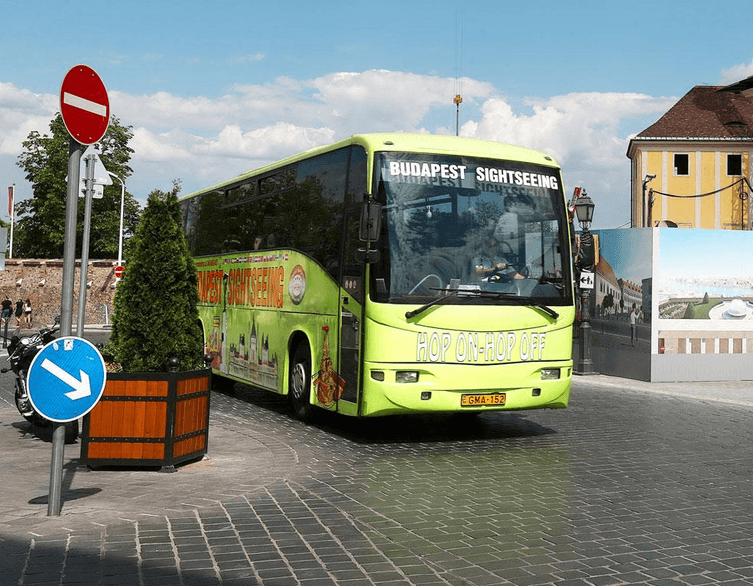
New Bus Rules on Gellért Hill: What Tourists Need to Know Before Visiting the Citadella
Budapest’s most dramatic hilltop is about to get a little more peaceful — and a lot more exciting. Gellért Hill, home to the newly renovated...
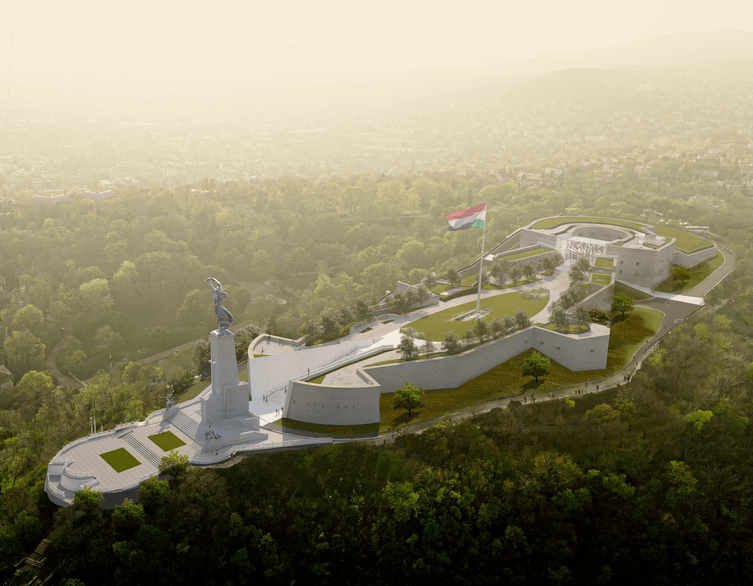
The Citadella Is Back: Budapest’s Most Iconic Hilltop Will Reopen Soon — and There’s a Party to Prove It
After more than a decade behind construction fences, one of Budapest’s most beloved landmarks will finally throw open its gates again — and...
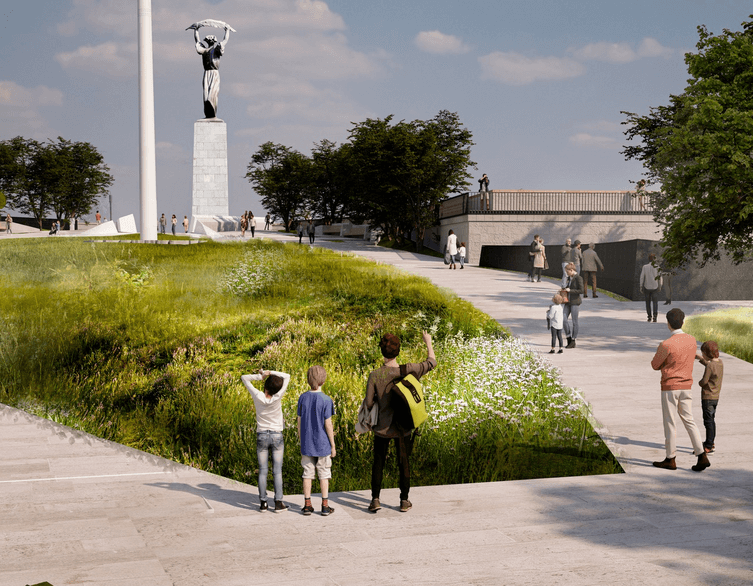
Budapest’s Citadella Is Finally Back — And It’s Better Than Ever
There are moments in a city’s life when something long dormant suddenly wakes up and reminds everyone why it mattered in the first place. Budapest...
Citadella Reopens Soon: Electric Buses Transform Buda Tours in Budapest
Budapest’s Buda side is gearing up for smoother adventures with the Citadella reopening soon and eco-friendly buses replacing big tour coaches....