Budapest’s Big Win: Turning “Ugly” Produce into a Sustainable City Success Story

Imagine strolling through Budapest’s vibrant markets, where the air buzzes with the scent of fresh fruits and veggies, only to learn that tons of perfectly good produce gets tossed because it doesn’t look picture-perfect. That is changing fast, thanks to Budapest’s groundbreaking win in the Bloomberg Philanthropies 2025–2026 Mayors Challenge. This one-million-dollar prize is fueling an innovative project that fights food waste while nourishing school kids and seniors—making the city even greener for visitors like you.
The Shocking Scale of Food Waste in Europe and Budapest
Food waste is not just a kitchen mishap; it is a global crisis that also hits close to home in Budapest. Every year, the European Union discards tens of millions of tons of food, much of it still edible, while millions of Europeans struggle to afford quality meals. Globally, around one-third of all food produced ends up in the bin, wasting enormous amounts of water, land and energy, and contributing significantly to greenhouse gas emissions. The painful irony is that this wasted food could feed huge numbers of people who currently go hungry.
In Budapest, the situation has an extra twist. Food prices have soared dramatically in recent years, making it harder for public kitchens to offer affordable, nutritious and varied menus. At the Budapesti Nagybani Piac, the city’s vast wholesale market in the 23rd district, up to 135,000 tons of fresh fruits and vegetables can remain unsold each year, even though they are still perfectly edible. For a city that operates nearly twenty elderly homes and provides public catering to thousands of schoolchildren and adults every single day, throwing away this much potential food is both economically and morally unsustainable.
How Budapest Snagged the Bloomberg Prize
Against this backdrop, Budapest decided to think big and act boldly. The city submitted a proposal to Bloomberg Philanthropies’ Mayors Challenge, a prestigious global competition that rewards innovative, already-tested urban solutions that improve essential public services. Out of 630 applicant cities worldwide, Budapest’s idea stood out: create a new, city-run processing hub that rescues “ugly but tasty” produce and channels it directly into public catering.
The concept is simple but powerful. Instead of letting slightly misshapen, overripe or cosmetically imperfect fruits and vegetables go to waste, the city collects them from its own markets and partner producers, then processes them into semi-prepared or ready-to-use products for school kitchens and elderly care homes. During the competition, Budapest’s project made it to the top 50 and was refined with expert support. Eventually, the city was selected as one of 24 global winners, alongside places like Barcelona, Cape Town, Rio de Janeiro and Toronto, and received one million dollars plus operational support to bring the idea to life over two years.
Inside the Fővárosi Feldolgozóközpont: Where “Ugly” Becomes Essential
At the heart of this initiative lies the Fővárosi Feldolgozóközpont, the Capital Processing Center. Think of it as a smart, socially conscious food factory. Unsold but still safe and nutritious fruits and vegetables from the wholesale market and local producers are collected here instead of being discarded. In this facility, they are washed, sorted, chopped, cooked or preserved and turned into soups, sauces, stews, purées or pre-cut ingredients ready for the city’s public kitchens.
These products then flow into the school catering system and the kitchens of elderly homes, improving the quality and variety of meals without driving costs through the roof. Children can get more fresh vegetable-based dishes, seniors can enjoy seasonal fruit desserts, and caterers gain flexibility in menu planning. What used to be “waste” becomes a key ingredient in healthier, more colorful plates across the city.
A crucial part of the project is digital. Producers, traders, the processing center and catering providers are linked via a real-time, digital platform. This system shows what surplus is available, in what quantity and when, and matches it with the needs of public kitchens. It helps stabilize the income of farmers and traders, makes planning easier and builds a resilient, long-term partnership between all actors in the food chain. At the same time, the project contributes to the EU and UN goal of cutting food waste in half by 2030.
Why This Matters for You as a Visitor
You might wonder what all this has to do with your city break in Budapest. The answer is: quite a lot. As a foreign tourist, you are not just visiting a beautiful capital on the Danube; you are stepping into a city that is actively rethinking how it treats resources, people and the environment. This project reinforces Budapest’s identity as a forward-looking, sustainable destination, which is something many travelers now consciously seek.
Best deals of Budapest












When you explore Budapest’s culinary scene—from cozy neighborhood bistros to modern farm-to-table restaurants—you are likely tasting the benefits of a broader mindset that values local produce and hates waste. The same city that rescues “ugly” vegetables for public kitchens is home to markets, cafés and restaurants that celebrate seasonality and smart resource use. Knowing this adds an extra layer of meaning to your goulash, your vegetable stew or your fruit-topped dessert.
If you are curious, you can even get closer to the source. The Budapesti Nagybani Piac, located at Nagykőrösi út 353 in the 23rd district, is one of Central Europe’s largest wholesale markets. While it primarily serves traders and professionals, there are time windows and areas where individual customers can buy produce as well. Visiting in the early morning, you can watch the city wake up over pallets of cabbages, crates of apples and boxes of peppers, and get a feel for the sheer scale of the food system that feeds Budapest.
Experiencing Sustainable Budapest Beyond the Markets
Budapest’s food-waste project is only one part of a wider green story. The city is steadily becoming more bike-friendly, with riverside paths and cycle lanes that make it easy to explore on two wheels instead of four. Public transport—metro, trams, buses and suburban rail—is extensive and affordable, giving you a low-impact way to get around. Many accommodations and hostels are embracing eco-friendly practices, from energy-saving systems to recycling and refill stations.
You will also find package-free or low-waste shops scattered around the city, where locals bring their own containers to buy dry goods, cleaning products or cosmetics. Choosing places like this during your stay helps reduce your environmental footprint, but it also plugs you into everyday Budapest life beyond the usual tourist landmarks.
Culturally, the city often participates in initiatives such as Earth Hour or climate-themed events, temporarily dimming the lights of iconic buildings or hosting exhibitions about sustainability and urban futures. Galleries, cultural centers and community spaces frequently organise talks and workshops on topics like circular economy, conscious consumption and urban gardening. If you are the kind of traveler who likes to understand the soul of a city, these are great opportunities to see how Budapest thinks about its future.
How You Can Join the Effort While Enjoying Your Trip
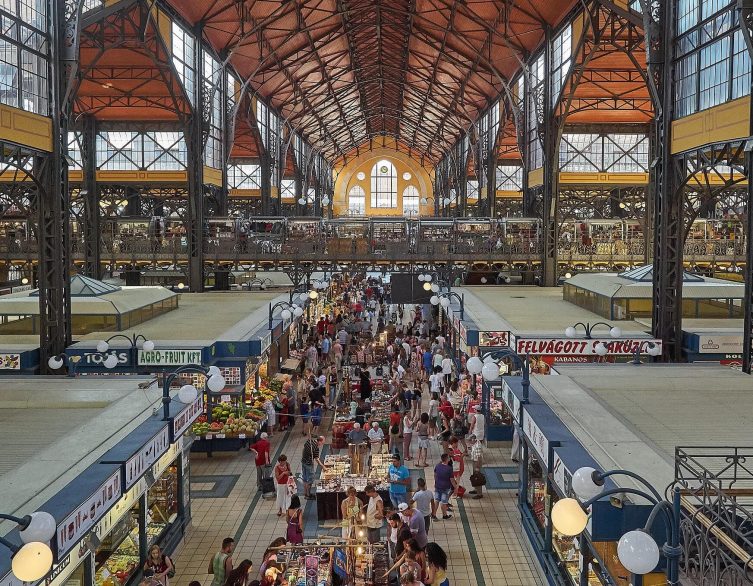
Even as a short-term visitor, you can easily align with the spirit of this project. Start by paying attention to your own food habits: order realistic portions in restaurants, share dishes if you are not too hungry, and take leftovers back to your accommodation when it is feasible and safe. When you shop at markets like the Great Market Hall (Nagyvásárcsarnok) or smaller local markets, do not be afraid to pick up imperfect-looking produce—it often tastes just as good, sometimes even better.
Bring a reusable water bottle and refill it as you go; tap water in Budapest is generally safe to drink. Carry a reusable tote bag for your market finds and souvenirs to avoid collecting plastic bags. When choosing where to eat, look for spots that highlight seasonal menus or local suppliers; many such businesses are proud to talk about their sustainability efforts, and you can always ask staff about it.
Most importantly, allow this story to shape how you see the city. Budapest is not only about thermal baths, ruin pubs and stunning architecture. It is also about people working behind the scenes—market vendors, kitchen staff, municipal teams—who are experimenting with new ways to make urban life fairer and more sustainable. The Bloomberg Mayors Challenge victory is a symbol of that ambition, and the rescued fruits and vegetables ending up on plates across the city are its most tangible proof.
As you sip your coffee in a Pest café or watch the sunset over Buda Castle, you are in a city that is quietly rewriting the fate of its “ugly” produce and, in its own way, taking a bite out of global food waste. That is a story worth tasting.
Related news
Related attractions