Budapest Today: What Visitors Need to Know About the Truckers’ Protest
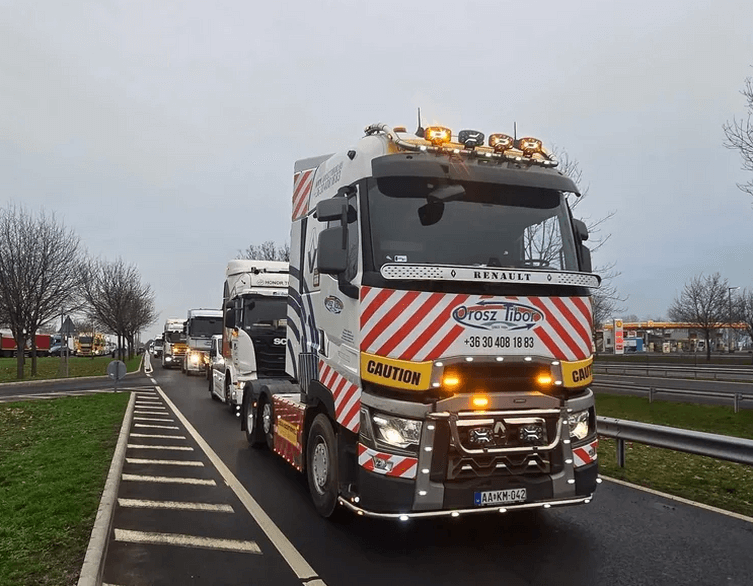
If you’re in Budapest this week, you might notice something unusual on the roads: long lines of trucks, heavy traffic around the ring road, and a lot of honking near the city’s northern entrances. A major protest by Hungarian truckers is taking place today, and while it’s mostly about domestic transport policy, it can affect how smoothly you move around the city.
Here’s what’s happening, how it might impact your visit, and how to keep your trip as stress‑free as possible.
What’s Behind the Truckers’ Protest?
On Monday, December 22, 2025, hundreds of truckers are demonstrating in and around Budapest against planned increases in road tolls (útdíj) for heavy vehicles. The protest is organized by a group called “Több, mint Kamionos” (More than Truckers), and its main demand is to stop or significantly reduce the planned toll hikes on highways and main roads.
The truckers argue that the new toll system would make their operations much more expensive, especially on secondary roads, and could push many small and medium‑sized transport companies into financial trouble. They’re calling for a rollback of the increases and for the government to return to an inflation‑linked toll model instead of a flat percentage rise.
Best deals of Budapest











The government’s transport ministry, however, says it has already reached a broad agreement with several professional transport associations and sees the protest as an unnecessary disruption, especially during the busy holiday period. Still, the scale of the demonstration is large, with several hundred trucks heading toward the capital.
How the Protest Is Affecting Traffic
The original plan was for a convoy of trucks to drive through central Budapest, following a route that would have taken them from the M3 motorway, along Róbert Károly körút, across Árpád Bridge, along Szentendrei út and Batthyány utca, then onto the M0 ring road, over the Megyeri Bridge, and back toward the M3, eventually ending at Hősök tere (Heroes’ Square).
However, the police have stepped in to limit the impact on the city. Instead of letting the full convoy into the center, they’ve allowed only about 50 trucks to enter Budapest and reach Hősök tere. The rest of the trucks are being held on the M0 and M3 motorways, mostly in the outer ring road area, where they’re creating significant traffic jams.
As a result, there are long delays on:
- The M3 motorway approaching Budapest (especially near the Szilas rest area and the M0 junction).
- The M0 ring road, particularly where the M3 and M0 connect.
- The northern sections of the city, including Róbert Károly körút and the approach to Árpád Bridge.
If you’re driving or using a taxi or ride‑sharing service, expect slower travel times, especially if your route takes you near the ring road or the northern parts of Pest.
What This Means for Tourists
If you’re a tourist in Budapest, the good news is that the protest is not a safety concern. There are no violent clashes, no blocked pedestrian areas in the historic center, and no direct threat to visitors. The demonstration is focused on traffic and logistics, not on public spaces where most tourists spend their time.
That said, the heavy traffic can still affect your plans in a few practical ways:
- Longer travel times. If you’re heading to or from the airport, or taking a taxi between hotels and attractions, your ride might take noticeably longer than usual. Allow extra time, especially during rush hours (roughly 7–9 AM and 4–7 PM).
- Delays on the ring road and bridges. The M0 and M3 are key routes for reaching the city from the north and east, so if you’re coming from that direction, expect congestion. Árpád Bridge and the Megyeri Bridge are also affected, so crossing the Danube in the northern part of the city may be slower.
- Possible noise and honking. Near the protest routes, you’ll hear a lot of truck horns and engine noise, especially in the afternoon and early evening. It’s loud but not dangerous – just part of the atmosphere of a big city protest.
How to Avoid the Worst of the Traffic
To keep your holiday smooth and enjoyable, here are a few simple tips:
- Stick to the city center when possible. The historic core of Budapest – around the Danube, the Castle District, Andrássy út, and the main Christmas markets – is largely unaffected. Walking, the metro, and trams are still the most reliable ways to get around central areas.
- Use public transport. Budapest’s metro, buses, and trams are running normally and are not impacted by the truck protest. The M1, M2, and M3 metro lines, as well as key bus routes, are your best bet for avoiding traffic jams.
- Check real‑time traffic if driving. If you’re renting a car or using a taxi, check apps like Google Maps or Waze before setting off. They’ll show you where the worst congestion is and help you choose a quieter route.
- Avoid the ring road and northern Pest during peak hours. If your hotel or activity is near the M0 or M3, try to plan trips outside the busiest times, or ask your driver to take inner city streets instead of the main highways.
A Glimpse of Local Life
While the protest might seem like just another traffic headache, it’s also a window into everyday life in Hungary. The truckers’ demonstration is about livelihoods, fuel costs, and the price of goods – issues that matter to ordinary people, especially during the expensive holiday season.
If you happen to see the convoy from a distance – maybe from a viewpoint near the Danube or while crossing one of the big bridges – it’s actually quite a striking sight: hundreds of trucks, many decorated with Hungarian flags, slowly moving through the winter light. It’s not a tourist attraction, of course, but it is a real, raw moment of the city’s current story.
Staying Calm and Enjoying Your Trip
The most important thing for visitors is this: don’t let the protest ruin your plans. Budapest is still very much open for business, and the festive atmosphere in the city center is as magical as ever. The Christmas markets, thermal baths, ruin bars, and historic sights are all operating normally.
If your taxi is late, if a bus takes a detour, or if you hear a lot of honking in the distance, just take a deep breath and remember that this is a temporary situation. In a day or two, the trucks will be back on the road, the traffic will ease, and Budapest will return to its usual rhythm.
In the meantime, focus on what makes this city special: the smell of chimney cake in the cold air, the glittering lights along the Danube, the warmth of a thermal bath, and the friendly chaos of a Central European capital at Christmas. With a little flexibility, your Budapest trip can still be unforgettable – protest traffic and all.