Budapest Is Going Wild — and Why You Should Pay Attention
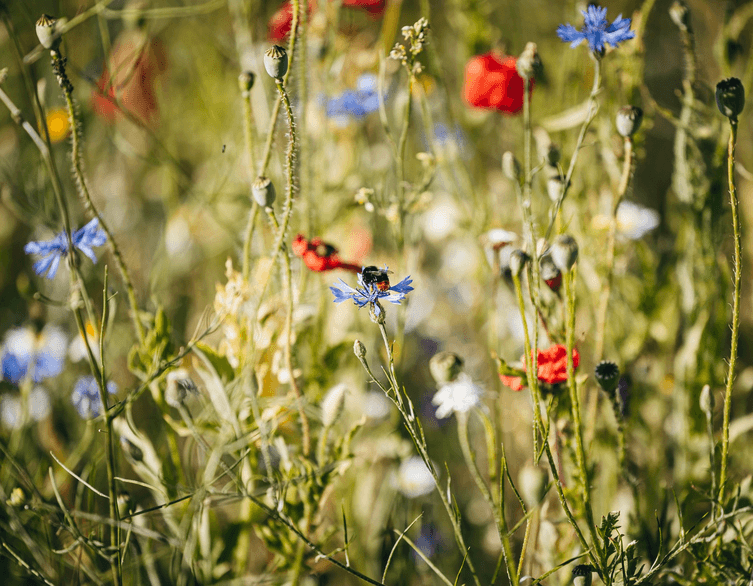
Spring has arrived in Budapest, and while most visitors are busy marvelling at the grand architecture along the Danube or hunting for the perfect lángos, something quietly extraordinary is happening in the city’s parks, gardens, and balconies. Budapest is in the middle of a slow-burning green revolution — one that involves wildflowers, tiny bees you’ve probably never heard of, and a very deliberate decision to do less in the garden. If you’re visiting the Hungarian capital right now, this is the perfect moment to witness it firsthand.
Why Budapest Is Rethinking Its Green Spaces
For decades, the ideal urban garden looked the same everywhere: neatly raked, carefully weeded, and tidied to within an inch of its life. Budapest is now challenging that assumption head-on. Sándor Bardóczi, the city’s chief landscape architect, has been making a case that’s almost counterintuitive at first glance — that leaving the soil alone, covering it rather than digging it up, is one of the most important things city-dwellers can do right now.
The reason is something that climate scientists are increasingly calling spring-winter drought — a phenomenon now affecting Hungary on a nationwide scale, including Budapest and the wider Danube-Tisza region. The top layers of soil, the very layers where most flowering plants, herbs, and shrubs take root, are losing moisture at an alarming rate. Raking, hoeing, and digging — the springtime rituals most gardeners swear by — actually accelerate this drying process, leaving the soil exposed and vulnerable. As Bardóczi puts it, it would be hard to do worse to your garden soil than stripping away its natural cover just as the dry season sets in.
The Art of Doing Nothing (Well, Almost Nothing)
So what should you do instead? According to Budapest’s green experts, the answer lies in mulching — covering the soil with autumn leaves, wood chips, straw, sawdust, compost, or ground-cover plants. These natural layers act like a blanket, locking moisture into the soil and protecting the delicate root systems of plants that would otherwise struggle through a dry spring. It’s a small change in habit that makes a surprisingly big difference, and it’s one that Budapest is actively encouraging both in its public parks and in private gardens across the city.
Best deals of Budapest










This philosophy sits at the heart of a broader shift in how Budapest manages its roughly ten million square metres of green space. Since 2019, the city has been introducing extensive maintenance — a gentler, more nature-friendly approach — across a growing number of areas, with the goal of eventually managing 50 hectares this way. The idea is to let nature lead, with humans playing a supporting role rather than a controlling one.
The Budapest Seed Mix: A Wildflower Story Still Being Written
One of the most tangible expressions of this philosophy is the Budapest Seed Mix (Budapest Magkeverék), a specially developed wildflower blend created from the city’s own ecological experience and research by the Institute of Ecology. It comes in two versions: the RÉT (Meadow) mix, containing 49 native annual and perennial species designed to create a gently swaying, meadow-like effect, and the KERT (Garden) mix, a 19-species blend tailored for domestic gardens that blooms continuously through summer.
Those who sowed the mix last October or back in February are now reaching what researchers might call the explorer’s phase of doubt — a moment of genuine uncertainty where the seedlings look suspiciously like weeds, the flowers are nowhere to be seen, and the neighbours are starting to raise an eyebrow. Bardóczi’s advice? Hold firm. May is when the magic typically begins, with spring-flowering species leading the charge, followed by summer and early autumn bloomers. Those who sowed in autumn will see perennial species dominate from the very first year; spring sowers can expect annuals to take the spotlight this season, with the full picture emerging only in year two. The seed mix is available through FŐKERT, Budapest’s public park management company.
Meet the Tiny Guests Moving Into Budapest’s Parks
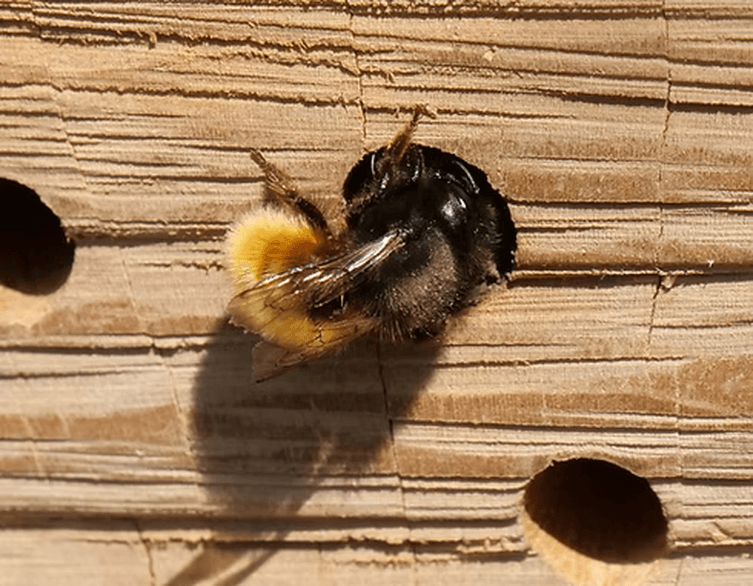
While all of this is happening at ground level, something equally fascinating is unfolding just above it. Across Budapest’s parks and green spaces, small wooden structures are appearing on trees — carefully designed bee hotels filled with hollow tubes, cavities, and reed nests. They might look like quirky garden decorations to the casual passerby, but they are, in fact, the centrepiece of a serious international scientific project.
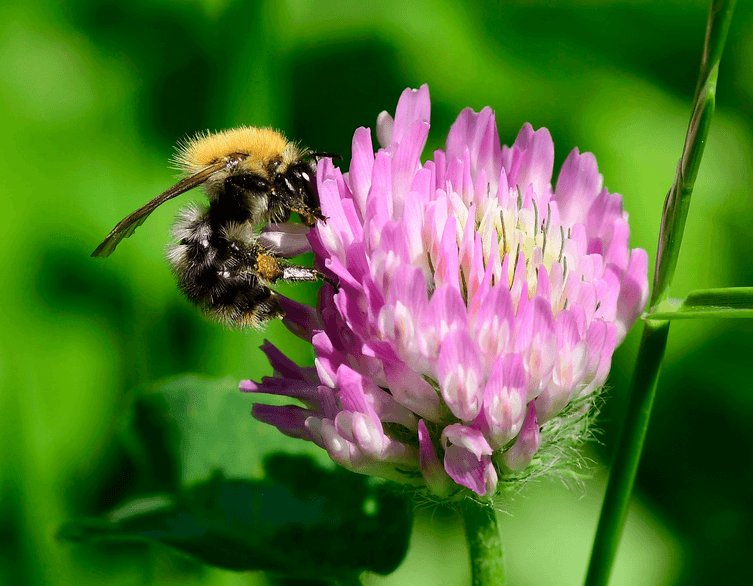
The UrbanBEE project, running from 2025 to 2028 and funded by Biodiversa+, is led by the HUN-REN Centre for Ecological Research and operates across seven cities in both Europe and Africa. Budapest is one of its key research sites, with project coordinators Edina Török and Riho Marja overseeing the local monitoring and data collection. The project’s focus is on solitary bees — a group of pollinators that, unlike honeybees, live alone, form no colonies, produce no honey, and go almost entirely unnoticed by the humans whose food systems they quietly sustain.
Living Laboratories in the Heart of the City
What makes UrbanBEE genuinely innovative is its use of these bee hotel networks as living laboratories. By distributing 1,400 bee hotels across cities spanning vastly different social and environmental contexts — from leafy, affluent residential neighbourhoods to denser, more urbanised districts — researchers can map precisely how different conditions affect which bee species settle where, how quickly, and why. Does air quality play a role? Does the microclimate of a particular park make a difference? Does the design of the hotel itself matter? These are questions that have never been answered at this scale before, and Budapest is helping to answer them right now.
Beyond the science, UrbanBEE has a strong citizen science dimension. Local residents across Budapest have been given bee hotels to host at home, where they record basic observations and feed data back to the research team. It’s a beautifully simple idea: transform ordinary city-dwellers into active environmental custodians, and in doing so, build both a richer dataset and a deeper public appreciation for urban biodiversity. If you’re visiting Budapest and happen to spot one of these small wooden structures in a park, you’re looking at a piece of live, ongoing scientific research.
Budapest’s Wider Green Vision
The UrbanBEE project and the Budapest Seed Mix are not isolated initiatives — they are part of a much larger, city-wide commitment to ecological restoration. The Biodiverse City LIFE project, backed by EU funding, is working to restore valuable Pannonian grassland habitats within Budapest, re-establish traditional land use methods, and improve water retention across the city’s green areas. The Buda Hills, the Danube riverbank ecosystems, and the network of urban parks scattered across both sides of the river all play a role in this vision — providing vital corridors for wildlife, including those increasingly important solitary pollinators.
For visitors, this translates into something genuinely worth seeking out. A walk through Margaret Island, City Park (Városliget), or the quieter green spaces of the Buda Hills in April and May offers more than just scenic beauty — it offers a front-row seat to a city actively working to rewild itself, one bee hotel and one wildflower meadow at a time. Spring in Budapest has always been worth experiencing. This year, it’s worth paying closer attention.
Follow Budappest.com on Facebook
Related news
Budapest Is Buzzing — And Not Just Because of the Tourism
When most people think of Budapest, they picture the Chain Bridge lit up at night, the steam rising from the thermal baths, or the ruin bars spilling...

Budapest Ranked Third Best City in Europe for Digital Nomads — And It’s Easy to See Why
Budapest has just landed on yet another must-visit list, and this time it’s not for its thermal baths or ruin bars — though those certainly...
A Perfect Day at Millenáris Park: Budapest’s Hidden Green Gem
If someone told you that one of Budapest’s best-kept secrets is a park tucked just behind the bustling streets of the 2nd District, you might...
Budapest’s Parks Are Waking Up for Spring — And They’ve Never Looked Better
The City Is Getting Its Green Spaces Ready for You Spring in Budapest doesn’t just happen — it’s carefully prepared. While you’re...
Budapest’s Secret Garden: How the City Is Buzzing Back to Life for Its Pollinators
There’s something quietly magical happening in Budapest’s parks, squares, and green strips. While visitors might be busy marvelling at...
Budapest’s Bottomless Lake Park Just Got a Fresh Start — and Spring Is the Perfect Time to Visit
Spring has arrived in Budapest, and with it comes one of the best reasons to lace up your walking shoes and head to the Buda side of the city. The...
Grow Your Own Hungarian Meadow: The Budapest Seed Mix Story
Let’s Get Those Hands Dirty in Budapest’s Urban Wilds Ready to channel your inner garden gnome? In Budapest, they’ve launched something truly...
Budapest’s First Native Wildflower Seeds Debut This Weekend
Budapest is making history this Saturday, September 27th, as the city launches its very first locally-adapted wildflower seed mix at an exciting...