Budapest Is Getting a New Neighbourhood — And a Library at Its Heart
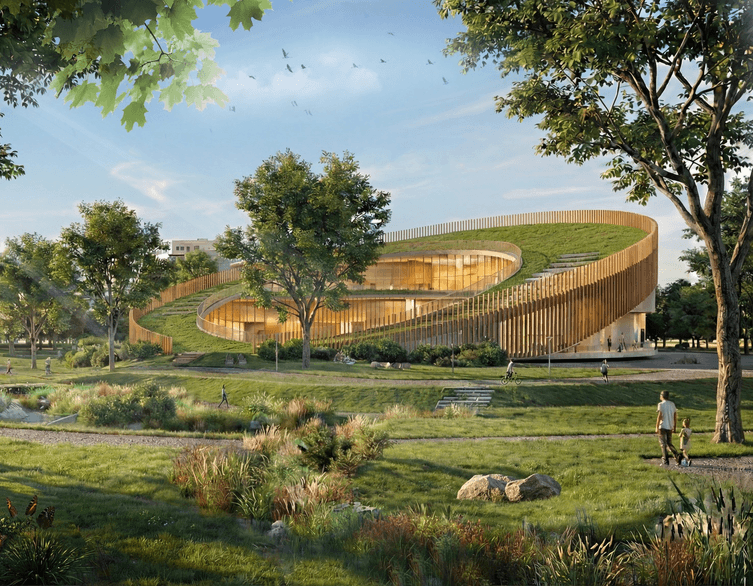
Budapest is a city that has always known how to reinvent itself, and the latest chapter in that story is being written on a vast stretch of former railway land in the 14th district. The Rákosrendező development project — one of the most significant urban planning efforts in Hungary in decades — has just taken a major step forward, with the winner of an international master plan competition announced in late March 2026. What emerged from the results is a vision for a new urban district that is green, walkable, community-centred, and anchored, of all things, by a spectacular new public library.
The Project That Replaced a Controversial Dream
The name Rákosrendező may not yet mean much to most visitors, but it is a site that has attracted considerable attention in recent years. This is the former freight railway yard in Budapest that was once earmarked for a very different kind of development — a grandiose, government-backed project dubbed “mini-Dubai” by its critics, envisioning luxury towers and a relocated government quarter. Budapest’s city government, led by Mayor Gergely Karácsony, rejected that direction and instead launched an international urban planning competition to reimagine the area as a green, integrated neighbourhood that would grow organically from the existing city fabric. The competition results, announced in late March, represent the first concrete vision of what Rákosrendező could actually become.
A Neighbourhood of Six Characters
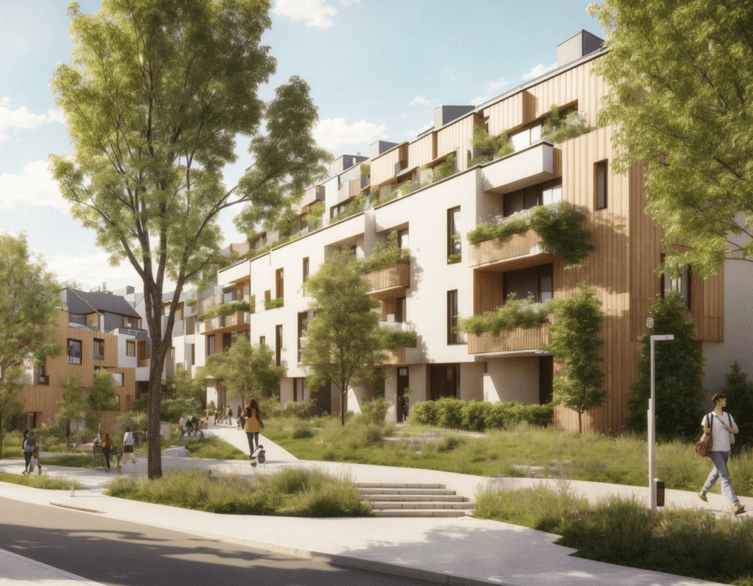
The winning entry was submitted by an international consortium of architecture and urban design firms: Coldefy et Associés Architectes Urbanistes, Cityförster, Sporaarchitects, Treibhaus Landschaftsarchitektur, and Marko and Placemakers. What makes their proposal stand out is its rejection of uniformity. Rather than designing a single, homogeneous urban quarter, the team has proposed six distinct sub-neighbourhoods, each with its own character and identity, yet all connected by a coherent network of streets, squares, and public spaces. A circular promenade thread through the whole development, stitching the parts together while encouraging movement on foot and by bicycle.
Mayor Karácsony, who has championed the project from the outset, praised the winning design for being “not just architecturally but also socially considered,” noting that it incorporates a diverse range of housing types, well-positioned community institutions, and urban planning solutions designed to work over the long term, not just in the short term.
Best deals of Budapest





Green at Its Core
The environmental ambition of the winning plan is hard to miss. Three large parks form the ecological backbone of the new district, complemented by a north-south green corridor that will run the full length of the development, linking open spaces and creating habitat continuity through the urban fabric. The plan also integrates climate-adaptive solutions and water retention systems — a direct response to the increasing pressure of extreme weather events on European cities.
The proposal consistently prioritises pedestrian and cycling mobility, treating cars as a secondary rather than primary mode of movement. Active ground floors, lively street frontages, and genuinely usable public spaces are central to the design philosophy throughout all six sub-neighbourhoods. It is, in short, a very different vision from the tower-and-highway urbanism that so many post-war European cities have had to spend decades correcting.
The Library by the Stream
Perhaps the most talked-about feature of the winning plan is its proposed library, situated alongside the Rákos Stream that flows through the site — a natural focal point for what promises to be one of the most evocative public buildings in Budapest’s future skyline. The Metropolitan Ervin Szabó Library, Budapest’s main public library network, has already welcomed the decision with evident excitement, confirming that the new building is planned as a full branch library within its network.
The library, in the vision articulated by the designers and embraced by the city, is conceived as far more than a place to borrow books. It is imagined as a community hub, a meeting place, a centre for learning and creativity — an iconic building at the heart of a new urban district that will need exactly this kind of anchoring civic institution to develop genuine community life. As the Ervin Szabó Library put it in their announcement: “a library that is not just a building, but a community space, a meeting place, a place for learning and creation.”
What Comes Next
It is worth being clear about the timeline: this is not a plan that will be built tomorrow. The winning competition entry is a starting point, not a finished design. A detailed master plan is expected to be completed by early 2028, after which the long process of phased implementation will begin. Budapest’s city government has been explicit that the competition result is an inspiring foundation from which the neighbourhood will be developed collaboratively, with public input shaping the final outcome.
For visitors who know Budapest’s existing public library, this context adds an extra layer of interest. The Metropolitan Ervin Szabó Library’s current main branch, housed in the breathtaking neo-Baroque Wenckheim Palace in the Palace District, is already one of the city’s most extraordinary spaces — a palace of gilded reading rooms, carved wooden panelling, and soaring chandeliers that tourists can visit on a daily pass. It is, by almost any measure, one of Europe’s most beautiful libraries. The idea that Budapest’s library network is now set to gain a bold new contemporary counterpart, set by a stream in a green new urban district, is an exciting prospect for a city that has long taken its intellectual and cultural life seriously.
A Vision Worth Watching
The Rákosrendező project is still in its early stages, but it already tells a story about the kind of city Budapest wants to be. At a time when many European capitals are grappling with how to use their last remaining large developable plots, Budapest has made a clear statement: this land will become a green, liveable, community-oriented district that puts people before cars and public space before private profit. Whether you’re visiting Budapest now or returning in a decade, this corner of the city is one to watch — and perhaps, in time, one to explore.
Follow Budappest.com on Facebook
Related news
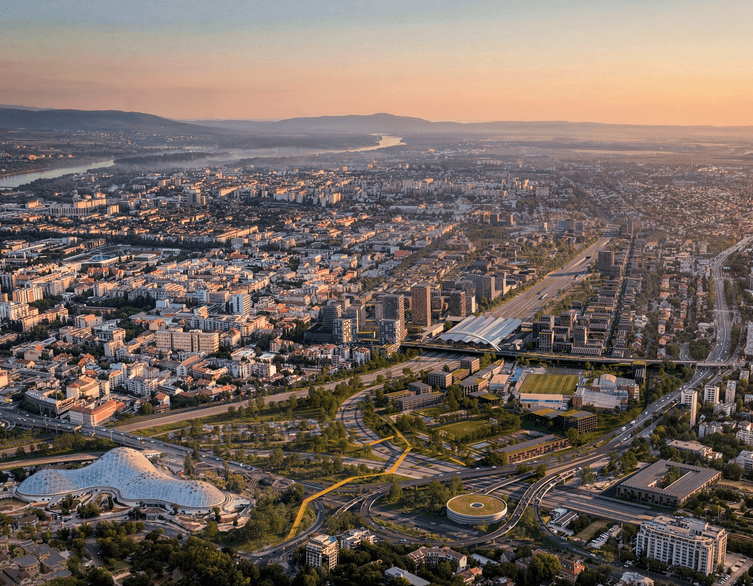
Budapest Is Building Its Future: The Rákosrendező Masterplan Has a Winner
Budapest just took one of its most significant urban planning steps in decades. On March 30, 2026, the city announced the winner of the international...
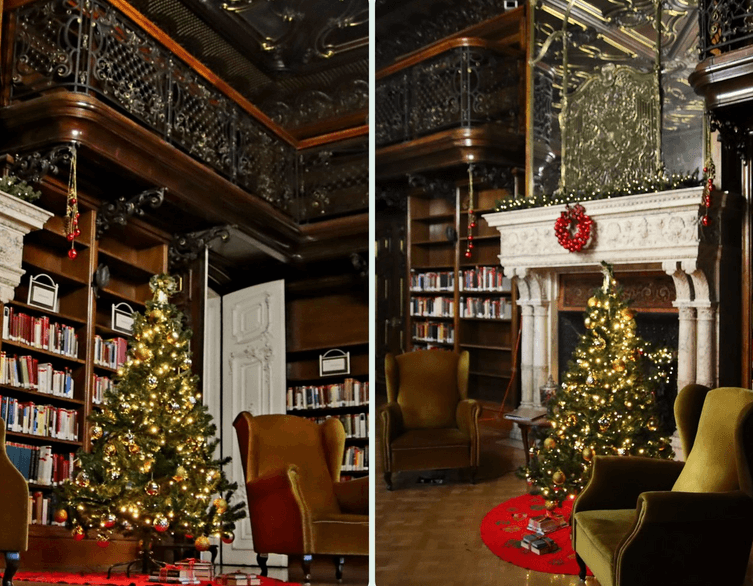
Discover the Magic of Budapest’s Palatial Library and Its New Digital Wonderland
Budapest is a city that loves to surprise you. Just when you think you’ve explored all its grand boulevards, thermal baths, and ruin bars, it offers...
Budapest’s Rákosrendező: A Bold Vision for Sustainable Urban Living Takes Shape
Budapest is embarking on one of its most ambitious urban transformations in decades, and the world’s leading architecture firms are taking...