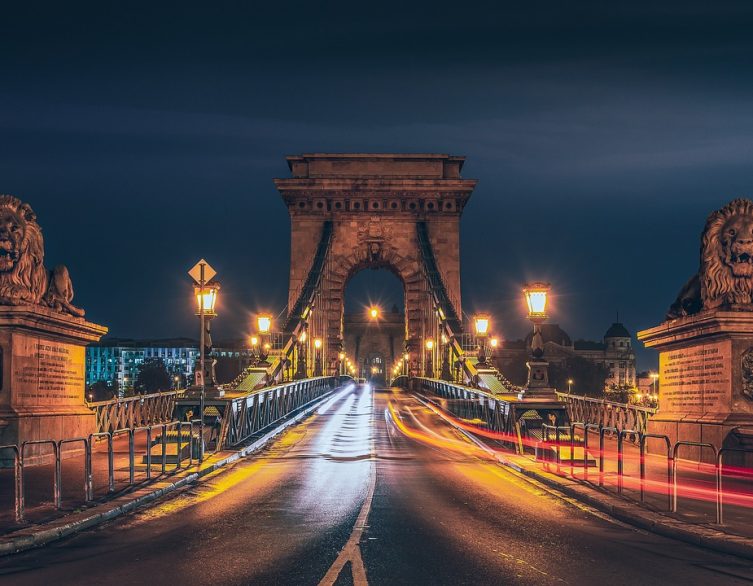
Bridges That Unite the World: The Chain Bridge Shines Among the Most Beautiful
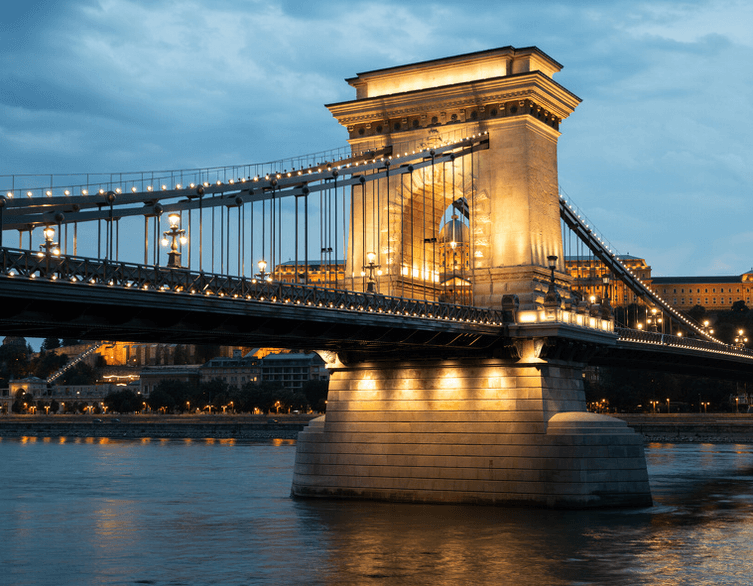
When Time Out unveiled its latest ranking of the world’s most beautiful bridges, the results carried a delightful surprise for lovers of European architecture. While the top spot went to the centuries-old Stari Most in Bosnia and Herzegovina, Budapest’s beloved Széchenyi Chain Bridge proudly earned a distinguished place on the list. This recognition places Hungary’s capital among global landmarks that do far more than carry traffic—they tell stories, connect histories, and symbolize unity.
Stari Most – A Symbol Rebuilt from the Ashes
Perched gracefully above the emerald waters of the Neretva River in Mostar’s Old Town, the Stari Most, or “Old Bridge,” dates back to the 16th century. It was constructed under the Ottoman Empire when Mostar served as a vital frontier city. For hundreds of years, this stone arch represented harmony between Muslim, Orthodox, and Catholic communities—a living testament to coexistence in a diverse region.
Best deals of Budapest








In 1993, during the Bosnian War, the bridge was tragically destroyed, marking a devastating moment in the city’s history. Its reconstruction between 2001 and 2004 became a global effort toward reconciliation. Today, the restored bridge and the surrounding old town are UNESCO World Heritage Sites, recognized as symbols of peace and cultural diversity. Standing atop Stari Most, travelers not only enjoy breathtaking views but also sense the resilience of a city that literally rebuilt its connection to the past.
The Chain Bridge – Budapest’s Beloved Icon
Budapest’s Széchenyi Chain Bridge has long been more than an architectural masterpiece—it is the heart of the Hungarian capital. Stretching across the Danube, it elegantly links hilly Buda on one side, crowned with the Fisherman’s Bastion and Buda Castle, with bustling Pest on the other, famed for its vibrant cafés, ruin bars, and cultural energy.
Designed by English engineer William Tierney Clark and built between 1839 and 1849, the bridge was Europe’s first permanent connection across the middle Danube. Its massive stone arches and cast-iron chains were symbols of progress and national pride when Hungary was rapidly modernizing. The Chain Bridge has also endured hardship: destroyed during World War II and rebuilt by 1949, it once again underwent careful restoration between 2021 and 2023, receiving new LED lighting that highlights its graceful structure each night. Today, it welcomes pedestrians, cyclists, taxis, and public transport—offering a quieter, more atmospheric crossing than ever before.
Why Bridges Capture the Human Spirit
The Time Out ranking reminds us that bridges are far more than feats of engineering. From the living root bridges of India to the futuristic Helix Bridge in Singapore, each structure tells something profound about human creativity and connection. They span not only rivers and valleys, but also cultural divides, symbolizing our shared desire to connect and move forward together.
In Budapest, the Chain Bridge holds a similar spirit. It is not just a route between two districts—it’s a unifying symbol that mirrors the city’s balance between tradition and renewal. Stroll across its walkway at sunset, and you’ll see why it earned a place among the world’s most beautiful: the Danube glows gold, the Parliament reflects in the water, and the lights of Buda Castle begin to shimmer on the opposite shore. It’s a view that captures the very essence of Budapest—romantic, resilient, and timeless.
Visit Budapest and Walk Through History
For visitors coming to Budapest, crossing the Chain Bridge is a must-do experience. Whether you start from Buda or Pest, take your time to pause for photos, watch the riverboats drift below, and let the panorama sweep you away. The bridge connects more than two banks—it connects people across generations and cultures, standing as a reminder that beauty is not only in design, but in the stories that bridges continue to tell.
Follow Budappest.com on Facebook
Related news
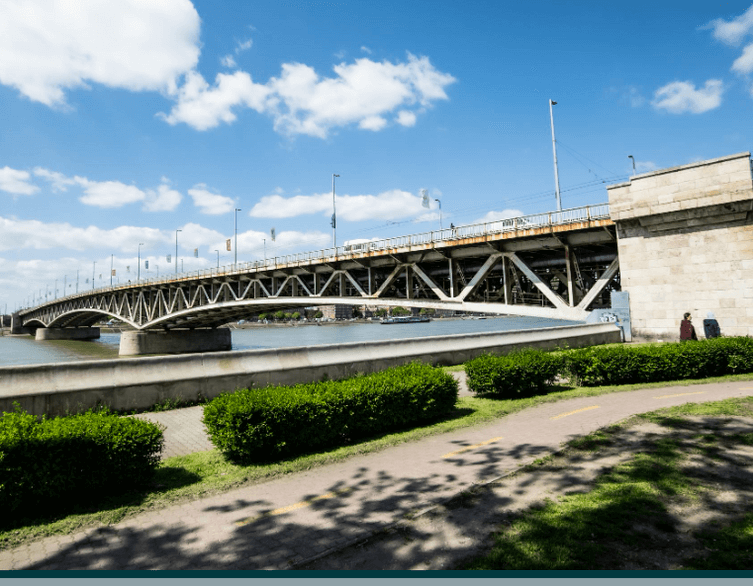
Budapest’s Petőfi Bridge Revival: Smoother Crossings Ahead for Tourists
Imagine gliding across the Danube on the Petőfi Bridge, that trusty workhorse linking bustling Pest to serene Buda, without a worry about creaky...
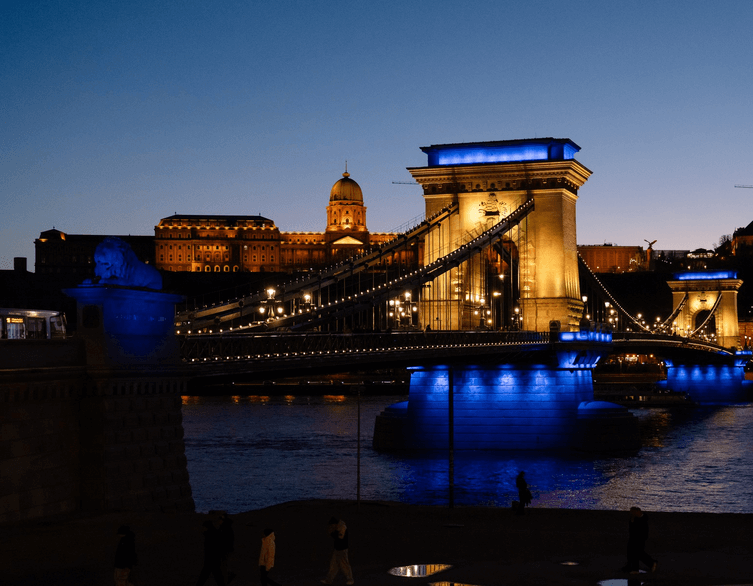
Chain Bridge Budapest Illuminated in Ukrainian Colors: A Powerful Gesture of Solidarity
If you’re strolling along the Danube in Budapest tonight, look up at the iconic Chain Bridge—it’s glowing in Ukraine’s blue and...
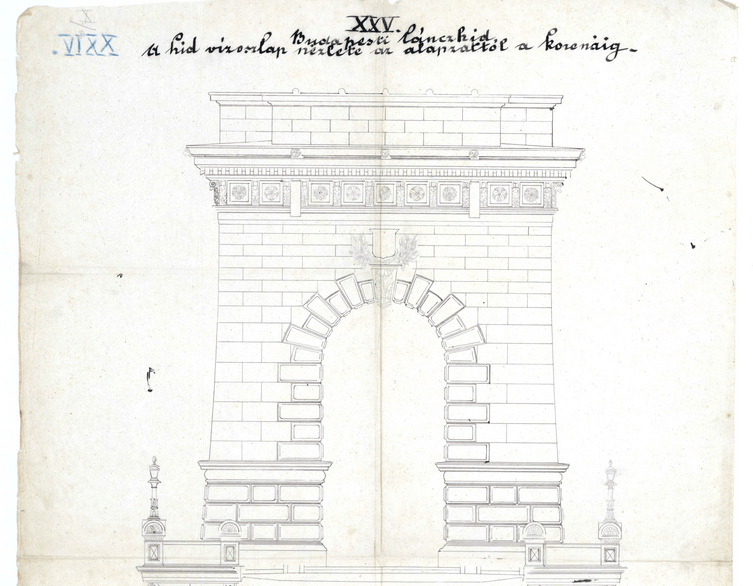
Adam Clark’s Lost Drawings: Budapest’s Chain Bridge Secrets Unveiled
Budapest’s world-famous Chain Bridge has long stood as a symbol of connection—between Buda and Pest, past and present. Yet, in autumn 2025, this...
Budapest’s Shining Icon: The Rebirth of the Chain Bridge
You’re strolling along the Danube, the sun glinting off the water, and there it is-Budapest’s most dazzling diva, the Széchenyi Chain Bridge,...
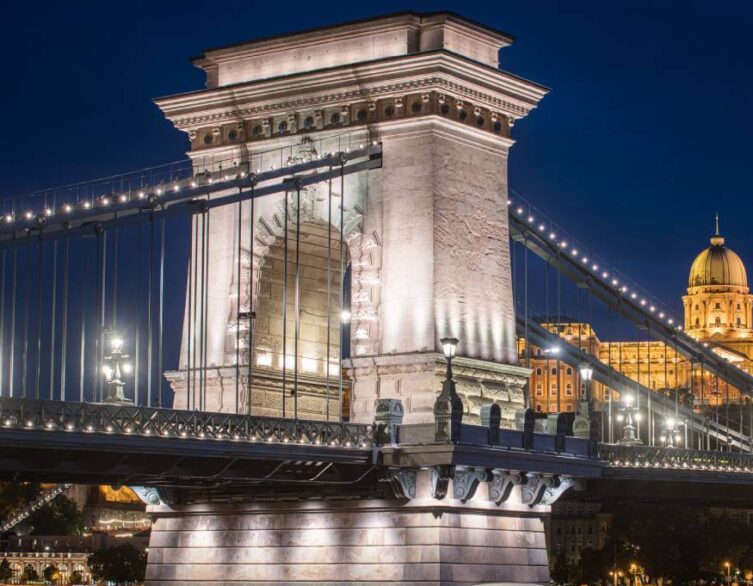
Revitalizing History: Budapest’s Chain Bridge Wins 24th Construction Industry Excellence Award
The 24th Edition of the Construction Industry Excellence Award The Construction Industry Master Prize Foundation announced the Construction Industry...
Related attractions