Farewell to Béla Tarr: Budapest Bids Goodbye to the Master of Slow Cinema
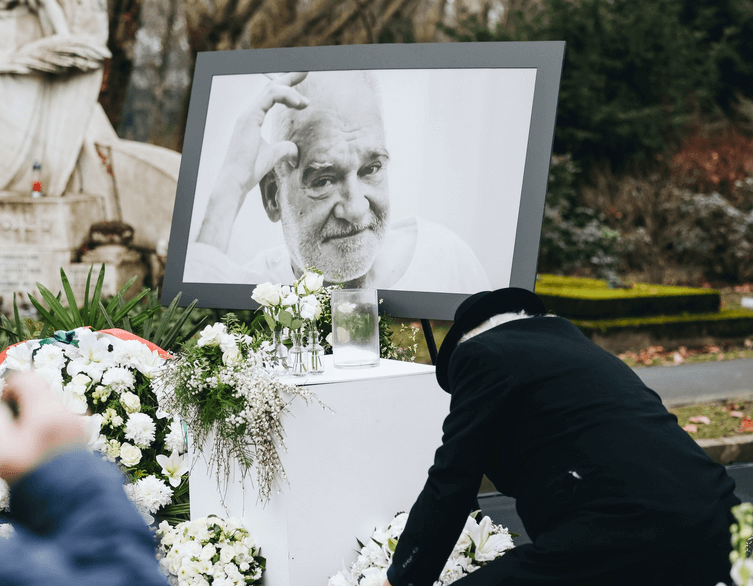
On February 6, 2026, under a soft winter sky, hundreds gathered at Budapest’s Fiumei Road Cemetery to bid farewell to one of Hungary’s greatest film auteurs — Béla Tarr, the internationally acclaimed director whose haunting, hypnotic films reshaped the language of cinema. Family members, friends, fellow artists, former students, and admirers filled the grounds, paying their last respects at a ceremony marked by quiet dignity and deep emotion.
For visitors to Budapest who admire European cinema, Fiumei Cemetery is no ordinary resting place. It is a national pantheon — a place where giants of Hungarian culture, politics, and art rest. This February, it became the final home of the man whose camera revealed the human condition with unmatched honesty and poetic intensity.
The filmmaker who turned monotony into meaning
Tarr Béla’s long, meditative sequences — as seen in films like Satantango and Werckmeister Harmonies — taught audiences to see time differently. As Miklós Szinetár, fellow director and one of Tarr’s early mentors, said in his eulogy, “Tarr was interested not in where the camera could sneak in, but in fate, humanity, and the face itself.” He recalled Tarr’s film school entrance exam, where the young director spoke passionately about György Fehér’s Richard III, a work that, he said, “portrayed world history on the human face.”
Szinetár continued, likening Tarr’s art to Einstein’s formula: just as mass can become energy, Tarr transformed the heavy weight of everyday despair into emotional force. “His films draw you in, absorb you, and sweep you away,” he said.
Tarr’s genius lay in dissolving the boundary between cinema and reality. We forget we are watching actors — instead, we see people, destinies, and society itself.
Best deals of Budapest









Remembering a man of integrity and vision
At the ceremony, Budapest Mayor Gergely Karácsony presented the honorary certificate and medal of Budapest’s honorary citizenship, an award granted to Tarr last year but left uncollected before his passing. In his speech, Karácsony reflected: “To stand for freedom and human dignity is the duty of the city that may call Béla Tarr its honorary citizen — precisely because Béla Tarr is its honorary citizen.”
His students, including filmmaker and screenwriter Dorka Vermes, remembered him as a moral compass in a rapidly changing world. “You did not believe in teaching, yet so many of us were your students,” she said. “Not because we wanted to make films like you, but because we shared your worldview and your sense of why we must make films at all.”
The human face of truth
Pastor Gábor Iványi offered words that captured Tarr’s spiritual depth: if the director wanted anything, it was “for us to discover the face of God in the face of another human being, and to reflect the invisible.”
Other collaborators and friends — including Fred Kelemen, Patrick Marshall, and Jákob Ladányi — shared their memories, while actor-director Renátó Olasz read Tarr’s acceptance speech for his European Film Academy Lifetime Achievement Award. Nobelist László Krasznahorkai, Tarr’s longtime creative partner, was also among the mourners, along with many key figures of contemporary Hungarian cinema, including Ildikó Enyedi, Simon Szabó, and Gábor Reisz.
Tarr Béla, the visionary behind films that taught the world to pause and look more deeply, passed away on January 6, 2026, at the age of 70. His work continues to speak to audiences across borders and generations, reminding us that even in silence, humanity endures.
Related attractions